
Middle East Innovation — August 4, 2026
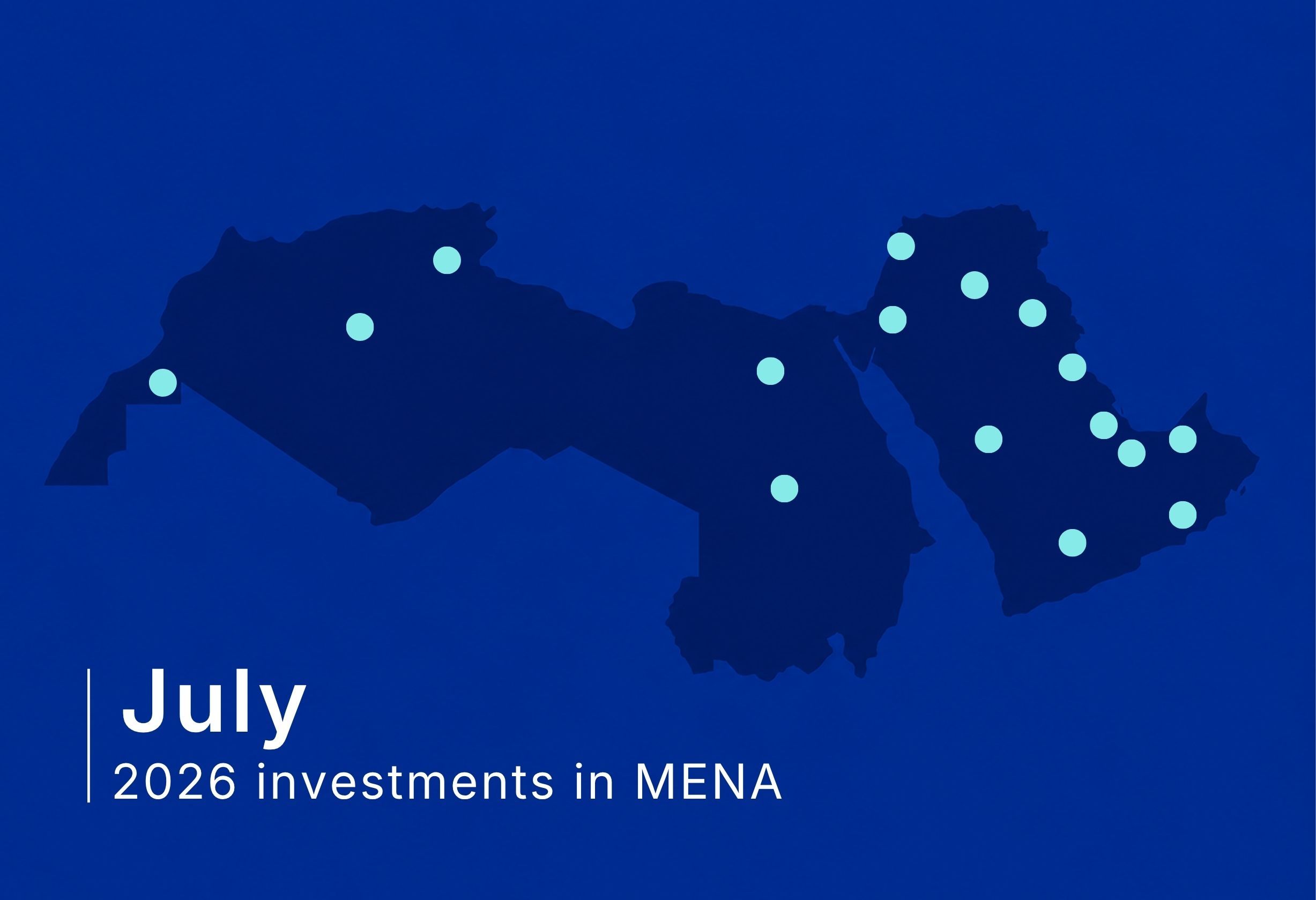
MENA startups raised $172.6 million across 45 deals in July 2026, marking a 16% monthly increase and reclaiming Saudi Arabia's funding leadership after June's slowdown. Fintech continues to dominate regional investment, while Saudi Arabia's digital economy hit $139.2 billion in value, positioning the Kingdom as a global AI player. The region shows resilience despite geopolitical volatility and seasonal summer pullbacks.
Middle East Innovation — August 4, 2026
Top Stories
MENA Startups Raise $173M in July as Saudi Arabia Regains Funding Leadership
- What happened: Middle East and North Africa startups raised $172.6 million across 45 funding deals during July 2026, up 16% from June's $148.2 million but still 78% below July 2025 levels. Saudi Arabia reclaimed the top funding position from the UAE during the month.
- Why it matters: Monthly volatility reflects both the region's venture capital volatility and the impact of geopolitical factors on investor confidence. The 16% month-over-month growth signals renewed investor appetite post-summer despite ongoing regional tensions.
- Key numbers: $172.6 million across 45 deals; 16% month-over-month increase; July 2026 funding 78% below July 2025.
Saudi Arabia's Digital Economy Reaches $139.2 Billion, Positioning Kingdom as Global AI Player
- What happened: Saudi Arabia's digital economy expanded to SR522 billion ($139.2 billion) in 2025, representing a dramatic increase from SR297 billion in 2017. The Kingdom is now recognized globally for its artificial intelligence and digital infrastructure investments.
- Why it matters: This tenfold expansion in digital economy value over eight years shows Saudi Arabia's strategic shift toward tech-driven growth and diversification away from oil. The Kingdom's AI initiatives and data center buildouts are attracting international investment and positioning it alongside UAE and Qatar in the Gulf's tech race.
- Key numbers: SR522 billion ($139.2 billion) digital economy value in 2025; growth from SR297 billion in 2017; represents strategic pivot toward AI and sovereign cloud infrastructure.

Qatar Advances Digital Transformation Journey from Hydrocarbons to Knowledge-Based Economy
- What happened: Qatar has shifted its economic strategy to reduce reliance on hydrocarbon resources through disciplined digital transformation execution, building a knowledge-based economy powered by advanced technologies including AI, digital services, and telecommunications.
- Why it matters: Qatar's transformation mirrors broader Gulf strategy but emphasizes digital sovereignty and economic diversification. As the smallest Gulf AI player by investment, Qatar's approach provides an alternative model to the UAE and Saudi Arabia's massive infrastructure plays.
- Key numbers: Strategic technology pivot to reduce hydrocarbon dependency; building knowledge-based economy foundations.

Funding & Deals
- MENA Startups (Collective) (MENA-wide) — $172.6 million in July 2026 across 45 deals | Mix of fintech, logistics, proptech, and gaming | Majority led by Saudi Arabia and UAE-based investors
Policy & Infrastructure
-
Saudi Arabia Digital Transformation Market Growth: Projected to reach USD 65.12 billion by 2030, driven by sovereign cloud infrastructure, AI deployment, digital government services, cybersecurity, and payment innovation. The Kingdom is shifting from project-led digitization to recurring platform and managed service growth.
-
Mobile Internet Infrastructure Expansion: Saudi Arabia achieved mobile internet speeds of 216 Mbps with 99.6% internet penetration, accelerating 5G deployment and digital service expansion across the Kingdom.
Analysis: What This Means
July's $173 million funding round and Saudi Arabia's resurgence as the top funder—combined with the Kingdom's $139.2 billion digital economy valuation—signals a maturing regional tech ecosystem that is increasingly independent from global capital cycles. While July 2026 funding trails July 2025 by 78%, the month-over-month 16% increase suggests summer seasonality rather than structural decline. The focus on sovereign digital infrastructure, AI data centers, and fintech across Saudi Arabia, UAE, and Qatar reflects a unified Gulf strategy: build regional tech sovereignty to compete globally without Western dependency. Qatar's knowledge-economy pivot and Saudi Arabia's digital market growth projections show this isn't just venture capital—it's state-level economic transformation. The remaining challenge is converting this infrastructure investment into profitable exits and scaling local talent pools.
What to Watch Next
- H2 2026 Funding Trajectory: Track whether MENA startups can sustain the 16% monthly growth and close the 78% year-over-year gap by Q4, indicating recovery post-geopolitical volatility.
- Saudi Arabia AI Data Center Expansion: Monitor announcements on the Kingdom's 6 GW AI data center capacity target by 2034 and which international hyperscalers commit infrastructure partnerships.
- Fintech Consolidation: Watch for M&A activity among MENA's dominant fintech sector ($409M in H1 2026) as regional players seek scale and international expansion.
Sources compiled from Wamda, Arab News, Telecom Review Middle East, GCC Business Watch, and OpenPR — all dated July 28–August 4, 2026.
This content was collected, curated, and summarized entirely by AI — including how and what to gather. It may contain inaccuracies. Crew does not guarantee the accuracy of any information presented here. Always verify facts on your own before acting on them. Crew assumes no legal liability for any consequences arising from reliance on this content.
Powered by
