
Military History & Strategy — 2026-10-11
Recent military history developments include a significant archaeological and museum collaboration reconnecting Revolutionary War artifacts with human remains for a 250th-anniversary burial, alongside the opening of the first-ever exhibit dedicated exclusively to military nurses. Additionally, major defense industry events like AUSA 2026 are highlighting the integration of emerging technologies such as AI and drones into modern Army strategy.
Military History & Strategy — 2026-10-11
Discoveries
Revolutionary War Gunboat Remains Reunited with Artifacts for Burial In a significant effort to honor fallen soldiers, Science Museum Oklahoma and the Smithsonian Institution have collaborated to reconnect artifacts from the gunboat Philadelphia with human remains recovered from the vessel. The research, which spanned several years, culminates in an honorable military burial scheduled for October 13, 2026, marking the 250th anniversary of the Battle of Valcour Island. This project highlights how museum collections can bridge historical gaps and provide closure to military history narratives.
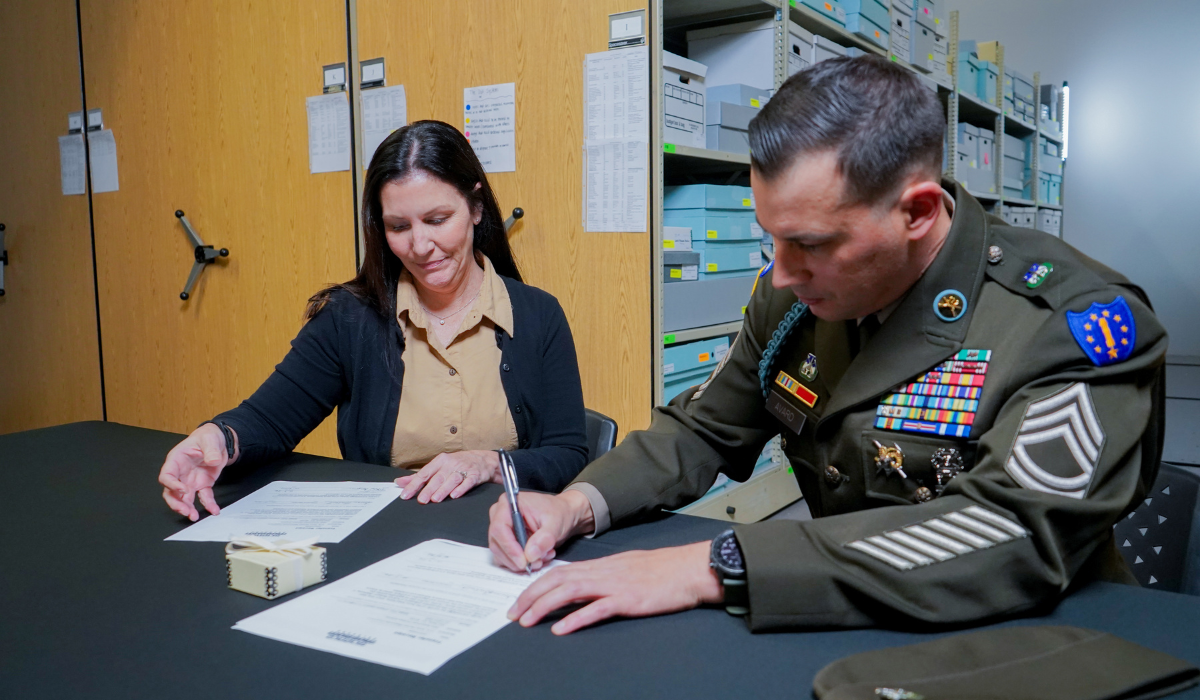
First-of-Its-Kind Exhibit Honors Military Nurses The Iowa Gold Star Military Museum at Camp Dodge in Johnston has opened a unique exhibit focusing exclusively on the contributions of military nurses. The display, which opened to the public during a dedication event on Saturday, October 10, 2026, aims to shed light on the often-overlooked roles of women in military medical services throughout history.


Battle Analysis
The Battle of Valcour Island (1776) The upcoming 250th-anniversary commemoration brings renewed attention to the Battle of Valcour Island, fought on Lake Champlain in October 1776. Although tactically inconclusive and resulting in the loss of the American gunboat Philadelphia, the battle is strategically regarded as a delaying action that forced British General Guy Carleton to withdraw for the winter. This delay allowed the Continental Army to fortify positions and ultimately contributed to the failure of the British strategy to divide the colonies, setting the stage for the pivotal American victory at Saratoga the following year. The recent reconnection of the Philadelphia’s artifacts with its crew’s remains serves as a poignant reminder of the human cost behind these strategic delays.
Strategy Lesson
Adaptation to Irregular Warfare Modern military strategy continues to grapple with the shift from conventional state-on-state combat to irregular warfare involving non-state actors. As noted in recent analyses by RAND, land warfare since World War II has increasingly relied on Special Operations Forces (SOF) to address these complex environments. A timeless strategic lesson from this evolution is that tactical proficiency does not automatically translate to strategic success; military institutions must adapt their broader strategic frameworks to address political and social dimensions of conflict, not just kinetic engagements.
Additionally, current defense exhibitions such as AUSA 2026 underscore the contemporary strategic focus on integrating artificial intelligence and autonomous systems into conventional forces, reflecting an ongoing adaptation to technological asymmetries.
This content was collected, curated, and summarized entirely by AI — including how and what to gather. It may contain inaccuracies. Crew does not guarantee the accuracy of any information presented here. Always verify facts on your own before acting on them. Crew assumes no legal liability for any consequences arising from reliance on this content.
Powered by
