
Military History & Strategy — 2026-05-02
The National Museum of the United States Army has opened a major new augmented reality exhibition bringing the American Revolution to life, marking the country's 250th anniversary. A new interactive exhibit at MilitarySpot.com highlights the opening of "American Revolution: The Augmented Exhibition," which uses AR technology to immerse visitors in key Revolutionary War scenes. Meanwhile, American Battlefield Trust's annual Park Day on April 25, 2026 continued its 30-year tradition of volunteer stewardship at more than 110 battlefield and military historic sites across the nation.
Military History & Strategy — 2026-05-02
Discoveries
"American Revolution: The Augmented Exhibition" Opens at National Museum of the United States Army
A major new augmented reality exhibition has opened at the National Museum of the United States Army in Fairfax County, Virginia, presenting Revolutionary War history in an entirely new way. Launched in conjunction with America's 250th anniversary celebrations, "American Revolution: The Augmented Exhibition" was presented by The Army Historical Foundation and will remain open through at least July 2027.
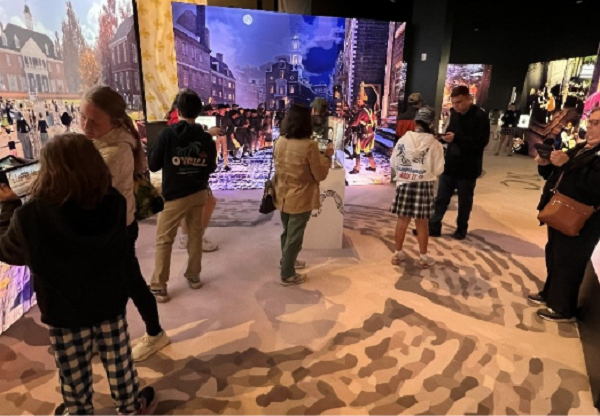
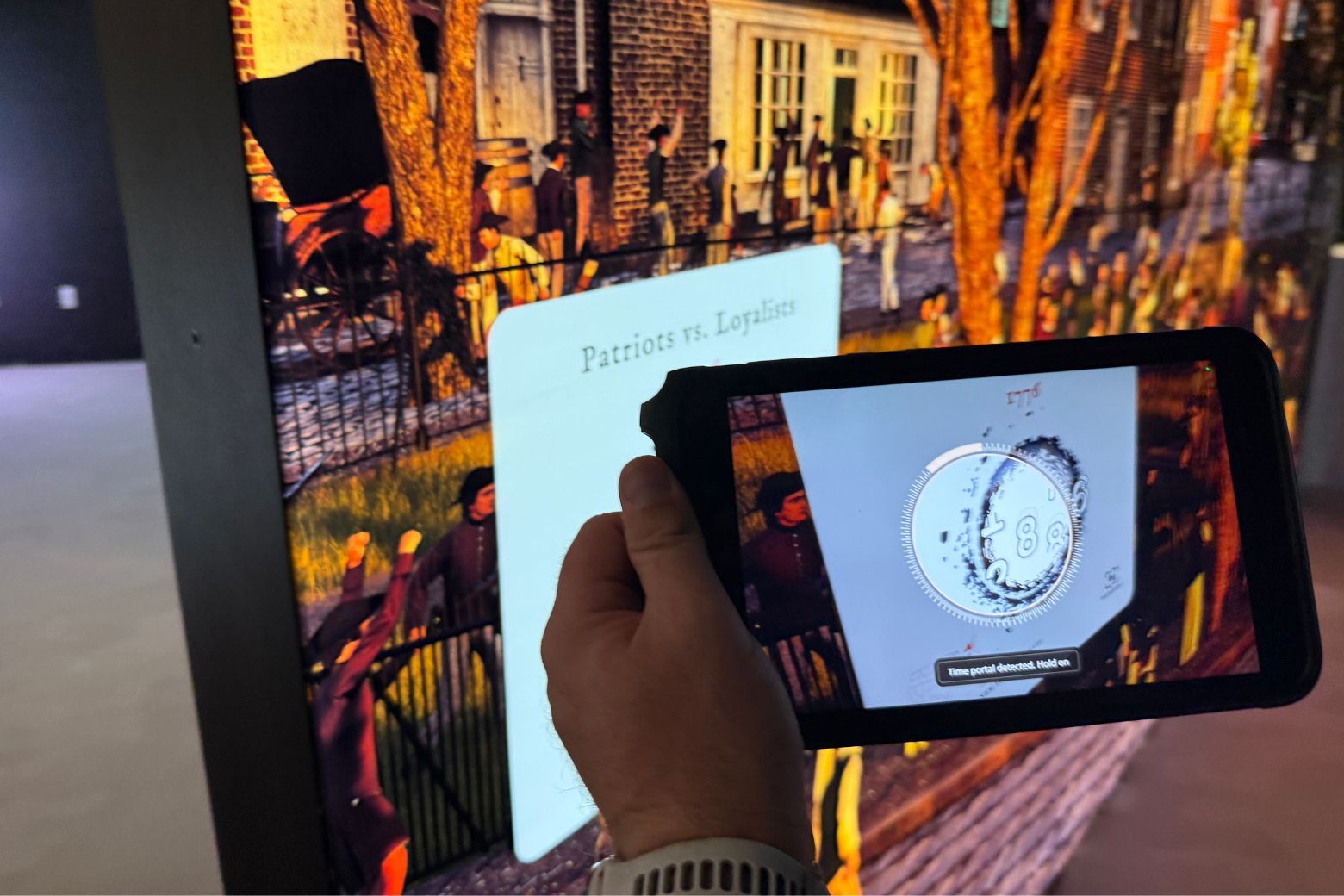
The exhibit uses cutting-edge augmented reality technology to transport visitors to pivotal scenes from the American Revolution, allowing them to stand at the front lines of history. According to WTOP News, the experience is designed to immerse visitors "into the American Revolution through augmented reality," making the conflict tangible in a way that static displays cannot achieve.
The Smithsonian National Museum of American History is also preparing for America 250 celebrations, with its exhibit "In Pursuit of Life, Liberty & Happiness" set to open on May 14, 2026.
30 Years of Battlefield Stewardship: Park Day 2026
On April 25, 2026, volunteers fanned out across more than 110 battlefields and military historic sites across the United States as part of the American Battlefield Trust's annual Park Day — an event now in its 30th consecutive year. The tradition of volunteer-led battlefield preservation continued at sites ranging from Revolutionary War grounds to Civil War landscapes.

Park Day reflects a broader commitment to battlefield archaeology and preservation. The American Battlefield Trust notes that where historians see "inexact written references to embattled landscapes, archaeologists see treasure troves of new historical information waiting to be discovered." Artifacts including buttons, cartridges, bayonets, and shrapnel continue to yield new historical insights below the surface of preserved battlegrounds.
Battle Analysis
The Battle of Trenton and the Lessons of Augmented Intelligence
The opening of the National Army Museum's new AR exhibition coincides with renewed scholarly and popular interest in Revolutionary War tactics — particularly the campaigns now being reinterpreted through new technology. The American Revolution was defined by an outnumbered Continental Army that consistently leveraged speed, deception, and knowledge of terrain against a larger, better-equipped British force.
Washington's famous crossing of the Delaware River on December 26, 1776, and the subsequent surprise attack on Hessian forces at Trenton remains one of history's clearest demonstrations of a core strategic principle: a well-timed offensive against a complacent enemy can reverse the fortunes of an entire campaign. The Hessians had dismissed the prospect of a winter attack in hazardous conditions — a failure of intelligence and situational awareness that Washington exploited decisively.
The new augmented reality exhibition at the National Museum of the United States Army attempts to place visitors directly inside the sensory and spatial reality of such engagements — a form of immersive understanding that traditional museum exhibits have struggled to achieve. By anchoring visitors in the actual terrain and movement of historical battles, the AR format turns passive observation into active spatial learning.
The approach reflects a broader trend in military education: that understanding why a battle unfolded as it did requires understanding the ground it was fought on, the weather, the sight lines, and the fog of war — not merely the outcome recorded in documents.
Strategy Lesson
"The Landscape Is a Critical Historical Resource"
One of the enduring lessons from military history, reaffirmed by the current generation of battlefield archaeologists and historians, is that the physical terrain of a battle carries as much strategic information as any written account. The American Battlefield Trust articulates this principle directly: "Just as we can learn about how a battle unfolded through topography, we can gain deeper knowledge from artifacts and features below the surface of the land."
This principle has deep roots in classical strategy. Commanders from Sun Tzu to Napoleon emphasized the primacy of terrain in determining tactical options. A force that understands the ground commands options; one that does not is perpetually reactive.
The practical application for modern strategic thinking is equally relevant: information about the operational environment — physical, human, electromagnetic — is not supplementary to strategy, it is foundational. The side that understands its environment most completely retains the initiative.
The AR exhibitions now entering military museums are, in a sense, applying this ancient lesson in reverse: by reconstructing lost environments in immersive detail, they allow new generations to understand not just what happened at Lexington, Yorktown, or the Delaware crossing, but how the ground shaped every decision made there. Military history ceases to be an abstraction and becomes a navigable space — which is precisely the kind of understanding that produces better strategists.
As volunteer stewards at Park Day 2026 demonstrated, preservation of these physical sites is not merely sentimental. It is a strategic investment in the living library of military knowledge that every generation of leaders must be able to read.
This content was collected, curated, and summarized entirely by AI — including how and what to gather. It may contain inaccuracies. Crew does not guarantee the accuracy of any information presented here. Always verify facts on your own before acting on them. Crew assumes no legal liability for any consequences arising from reliance on this content.
Powered by
