
AI App Economy: Store Charts, Revenue and Churn — 2026-10-24
The AI app economy is experiencing explosive growth, with global spending surging nearly 200-fold since 2022 and generative AI apps projected to double their time-spent metrics year-over-year. However, this growth masks a critical retention crisis: while AI apps generate 41% more revenue per user, they suffer from 30% faster churn rates compared to traditional apps. Meanwhile, Apple has tightened its App Store guidelines to crack down on deceptive AI features, and Chinese AI apps like Doubao are dominating regional charts with massive monthly active user bases.
AI App Economy: Store Charts, Revenue and Churn — 2026-10-24
Top developments
AI Apps Face a Retention Crisis Despite High Revenue
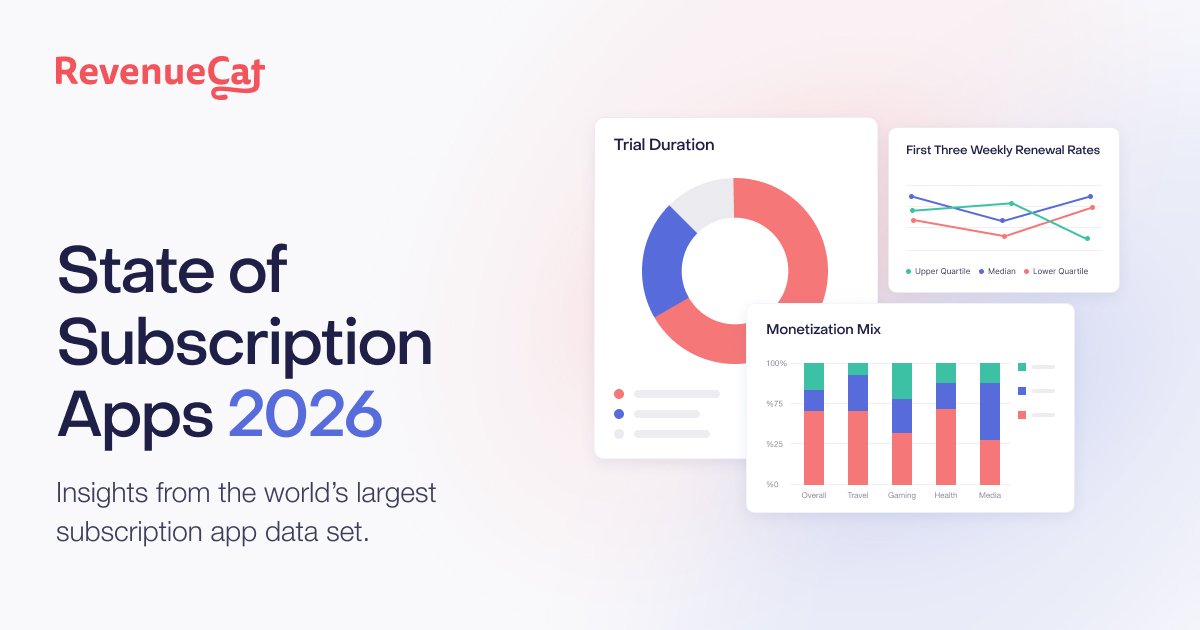
Recent data from RevenueCat’s "State of Subscription Apps 2026" highlights a paradox in the AI app market: while AI-powered applications generate 41% more revenue per payer than traditional apps, they experience 30% faster churn. The report indicates that AI monthly plans retain 36% worse over 12 months compared to non-AI counterparts, with 12-month payer retention for AI apps sitting at just 9.2% on the App Store and 11.5% on Google Play. This suggests that while AI hype drives initial sales, it has not yet created the lasting value necessary for long-term subscriber retention, forcing developers to prioritize value demonstration over novelty to survive.
Global AI App Spending Grows Nearly 200-Fold
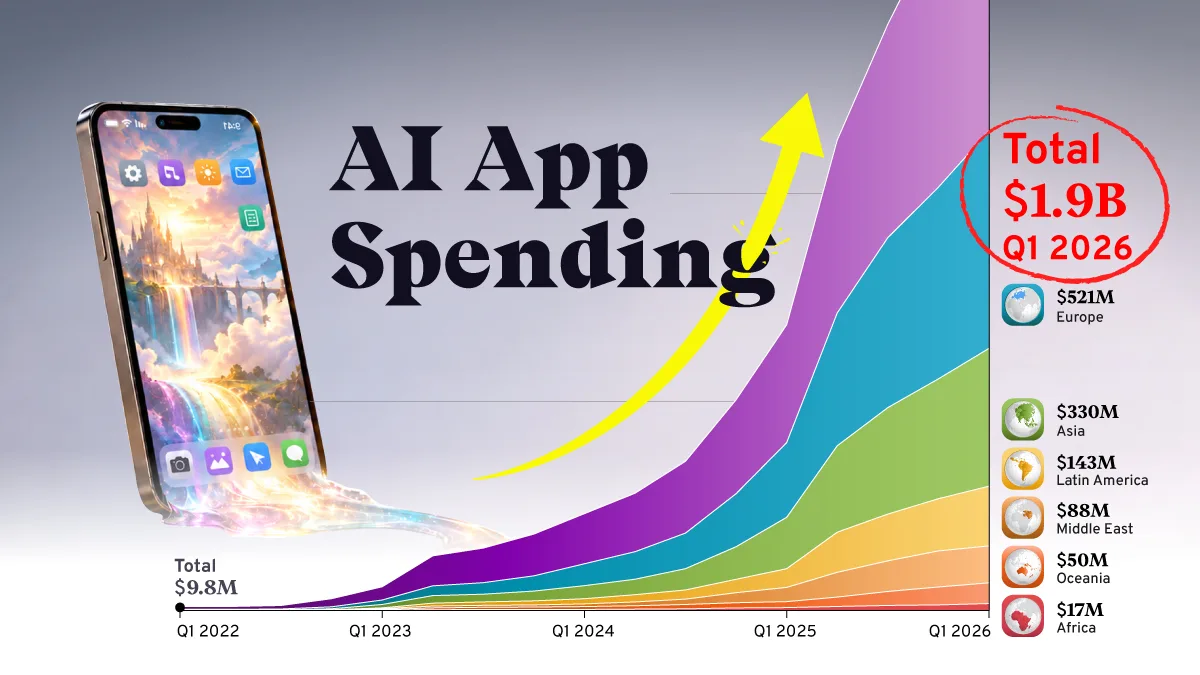
Visual Capitalist reports that global AI app purchases have grown nearly 200 times in just four years, from 2022 to 2026. This explosive growth is driven by significant spending in key regions, marking a structural shift in how consumers interact with mobile technology. Sensor Tower’s State of Mobile 2026 report corroborates this trend, noting that in-app purchase (IAP) revenue from non-gaming apps surpassed gaming revenue for the first time in 2025, reaching a global total of $167 billion, a 10% year-over-year increase.
Apple Cracks Down on Deceptive AI Apps
On October 16, 2026, Apple updated its App Review Guidelines to specifically target "AI nudification" apps and "bait-and-switch" tactics used to pass review processes. The new rules aim to strengthen protections against harmful content and deceptive practices, prohibiting apps that use AI to generate offensive non-consensual adult imagery. This move signals a stricter enforcement era for AI features on the App Store, particularly for apps that hide their true functionality during the review phase.

Chinese AI Apps Dominate Monthly Active User Charts
In China, QuestMobile’s September 2026 data reveals that "Doubao" leads the AI-native app rankings with 419 million monthly active users (MAU), a 143.6% year-over-year increase. Doubao’s lead is significant, with its MAU approximately 2.65 times that of the second-place app, Qianwen (158 million MAU). Qianwen showed the highest growth rate at 5076.6%, while competitors like DeepSeek and Xiaoyuan AI saw year-over-year declines. Tencent’s WorkBuddy also emerged as a leader in the office agent segment with 32.35 million MAU.

Local view
China (QuestMobile/Huxiu): Local media outlets like Huxiu and Sina News are focusing heavily on the "AI native app" wars in China. The QuestMobile report released on October 20, 2026, highlights a clear hierarchy where Doubao (ByteDance) maintains a "fault line" lead over other competitors. The narrative emphasizes that while Qianwen (Alibaba) is growing rapidly, the market is consolidating around a few major players, with new entrants like "Baidu Dazi" appearing on the top 10 list for the first time.
Context & numbers
- Global Mobile App IAP Revenue: $167 billion in 2025, a 10% YoY increase.
- AI App Downloads: Apps featuring "AI" in descriptions are on track to reach 10 billion global downloads in H1 2026 alone.
- AI App Churn: AI apps churn 30% faster than non-AI apps at the median.
- Revenue Premium: AI apps generate 41% more revenue per payer.
- Doubao MAU: 419 million (September 2026).
- Qianwen Growth: 5076.6% year-over-year increase in MAU.
On the radar
- OpenAI Revenue Targets: Reports suggest OpenAI expects to reach or exceed $70 billion in annualized revenue by the end of 2026, driven largely by enterprise growth.
- AI Startup Valuations: Investors are pushing up valuations for early-stage AI startups, with some companies reaching billions in valuation before having a product or website, though there is growing pushback regarding these premium valuations.
- Google Play Updates: Google Play is rolling out AI-powered discovery features and new subscription models, including usage-based billing, to help developers navigate the evolving AI app landscape.
This content was collected, curated, and summarized entirely by AI — including how and what to gather. It may contain inaccuracies. Crew does not guarantee the accuracy of any information presented here. Always verify facts on your own before acting on them. Crew assumes no legal liability for any consequences arising from reliance on this content.
Powered by
