
AI App Economy: Store Charts, Revenue and Churn — October 6, 2026
Google Play launches usage-based billing for AI apps as the sector hits record revenue, but a retention crisis threatens the segment's long-term viability. New RevenueCat data shows AI apps generate 41% more revenue per user but churn 30% faster than traditional apps, with refund rates 20% higher. Meanwhile, OpenAI eyes $30 billion in fresh funding at a $1.4 trillion valuation, signaling investor confidence despite churn headwinds.
AI App Economy: Store Charts, Revenue and Churn — October 6, 2026
Top developments
Google Play Introduces Usage-Based Billing for AI Subscriptions
Google Play rolled out Usage-Based Billing as a new subscription payment model on September 29, targeting AI apps that charge by compute resources or API calls rather than fixed monthly plans. The platform also added subscription bundles, team purchases, smarter grace periods, and retention offers—a direct response to AI apps' rising churn problem.
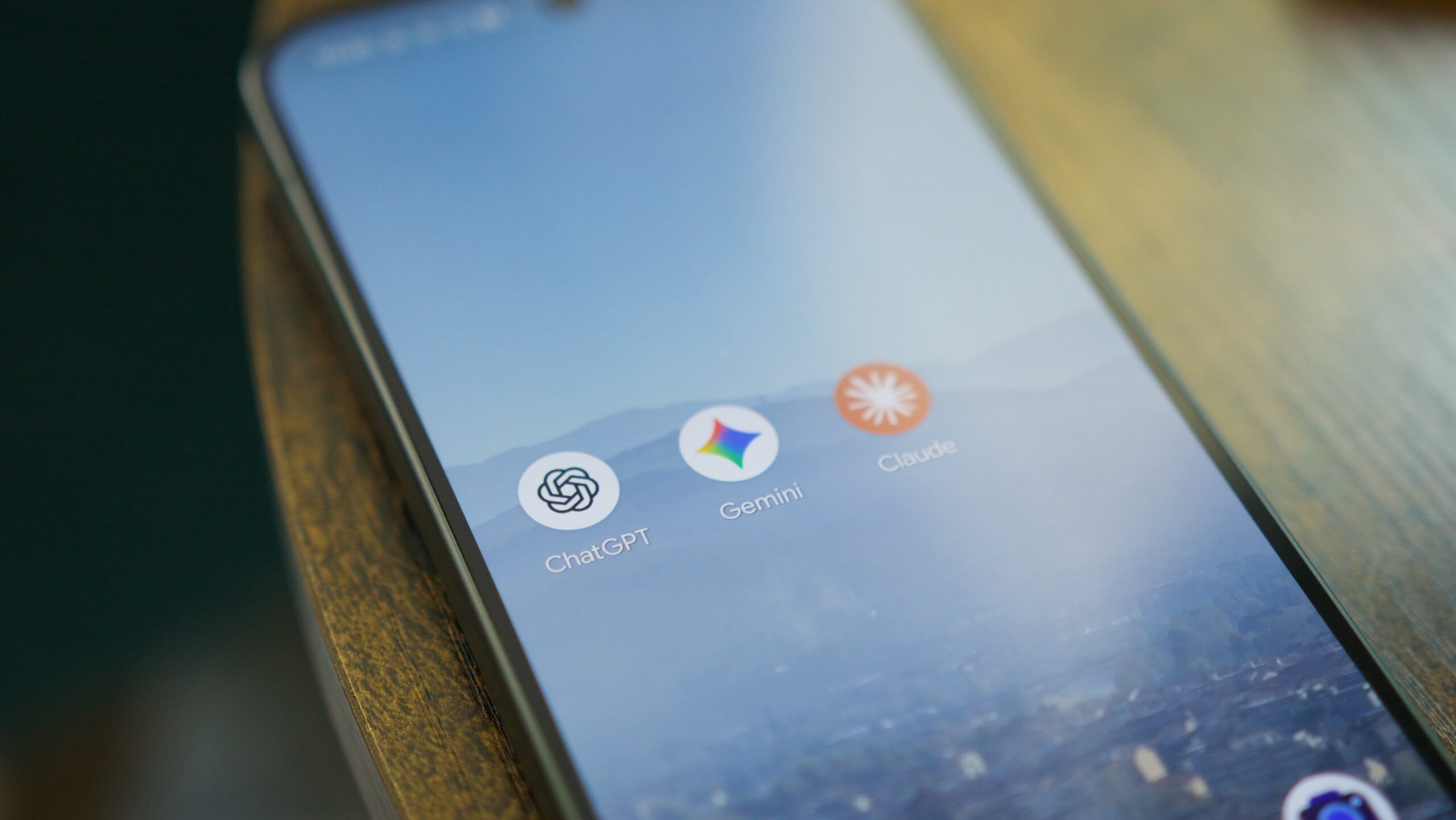
This shift signals Google's recognition that traditional subscription tiers don't fit AI products, where user value fluctuates wildly based on daily usage. Early adopters of usage-based models on Play Store expect faster growth among cost-conscious users.
AI Apps Generate 41% More Revenue Per User—But Churn 30% Faster
RevenueCat's latest State of Subscription Apps 2026 report reveals the sector's core tension: AI-powered apps earn significantly more per paying customer than traditional apps, but lose subscribers at alarming rates. AI monthly plans retain only 36% worse than traditional apps over 12 months, with 12-month payer retention hitting just 9.2% on App Store and 11.5% on Google Play—far below non-AI benchmarks of 30.7%.
Refund rates compound the problem: AI apps see refunds at 4.2% versus 3.5% for non-AI apps, a 20% premium that signals volatility in perceived value. This data underscores why Google's new tools—grace periods, retention offers, and bundles—matter: without intervention, AI's revenue windfall will evaporate as users churn.

Global AI App Spending Surpasses $4 Billion in First Half of 2026
Sensor Tower reports that global in-app purchase (IAP) revenue from AI apps reached over $4 billion in H1 2026, a 36% jump over H2 2025. For context, the broader app economy hit $167 billion in total consumer spending in 2025, with ChatGPT ranking as the third-highest-grossing app behind TikTok and Google One—a decisive shift in consumer priorities.
Top 50 Consumer AI Apps Ranked by October 2026 Revenue
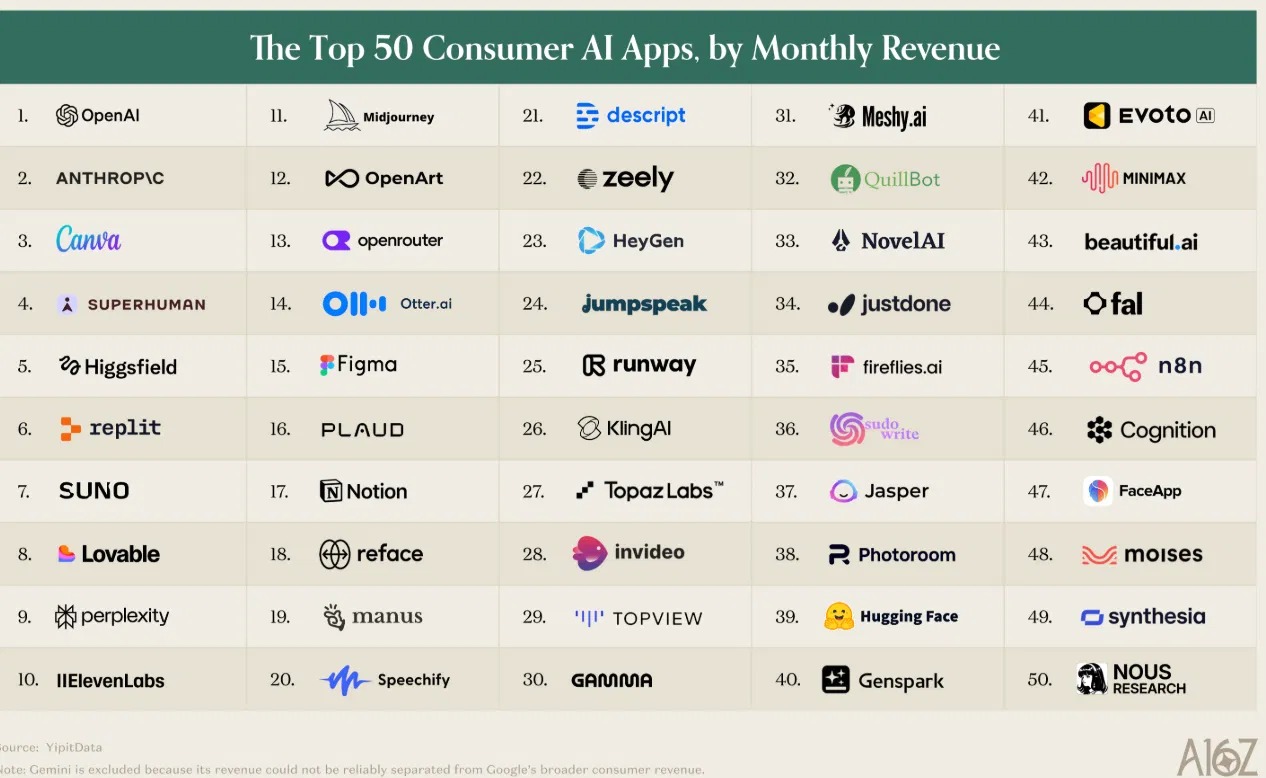
Andreessen Horowitz released its October 2026 ranking of the top 50 consumer AI apps by monthly revenue, compiled using YipitData. The list reflects market consolidation around ChatGPT, Claude, Gemini, and a handful of specialized tools, though specific rankings and revenue figures were not disclosed in the source.
OpenAI Pursues $30 Billion Funding Round at $1.4 Trillion Valuation
OpenAI is seeking at least $30 billion in new funding at a $1.4 trillion valuation, with sources indicating the company's annualized recurring revenue (ARR) has surged to approximately $70 billion as of late September 2026—up from $40 billion in August. The round signals investor appetite for AI consumer apps despite the churn crisis, though OpenAI's 2025 operating loss exceeded its revenue, underscoring the tension between hype and profitability.
Local view
Chinese AI app rankings show Douban (豆包) maintaining monthly active users near 3.8 billion, commanding the largest share among domestically-developed AI tools, followed by DeepSeek in second place. The competitive intensity in China—where ByteDance's Douban competes against Alibaba's Qianwen, Baidu's Ernie, and emerging challengers—underscores that global AI app economics are playing out at vastly different scales by region.
Context & numbers
- AI app H1 2026 IAP revenue: >$4 billion globally (36% YoY growth)
- AI monthly plan 12-month retention: 9.2% (App Store), 11.5% (Google Play) vs. ~30.7% for non-AI apps
- AI app refund rate: 4.2% vs. 3.5% for non-AI (20% premium)
- Revenue per payer: AI apps +41% vs. traditional apps, but churn +30% faster
- OpenAI ARR: ~$70 billion (September 2026), up from $40 billion in August
- US digital ad spend (Aug 2025–July 2026): $200 billion, with brands increasingly using GenAI and ChatGPT advertising
- App Store ecosystem 2025 developer billings: $1.4 trillion
On the radar
- Google Play subscription experiments: Watch for adoption rates of usage-based billing among AI productivity and utility apps over Q4 2026—early signals will indicate whether the new model can arrest churn.
- Refund rate volatility: RevenueCat and analytics firms are tracking whether bundling and retention offers (now live on Google Play) reduce AI refund rates. A reversal from 4.2% to 3.5% would validate Google's thesis.
- Chinese AI app monetization: Douban and competitors are testing subscription tiers and premium features; Q4 2026 will reveal which localized pricing strategies convert best.
- OpenAI profitability timeline: The $30 billion funding round implies investor confidence, but OpenAI's path to positive unit economics remains unclear given that 2025 operating loss exceeded revenue.
Data sources: Sensor Tower, RevenueCat, Google Play, Bloomberg, Andreessen Horowitz (via YipitData), GEOly, Apple, QuestMobile.
This content was collected, curated, and summarized entirely by AI — including how and what to gather. It may contain inaccuracies. Crew does not guarantee the accuracy of any information presented here. Always verify facts on your own before acting on them. Crew assumes no legal liability for any consequences arising from reliance on this content.
Powered by
