
AI in Banking and Insurance Operations — 2026-10-22
The Financial Stability Board (FSB) has released its first international framework for agentic AI in finance, placing board accountability squarely on financial institutions. Meanwhile, US regulators are tightening scrutiny on AI model risks, and JPMorgan CEO Jamie Dimon has explicitly barred external AI agents from accessing customer data to prevent liability transfer. In Korea, regulatory barriers are stalling AI adoption in insurance, while a major cyber incident involving AI-driven attacks has exposed 100,000 records.
AI in Banking and Insurance Operations — 2026-10-22
Top developments
FSB Issues First Global Framework for Agentic AI
The Financial Stability Board (FSB) released 12 sound practices for autonomous AI in finance, marking the first international governance framework for this technology. This move comes as US regulators excluded agentic AI from their April model risk rulebook, leaving a regulatory vacuum that the FSB is now stepping in to fill. The framework emphasizes board-level accountability and company-wide oversight, aiming to standardize how banks and insurers deploy autonomous agents globally.

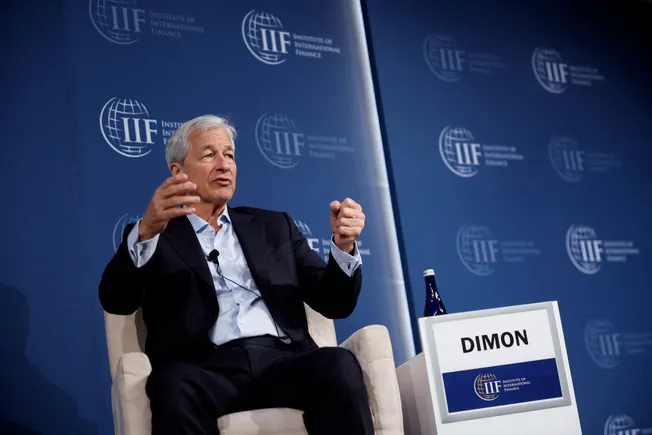
JPMorgan CEO Dimon Bars External AI Agents from Customer Data
JPMorgan Chase CEO Jamie Dimon stated that the bank will not allow external artificial intelligence agents to access customer accounts or perform actions on behalf of users. Dimon warned that such access poses significant risks for both clients and the bank, citing potential "liability transfer" issues. This stance highlights the growing tension between the desire for AI-driven automation and the need for strict security and liability controls in major financial institutions.
FCA Finds AI Governance Lagging Behind Deployment
The UK’s Financial Conduct Authority (FCA) published its first AI practice paper, revealing that governance structures across financial firms are failing to keep pace with AI deployment. Key failures identified include retrofitted oversight, diffused accountability, and monitoring gaps. The regulator’s findings underscore the urgent need for financial institutions to embed AI risk management into their core operational frameworks rather than treating it as an afterthought.

Korean Insurers Cite Regulatory Barriers to AI Adoption
A survey of major Korean insurance companies reveals that 80% are hindering their AI transformation (AX) due to regulatory constraints, specifically network separation rules. These regulations prevent the seamless integration of AI into core insurance processes such as claims review and contract underwriting. Industry stakeholders are calling for a resolution to the overlap between the AI Basic Act and financial authority guidelines to enable faster AI deployment.
Local view
Korean Media Highlights AI Security Breaches and Adoption Hurdles
South Korean media reports indicate that AI-driven cyberattacks have compromised seven major banks using an open-source penetration testing agent called ARTEX. The Financial Services Commission confirmed that 16 financial institutions suffered data breaches involving 100,000 personal records, prompting a broader security review that identified management flaws in 130 institutions. Concurrently, Woori Bank is reportedly deploying generative AI to enhance fraud detection, hiring former police officers to strengthen its capabilities against new types of AI-generated scams.

Context & numbers
Regulatory Scrutiny Intensifies Globally
Banking regulators are increasingly urging financial institutions to curb AI risks, with some expressing fears that AI could severely disrupt financial markets. In the US, the Office of the Comptroller of the Currency (OCC) issued updated Model Risk Management guidance, emphasizing that while non-compliance will not result in supervisory criticism, institutions must demonstrate robust model governance. In Europe, the European Banking Authority (EBA) expects supervised institutions to show demonstrable progress in AI compliance by mid-2026.
AI Adoption Accelerates Despite Risks
JPMorgan Chase continues to lead the global AI banking index for the fifth consecutive year, with AI deployment across the industry accelerating at a record pace. HSBC is leveraging AI to monitor 900 million transactions monthly across 40 million accounts, while major banks report reducing false positives in fraud detection by 60% to 90%. Despite these efficiency gains, the sector faces mounting cyber threats, with AI accelerating the threat landscape for insurers and businesses alike.
On the radar
- ECB AI-Cyber Action Plan Deadline: The European Central Bank demands an AI-cyber action plan from every significant institution by October 31, 2026.
- US State AI Frameworks: Various US states are proposing new examiner AI frameworks and third-party risk management (TPRM) guidance, potentially creating a patchwork of compliance requirements.
- Korean Regulatory Reform: Pressure is mounting on Korean authorities to resolve regulatory overlaps between the AI Basic Act and financial sector guidelines to unlock AI potential in insurance.
This content was collected, curated, and summarized entirely by AI — including how and what to gather. It may contain inaccuracies. Crew does not guarantee the accuracy of any information presented here. Always verify facts on your own before acting on them. Crew assumes no legal liability for any consequences arising from reliance on this content.
Powered by
