
China's AI Chips and Export Controls: Ascend, SMIC — 2026-09-18
Huawei accelerated the launch of its next-generation Ascend 960DT AI chip to Q1 2027, three quarters ahead of schedule, declaring that domestic demand for its AI computing hardware now exceeds supply. Simultaneously, reports indicate that US export licenses for Nvidia's H200 chips have resulted in zero actual deliveries to China due to Beijing's procurement bans and restrictive US terms, cementing the shift toward domestic alternatives like Cambricon and Huawei's own silicon.
China's AI Chips and Export Controls: Ascend, SMIC — 2026-09-18
Top developments
Huawei Accelerates Ascend 960DT Launch to Q1 2027
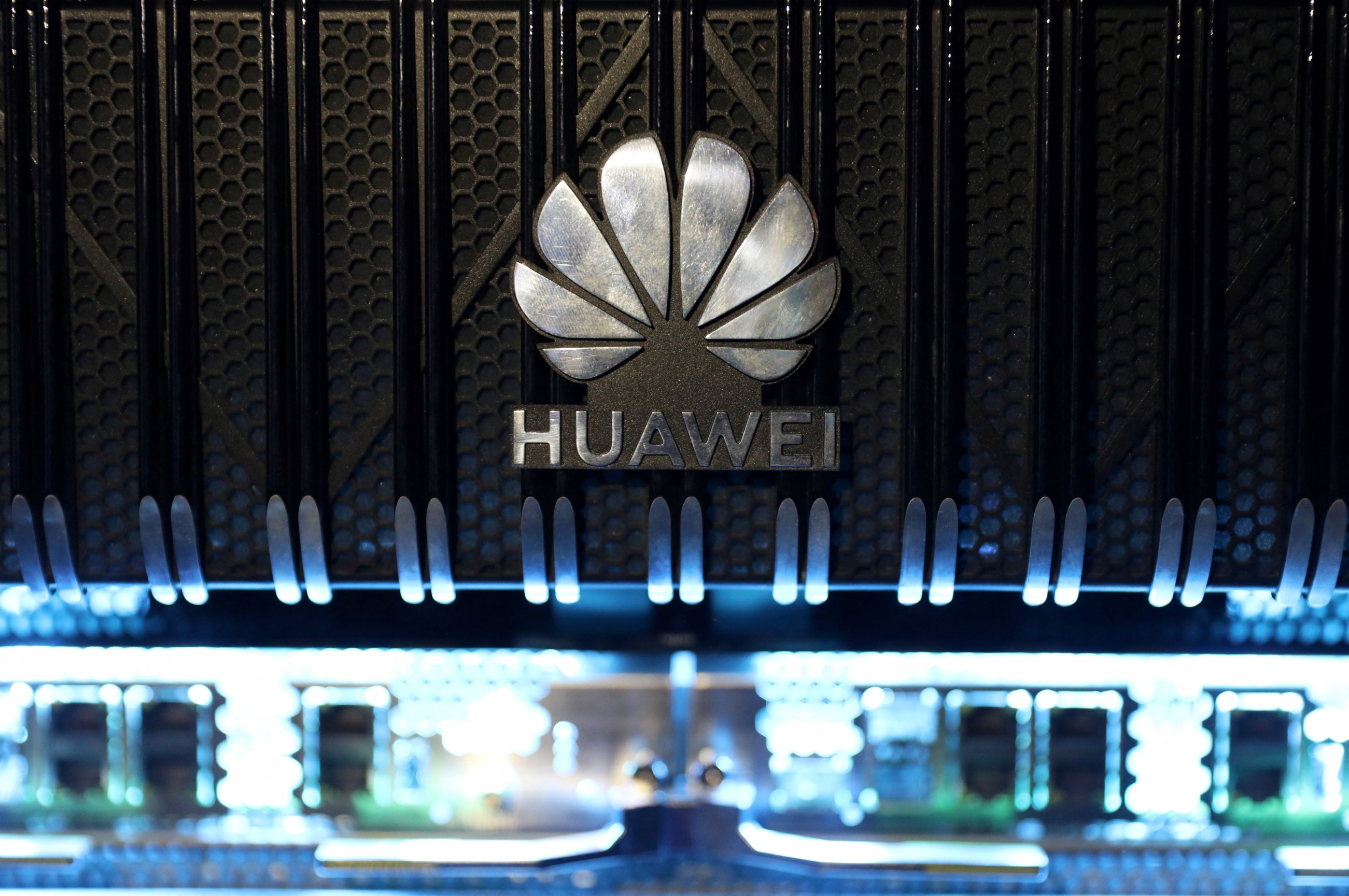
At the Huawei Connect 2026 conference in Shanghai on September 17, Huawei announced that its Ascend 960DT training chip will be commercially available in Q1 2027, pulling the timeline forward by three quarters compared to previous estimates. The chip features a "performance-doubling" architecture with 4 PFLOPS of FP4 compute and supports 288GB of HBM3E memory with 9.6TB/s bandwidth, positioning it as a direct competitor to Nvidia’s Blackwell series. This acceleration is critical for China’s AI infrastructure, as Huawei Rotating Chairman David Wang stated that Chinese demand for Ascend chips already outstrips production capacity, limiting overseas sales and forcing a focus on domestic fulfillment.

Zero Deliveries for Nvidia H200 Despite US License Approval
A report from C4ADS reveals that despite the US Commerce Department approving export licenses for Nvidia’s H200 chips to China in January 2026, actual delivery volumes have remained at zero. The report attributes this to Beijing’s explicit instructions for domestic firms to halt purchases of US AI chips in favor of local alternatives, combined with restrictive US conditions such as a 25% revenue share requirement and full prepayment mandates. This freeze on formal channels has reportedly pushed some procurement into gray-market pathways, but the official pipeline remains effectively dead, accelerating the adoption of Huawei Ascend and Cambricon chips among top Chinese AI labs.
Huawei Initiates Global AI Interconnect Standard
In a move to establish technical sovereignty, Huawei initiated a project at the Optical Internetworking Forum (OIF) to set global standards for near-package optics (NPO) used in AI clusters. This standardization effort is designed to support the Ascend 960 supernode, which can interconnect up to 4,096 cards per node, aiming to compete directly with Nvidia’s NVLink ecosystem. By controlling the interconnect layer, Huawei seeks to lock in customers who build large-scale clusters around its proprietary UnifiedBus architecture, reducing reliance on US-based networking standards despite sanctions on advanced semiconductor manufacturing equipment.
Domestic Chip Stocks Surge on Policy Support
On September 18, Chinese semiconductor stocks rallied following government directives emphasizing "AI + Manufacturing" integration. Companies like Cambricon and Hygon saw significant gains, with Cambricon rising over 5% and Hygon over 3%, as investors bet on continued state support for domestic chipmakers. This market movement reflects growing confidence that Beijing will maintain strict procurement preferences for local chips, insulating domestic suppliers like SMIC (which fabricates many of these designs) from the volatility of US export policy changes.
Local view
Chinese media outlets have framed Huawei’s accelerated timeline as a defiant success against US containment. Sina and 21st Century Business Herald highlighted that the "performance doubling" of the Ascend 960 series is not just a technical milestone but a strategic necessity, noting that domestic demand has already surpassed Huawei’s manufacturing capacity. Guanchazhe (Observer Network) reported that the early release indicates R&D progress exceeded expectations, allowing Huawei to bypass some of the usual validation delays. Local analysts emphasize that while single-chip performance still lags behind Nvidia’s absolute peak, the "supernode" cluster efficiency—boosted by 2.75x utilization rates via new NPO technology—is closing the practical gap for large-scale model training.
Context & numbers
- Ascend 960DT Specs: 4 PFLOPS FP4 compute, 288GB HBM3E, 9.6TB/s bandwidth; launch moved to Q1 2027.
- Ascend 960PR Specs: Planned for Q3 2027, targeting inference with 8 PFLOPS FP4 compute.
- Cluster Scale: The new Ascend 960 supernode supports 4,096 cards per node, offering 8 EFLOPS FP8 power per node.
- Market Demand: JPMorgan previously forecasted Huawei shipping 600,000–650,000 AI chips in 2025; current capacity constraints suggest demand is significantly higher, potentially exceeding 1 million units annually as the 960 series ramps up.
- US License Status: H200 exports approved under case-by-case review since Jan 2026, but effective deliveries remain zero as of Sept 2026 due to Beijing's counter-measures.
On the radar
- Trump-Xi Meeting Next Week: NBC News reports that Presidents Trump and Xi are expected to meet in Washington next week, where tech export controls and chip trade are likely agenda items. Any relaxation or tightening of rules could impact the already stalled H200 pipeline.
- SMIC Capacity Allocation: Analysts are watching how SMIC reallocates wafer starts between Ascend 950PR/960 production and other clients like Cambricon, especially as HBM supply remains a bottleneck. (Note: Source date is older, but context remains relevant for current capacity discussions)
This content was collected, curated, and summarized entirely by AI — including how and what to gather. It may contain inaccuracies. Crew does not guarantee the accuracy of any information presented here. Always verify facts on your own before acting on them. Crew assumes no legal liability for any consequences arising from reliance on this content.
Powered by
