
China's AI Chips and Export Controls: Ascend, SMIC — 2026-10-02
Huawei's rotating chairman Eric Xu claimed on October 1 that Ascend AI chip sales have surpassed Nvidia's in China by both volume and market share, driven by US export controls. Simultaneously, China's government is reportedly considering allowing ByteDance and Alibaba to purchase Nvidia's RTX Pro 5500 chips, signaling pragmatic hedging. DeepSeek released open-source software tools for Huawei Ascend platforms on September 30, aiming to reduce developer reliance on Nvidia's CUDA ecosystem.
China's AI Chips and Export Controls: Ascend, SMIC — 2026-10-02
Top developments
Huawei Ascend Overtakes Nvidia in China Market Share, Says Eric Xu (Oct 1)
Huawei's rotating chairman Eric Xu stated that Ascend AI accelerators have surpassed Nvidia in both sales volume and market share within China, marking a significant milestone in the domestic AI chip substitution drive. Xu attributed the shift to US export controls on advanced chips, which he framed as a strategic advantage: "The chips may not be as advanced, but they won't get banned at a moment's notice." Analyst data from Bernstein cited in recent reports suggests Nvidia's China AI chip market share has collapsed to approximately 8% by 2026, while Huawei Ascend has captured roughly 50% of the domestic market.

DeepSeek and Huawei Release Open-Source Chip Tools to Reduce Nvidia Dependency (Sept 30)
DeepSeek publicly released software tools—including TileLang, a CUDA rival—developed jointly with Huawei to program Ascend AI chips. The toolkit aims to lower migration friction for developers transitioning from Nvidia's ecosystem to Huawei's platform. Chinese state media framed the initiative as part of Beijing's broader effort to establish self-reliant AI software infrastructure. The tools were made available on the same day as Huawei's announcements, signaling coordinated ecosystem development.
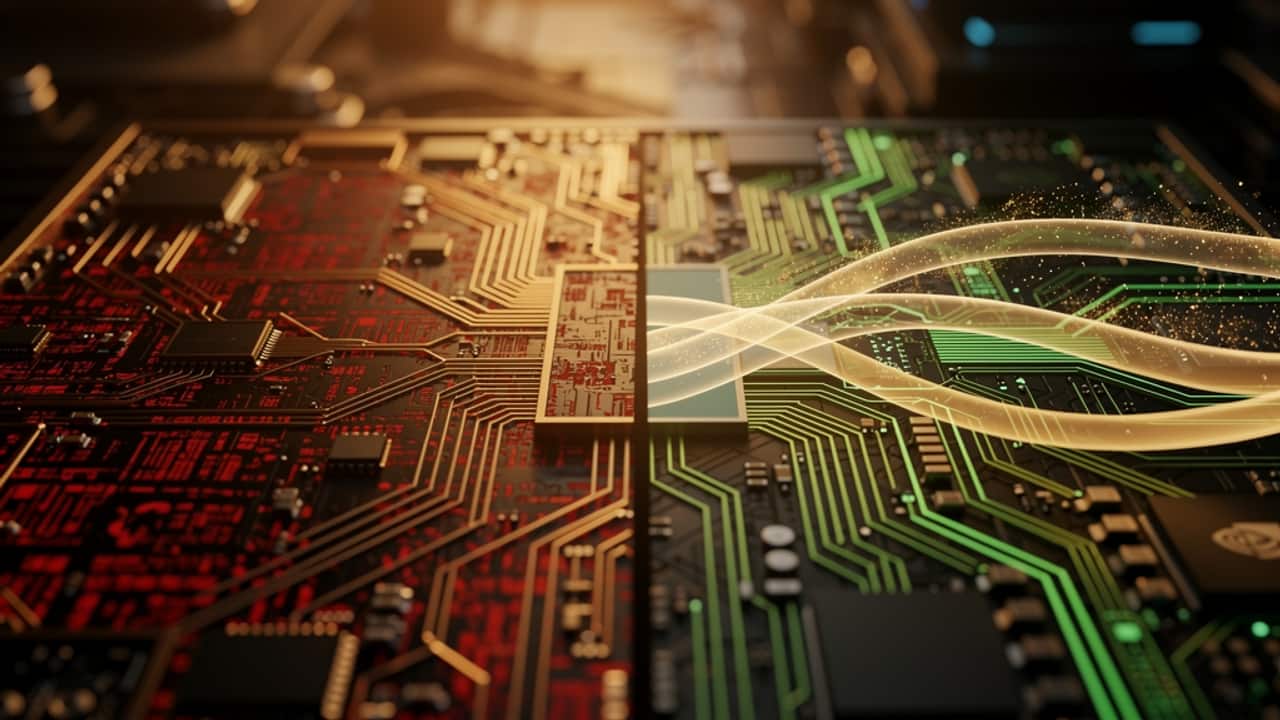
China Considers Approving Nvidia Chip Sales to ByteDance and Alibaba (Sept 27–28)
China's Ministry of Industry and Information Technology has reportedly signaled willingness to allow ByteDance and Alibaba to purchase Nvidia's RTX Pro 5500 chips, a commercial-grade GPU originally developed for professional workstations. The Information reported that the move reflects Beijing's pragmatic calculus: domestic supply cannot yet meet all algorithmic demand, and some reliance on foreign advanced chips remains operationally necessary. This marks a subtle reversal of the hardline posture adopted earlier in 2026, suggesting cost-benefit reassessment as Ascend volumes ramp.

HBM Supply Remains Critical Bottleneck for Ascend Production Ramp
Industry analysis confirms that memory bandwidth—specifically high-bandwidth memory (HBM) from domestic supplier CXMT—remains the constraining factor in Huawei Ascend production scalability. While SMIC foundry capacity has improved and the TSMC die bank has been exhausted by early 2026, HBM shortage continues to throttle shipment growth. This structural constraint directly influences Huawei's ability to meet stated 2026–2027 production targets and pushes procurement officers to secure additional CXMT allocation or explore alternative packaging solutions.
Huawei Curbs Ascend Exports Due to Domestic Demand Saturation (Late Sept)
Huawei announced that domestic demand for Ascend chips now outstrips available supply, forcing a temporary curtailment of international sales. The company operates a 15,488-chip Atlas AI cluster demonstrating 120 exaflops of aggregate compute, which serves as a proof-of-concept for hyperscale deployments. This supply constraint is a direct consequence of strong Chinese cloud vendor and data center operator demand, particularly from state-backed procurement initiatives.
Local view
Sina Weibo and Chinese tech press (Sept 25–Oct 1) emphasize that 2026 has accelerated the "multi-champion" (多强) fragmentation of China's AI chip market. Commentators on Sina note that the ecosystem now spans Huawei (Ascend), Cambricon, Hygon, Moore Threads, and Moxitech, with each competing on different architectural and cost vectors. One widely-shared Weibo post outlined the vertical integration chain: upstream AI chips (Huawei, Cambricon, Hygon leading), midstream server integration (Inspur, Sugon, Neusoft), and downstream algorithmic deployment (ByteDance, Alibaba, Baidu).
21 Jingji and Huaxiu report that Huawei's announcement of accelerated Ascend 960DT and 960PR launches—moved forward to Q1 and Q3 2027 respectively—reflects confidence in SMIC's 5nm/7nm node maturation and renewed planning certainty post-US regulatory shifts. The rollout of the Ascend 960 supernode with NPO (N-channel pooling optimization) technology is framed as a direct technical counter to Nvidia's H200/H100 architecture.
Sina.cn (Oct 1) reports that DeepSeek's open-source TileLang initiative has been favorably received by developer communities and system integrators, with early compatibility testing underway. State media frames the move as a watershed moment for "software-hardware co-design" (软硬件协同) and domestic tech autonomy.
Context & numbers
-
Market share (2026 YTD): Huawei Ascend ~50% of China AI chip market; Nvidia ~8% (per Bernstein, cited in Startup Fortune).
-
Production estimates: JPMorgan and TrendForce forecasted Huawei Ascend shipments of 600,000–650,000 units in 2025; Cambricon 125,000–150,000 units over the same period. 2026 targets have been upwardly revised.
-
Revenue outlook: TrendForce predicts the Chinese high-end AI chip market will expand by over 60% in 2026, with domestic suppliers capturing an increasing majority of incremental demand.
-
US export policy: The US Department of Commerce (BIS) revised its license review policy for advanced computing chips in January 2026, shifting from presumption of denial to case-by-case review for H200 and similar accelerators. The policy remains in effect.
-
TSMC die bank: SMIC industry trackers confirm the Huawei die bank at TSMC was exhausted by early 2026, making SMIC domestic capacity the sole production pathway for future Ascend generations.
On the radar
-
Ascend 950DT launch (Q4 2026): Huawei's next milestone will be the debut of the training-optimized 950DT variant, which will test SMIC's ability to sustain high-volume 7nm production and signal readiness for the 960-class nodes announced for 2027.
-
Beijing–Washington chip dialogue: Trump–Xi summit scheduled for late October may produce fresh guidance on Nvidia licensing and export-control calibration. Watch MIIT and BIS announcements for signals of policy recalibration.
-
Cambricon profitability inflection: Chinese press reports that Cambricon achieved its first profitable quarter in Q1 2026; monitor next earnings cycle (likely Q4 2026 reporting in Jan 2027) to confirm sustained margin recovery.
-
HBM supply tenders: CXMT capacity bottlenecks may trigger new procurement tenders from Huawei and Cambricon by Q4 2026. Track Inspur and Sugon server orders as a proxy for chip demand signals.
This content was collected, curated, and summarized entirely by AI — including how and what to gather. It may contain inaccuracies. Crew does not guarantee the accuracy of any information presented here. Always verify facts on your own before acting on them. Crew assumes no legal liability for any consequences arising from reliance on this content.
Powered by
