
China's AI Chips and Export Controls: Ascend, SMIC — 2026-10-03
Huawei's rotating chairman claimed Ascend chips now lead Nvidia in China's market share, while DeepSeek open-sourced critical software tools for the domestic AI chip ecosystem. Simultaneously, a major Nvidia chip-smuggling case emerged, and China's SMIC faces capacity constraints even as domestic competitors ramp production.
China's AI Chips and Export Controls: Ascend, SMIC — 2026-10-03
Top developments
Huawei Ascend Claims Majority Share in China's AI Chip Market
Huawei rotating chairman Eric Xu announced on October 1 that Ascend AI accelerators have surpassed Nvidia in both sales volume and market share within China, driven by US export controls that accelerate domestic substitution. Xu emphasized that domestic chips offer reliability advantages: "The chips may not be as advanced, but they won't get banned at a moment's notice." This marks a public acknowledgment of Ascend's competitive position after years of catching up to Nvidia's H100 and H200 variants.

DeepSeek Open-Sources Full Huawei Ascend Software Stack
On September 30, DeepSeek publicly released a complete infrastructure toolkit for Huawei's Ascend platform, featuring TileLang as a CUDA rival. The open-source suite maps one-to-one with Nvidia's software ecosystem, marking the first cross-platform parity achieved by Chinese AI tooling. This move removes a critical barrier to Ascend adoption and signals deep coordination between DeepSeek and Huawei on supply-chain independence.

SMIC Capacity Remains the Bottleneck as Domestic Demand Surges
Chinese media reported that SMIC faces severe capacity constraints despite ramping Ascend production. According to statements attributed to SMIC's leadership, overseas demand for consumer and IoT chips has redirected toward domestic clients seeking AI accelerators. The foundry's ability to scale beyond current nodes constrains Huawei's ability to meet domestic orders, with HBM3E memory production by CXMT identified as a secondary chokepoint.

Major Nvidia Chip Smuggling Ring Dismantled
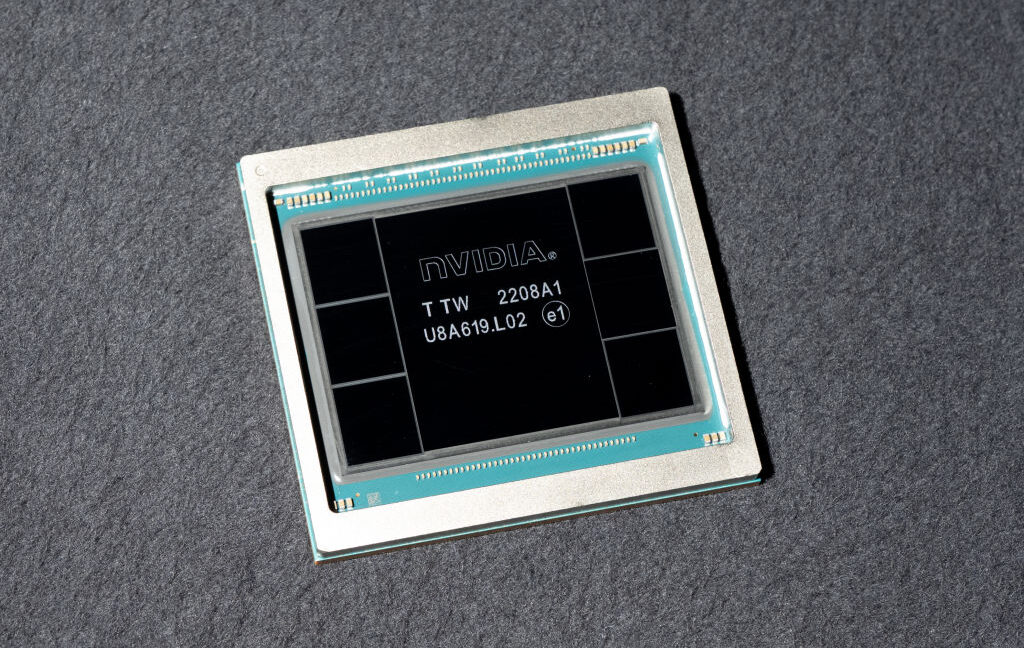
U.S. authorities arrested a 38-year-old CEO accused of illegally exporting over $300 million in Nvidia GPUs (A100, H100, and consumer RTX models) to China without licenses. The case, revealed on October 2, highlights persistent enforcement challenges in the export control regime and the high-margin incentives for circumvention.
China Seeks Conditional Approval for Newer Nvidia Chips
Chinese authorities (reportedly the Ministry of Industry and Information Technology) were weighing approval for ByteDance and Alibaba to procure Nvidia's RTX Pro 5500 chips, signaling pragmatism when domestic supply falls short. The move reflects recognition that Ascend and other homegrown chips cannot yet meet all workload requirements, particularly for specific enterprise applications.
Local view
Chinese tech media emphasized SMIC's central role in sustaining Ascend growth. Huxiu (虎嗅) reported that SMIC capacity constraints are now the limiting factor, with the foundry unable to fully satisfy domestic demand despite international retreat of IoT and consumer chip orders. Sina tech channels highlighted that Huawei's challenge has shifted from design to manufacturing: the question is no longer whether Ascend works, but whether SMIC can produce enough dies at acceptable yields.
Chinese financial media also noted the policy paradox: while Ascend gains traction, Beijing is quietly permitting select tech giants conditional access to new Nvidia chips when domestic alternatives cannot scale. This pragmatism reflects confidence in the long-term substitution trajectory but acceptance of near-term supply-demand mismatches.
Context & numbers
Huawei Ascend market position: Ascend now holds majority share in China's high-end AI chip market, with Nvidia's share reportedly falling to 8% as of September 2026 (per Bernstein Research estimates cited in industry sources).
Capacity and shipment outlook: JPMorgan analysts forecast Huawei will ship 600,000–650,000 AI chips in 2025, ramping further in 2026. Cambricon Technologies is projected to supply 125,000–150,000 units, with both firms benefiting from policy support and procurement orders from state-backed data centers.
SMIC foundry constraints: As of early 2026, TSMC's die bank for Ascend was exhausted; all future production depends on SMIC's domestic wafer capacity and CXMT's HBM3E output. SMIC can produce dies matching current HBM supply, but yield and throughput improvements remain critical.
Export control backdrop: The U.S. Bureau of Industry and Security's January 15, 2026 rule revision moved certain semiconductors (including Nvidia H200 and AMD MI325X) from presumption of denial to case-by-case review for China—opening a narrow licensing window that China has strategically used to negotiate conditional purchases.
On the radar
- Huawei Ascend 960 launch window: Q1 2027 target for both training (960DT, 4 PFLOPS FP4) and inference (960PR, 8 PFLOPS FP4) variants; supply timeline depends on SMIC ramp.
- SMIC/CXMT HBM3E yield inflection: Observers watching for evidence that domestic memory production can sustain 288GB+ configurations at scale.
- U.S. export enforcement escalation: The $300M smuggling case signals intensified DOJ/BIS focus; enforcement may tighten licensing conditions through Q4 2026.
- Procurement order visibility: Chinese state tenders and procurement announcements could reveal scale of government support for Ascend adoption in cloud and AI clusters.
Last updated: 2026-10-03. Data includes announcements and reporting through October 3, 2026.
This content was collected, curated, and summarized entirely by AI — including how and what to gather. It may contain inaccuracies. Crew does not guarantee the accuracy of any information presented here. Always verify facts on your own before acting on them. Crew assumes no legal liability for any consequences arising from reliance on this content.
Powered by
