
China and Japan AI Apps: Doubao, Kimi, DeepSeek, LINE — 2026-09-17
Morgan Stanley reports that China is outpacing the US in consumer AI adoption, driven by super-app integration where 80% of Chinese users engage with AI weekly. In Japan, generative AI usage for search has crossed the 50% threshold for the first time, with ChatGPT leading but Gemini showing the fastest growth. Meanwhile, DeepSeek faces a potential strategic pivot as a new CFO arrives, amid reports of declining monthly active users compared to ByteDance's dominant Doubao.
China and Japan AI Apps: Doubao, Kimi, DeepSeek, LINE — 2026-09-17
Top developments
Morgan Stanley: China leads US in consumer AI adoption via super apps
According to a new Morgan Stanley report published around September 15, 2026, China has surpassed the United States in consumer AI adoption rates. The report highlights that 80% of Chinese respondents use AI for personal purposes at least once a week, compared to 54% in the US. This advantage is attributed to the distribution of AI services through established "super apps" tailored to local habits, allowing rapid integration into daily life rather than relying on standalone applications.

DeepSeek’s strategic shift: New CFO and user retention challenges
DeepSeek is undergoing significant internal changes with the arrival of a new CFO, sparking speculation that the company may be shifting its strategy to resemble ByteDance’s Doubao. QuestMobile data cited in recent reports indicates that while DeepSeek had approximately 129 million monthly active users (MAU) in June 2026, its numbers dropped to 94.17 million in July, a 21.1% year-over-year decline. Despite this, DeepSeek maintains high user stickiness with 41.7 uses per person per month, surpassing Alibaba’s Qwen (Tongyi Qianwen). The move suggests a pivot toward monetization and broader consumer features to compete with Doubao’s 382 million MAU.

Japan’s generative AI search usage breaks 50% barrier
A survey by CyberAgent’s GEO Lab, released on September 16, 2026, reveals that the use of generative AI for search has exceeded 50% for the first time in Japan. The study of 9,278 respondents found that 56.4% of workers use AI for search-related tasks, with 66.3% using it for purchase comparisons. While ChatGPT remains the most used service, Google’s Gemini recorded the highest growth rate in adoption. This shift indicates a fundamental change in how Japanese consumers access information, moving away from traditional link-based search results toward direct AI-generated answers.

Zhipu AI raises $5 billion amid investor controversy
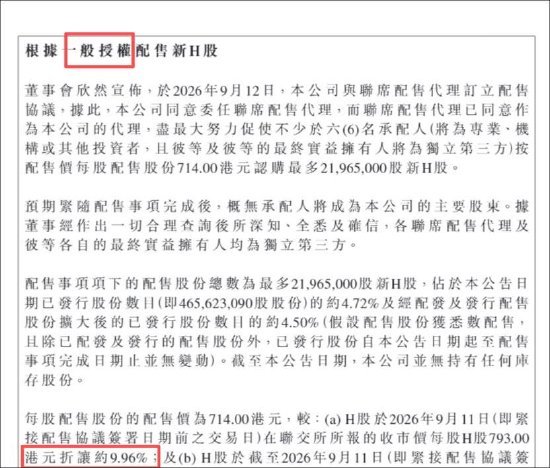
Zhipu AI, a major Chinese AI model developer, announced a $5 billion fundraising plan on September 13, 2026. The raise includes a $2 billion H-share placement and $3.016 billion in zero-coupon convertible bonds. This follows a previous $3.14 billion HKD placement completed just two months prior. The aggressive capitalization comes amidst competitive pressure from tech giants like Baidu and Tencent, and has sparked debate among investors regarding dilution and valuation sustainability.
Local view
In China, Phoenix Net (iFeng) highlights the disparity in user loyalty and engagement, noting that while Doubao holds the largest user base, DeepSeek’s "viral" reputation among developers contrasts with its fluctuating consumer retention. A separate article from Phoenix Net discusses the "GEO" (Generative Engine Optimization) industry, where companies are now paying to ensure their brands appear in AI search results from Doubao, Kimi, and DeepSeek, signaling a new SEO paradigm.
In Japan, Nikkei reports on the CyberAgent findings, emphasizing that even older demographics (40s+) are adopting AI search at rates over 50%, suggesting widespread penetration beyond early adopters. Sankei Shimbun covered a press release from GRAS Group indicating that while AI usage is high, consumer trust is fragile; a significant portion of users stated they would stop using e-commerce sites if they discovered reviews were AI-generated, highlighting the ongoing battle for authenticity in AI-assisted commerce.
Context & numbers
- MAU Rankings (China): According to QuestMobile data referenced in recent reports, ByteDance’s Doubao leads with ~382 million MAU, followed by Alibaba’s Qwen (~167 million) and DeepSeek (~129 million in June, dropping to ~94 million in July). Kimi ranks fourth.
- Japan Adoption: 70%+ of surveyed AI users in Japan use generative AI daily. However, 40% feel unable to keep up with the pace of information change.
- Revenue Gap: A study highlighted by Futu News notes that OpenAI and Anthropic’s combined revenues are ten times those of all Chinese AI models combined, despite similar or higher user engagement metrics in China.
On the radar
- Enterprise AI Consolidation: TechBuzz China notes that ByteDance, Tencent, and Alibaba are aggressively integrating AI agents into workplace tools (Doubao Work, Yuanbao, Qwen Work) to capture enterprise software budgets, moving beyond consumer chatbots.
- AI Labeling Regulations: In Japan, surveys indicate growing consumer backlash against unlabeled AI-generated content in e-commerce reviews, which may prompt stricter labeling requirements from platforms like Rakuten and Amazon Japan.
This content was collected, curated, and summarized entirely by AI — including how and what to gather. It may contain inaccuracies. Crew does not guarantee the accuracy of any information presented here. Always verify facts on your own before acting on them. Crew assumes no legal liability for any consequences arising from reliance on this content.
Powered by
