
Companion Chat: Character.AI, Replika, Talkie, Zeta — 2026-09-08
South Korean media reports a surge in "relationship AI" usage among teens, with users spending over two hours daily on apps like Zeta and Crack, while highlighting the lack of effective age verification. In Japan, regulators and press are scrutinizing China's new ban on AI companions for minors and its impact on global app strategies. Meanwhile, the US FTC continues its 6(b) inquiry into seven major firms, including Character Technologies and xAI, as state-level age-gating laws expand.
Companion Chat: Character.AI, Replika, Talkie, Zeta — 2026-09-08
Top developments
South Korea: "Relationship AI" Usage Surges Among Teens
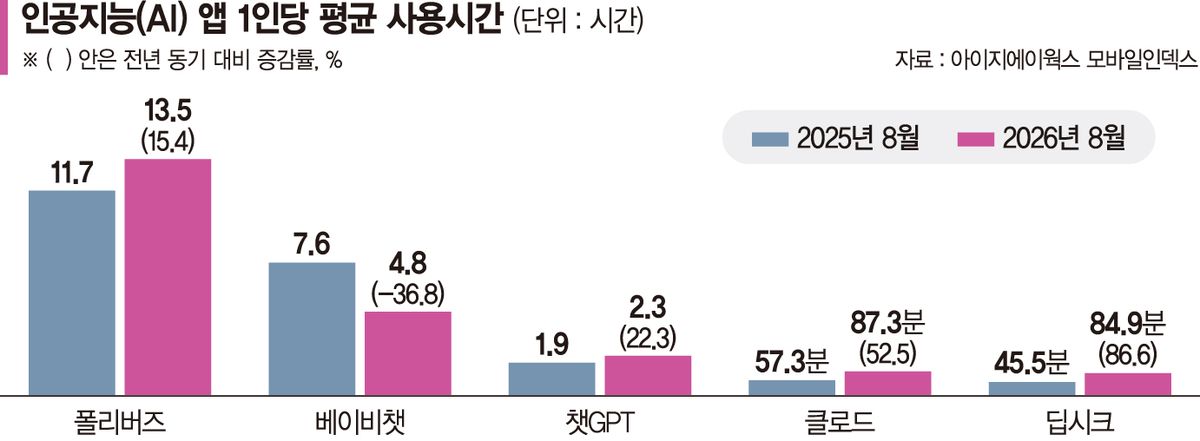
Financial News (Korea) reported on September 7 that "relationship AI" apps, where users converse with AI as friends or lovers, are rapidly spreading among the 10-20 age demographic. While general-purpose AI like ChatGPT has more total users, specific relationship-focused apps show higher per-user engagement time, with some teens spending over two hours daily interacting with characters. This trend highlights the deepening emotional dependency of younger users on AI companions, raising urgent questions for local regulators about addiction and mental health safeguards.
Japan: Scrutiny of China's AI Companion Ban
Asahi Shimbun (Japan) published an article on September 4 discussing the sudden disappearance of AI "lovers" in China following new regulations that restrict human-like AI interactions to prevent excessive dependence. The report notes that Chinese authorities have imposed strict monitoring for "extreme emotions or addiction," requiring platforms to intervene when such indicators appear. This regulatory shift is being watched closely by Japanese stakeholders as a potential blueprint for domestic policy.

US: FTC Inquiry Continues into Seven Major Firms
While no new enforcement actions were announced this week, the Federal Trade Commission's (FTC) 6(b) inquiry into seven major AI companies—Alphabet, Character Technologies, Meta, OpenAI, Snap, Instagram, and xAI—remains the primary regulatory pressure point. The inquiry, opened in September 2025, demands data on safety, monetization, child impact, and COPPA compliance. This ongoing scrutiny underpins recent state-level legislative moves requiring strict age verification for companion apps.
Local view
South Korea: Aju News reported on September 8 that while youth AI chatbot usage is growing rapidly in Korea, there is a critical "regulatory blind spot." Unlike the US, which has seen lawsuits and state bans, or China, which has implemented explicit prohibitions on virtual intimate relationships for minors, Korea currently lacks specific laws directly regulating long-duration emotional dependence on AI. The article contrasts the Korean silence with active regulatory frameworks abroad, urging local lawmakers to address the gap.
China: Beijing Daily (Jingbao Wang) highlighted that since the July 15 implementation of the "Interim Measures for the Administration of Artificial Intelligence Anthropomorphic Interaction Services," multiple platforms have tightened minor usage permissions. The measures explicitly prohibit platforms from providing virtual intimate relationship services to minors. Recent tests by the outlet show that while many platforms have upgraded their minor modes, some still allow borderline interactions, indicating ongoing compliance challenges.
Context & numbers
- Revenue Run-Rate: AI companion apps were on track to pull in $120 million in revenue in 2025, with 128 of the 337 active revenue-generating apps released that year alone.
- Market Concentration: The top 10% of companion apps capture 89% of total revenue, indicating a winner-take-most market dynamic. Only 33 apps have crossed the $1 million lifetime spending threshold.
- Regulatory Landscape: As of mid-2026, a dozen US states have followed California's SB 243 lead in enacting age-verification laws for companion AI, ending the "we didn't know they were a minor" defense for platforms.
On the radar
- Korean Regulatory Pressure: Following the recent media focus on Zeta and Crack apps exposing minors to adult content despite age gates, Korean regulators may face increased calls for mandatory age verification protocols similar to those in the US and China.
- FTC Findings: The results of the FTC's 6(b) inquiry into the seven major firms are pending; any release of findings could trigger immediate compliance changes or further legislative action in the US.
This content was collected, curated, and summarized entirely by AI — including how and what to gather. It may contain inaccuracies. Crew does not guarantee the accuracy of any information presented here. Always verify facts on your own before acting on them. Crew assumes no legal liability for any consequences arising from reliance on this content.
Powered by
