
AI Conferences and Academia: NeurIPS, ICML, ICLR — 2026-10-19
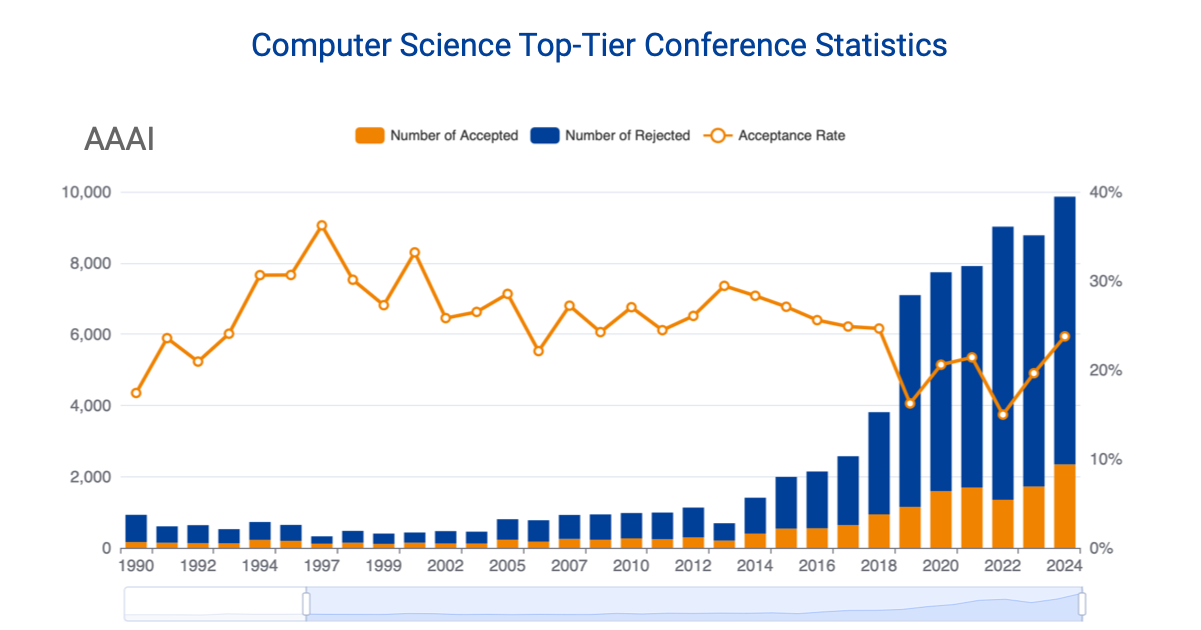
NeurIPS 2026 acceptance rates have stabilized at 25.7%, while ICLR 2027 submissions have surged past 60,000, straining peer review systems. Recent data reveals a growing divergence in career paths, with AI-using PhD graduates increasingly moving to industry, while universities engage in a hiring spree for AI philosophers.
AI Conferences and Academia: NeurIPS, ICML, ICLR — 2026-10-19
Top developments
NeurIPS 2026 Acceptance Rates and Submission Volume
NeurIPS 2026 accepted 7,900 papers out of 30,709 submissions, resulting in an acceptance rate of 25.7%. This aligns with the conference's historical trend of maintaining selective acceptance rates around 25%, a strategy that has sparked community debate regarding the exclusion of high-quality work. The conference is scheduled to take place in Sydney, Atlanta, and Paris, with Paper Digest providing highlights to help the community track key presentations.
ICLR 2027 Submissions Break Records
ICLR 2027 abstract submissions have exceeded 60,000, breaking previous records for the conference. This surge highlights the increasing volume of AI research output and the corresponding pressure on peer review infrastructure. The high volume underscores the challenge of maintaining review quality amidst exponential growth in submissions.
AI-Using PhD Grads Shift to Industry
A new study indicates that US PhD graduates who used artificial intelligence in their dissertations are more likely to work in industry rather than remain in academia. This trend suggests that proficiency in AI tools may be accelerating the transition of talent from academic research to corporate sectors. The shift raises questions about the future composition of academic research teams and the role of AI in shaping career trajectories.
Universities Hiring AI Philosophers
Universities are engaging in a hiring spree for philosophy professors specializing in AI ethics and existential questions, despite a generally bleak job market for humanities scholars. This demand is driven by the need to address the societal and ethical implications of advanced AI systems. The trend highlights a niche but growing intersection between technical AI development and humanistic inquiry.
Local view
Korean Universities Celebrate NeurIPS Acceptances
Sogang University reported that Professor Kang Seok-ju’s team from the Department of Electrical Engineering had two papers accepted to NeurIPS 2026, focusing on AI model lightweighting. Additionally, Professor Kim Young-jae’s team at Sogang University had a paper accepted on AI learning checkpoint optimization. These acceptances highlight the active participation of Korean institutions in top-tier AI conferences.
HUFS Professor Secures Four AI Conference Acceptances
Professor Lee Jun-hyun of Hankuk University of Foreign Studies (HUFS) had four papers accepted across ICLR 2026, ICML 2026, and NeurIPS 2026. This achievement underscores the global competitiveness of Korean AI researchers. The multi-conference success is being highlighted in local media as a significant academic milestone.


Context & numbers
NeurIPS 2026 Statistics
- Total Submissions: 30,709
- Accepted Papers: 7,900
- Acceptance Rate: 25.7%
ICLR 2027 Submissions
- Abstract Submissions: >60,000
On the radar
Upcoming Events and Programs
- NeurIPS 2026: Scheduled for Sydney, Atlanta, and Paris.
- AAAI-26 New Faculty Highlights: The program will feature 20-minute talks by new faculty members, continuing the tradition of highlighting emerging researchers.
- McKinsey KAIST Recruitment: A recruitment session will be held on October 26, 2026, at KAIST, indicating continued industry engagement with academic talent.
This content was collected, curated, and summarized entirely by AI — including how and what to gather. It may contain inaccuracies. Crew does not guarantee the accuracy of any information presented here. Always verify facts on your own before acting on them. Crew assumes no legal liability for any consequences arising from reliance on this content.
Powered by
