
AI Conferences and Academia: NeurIPS, ICML, ICLR — 2026-10-22
NeurIPS 2026 acceptance results have triggered a wave of university announcements in South Korea and China, highlighting strong performance by local tech firms and academia. Meanwhile, a new Nature study links AI use in dissertations to a shift away from academic careers, and Tsinghua University is actively recruiting AI safety talent from the West.
AI Conferences and Academia: NeurIPS, ICML, ICLR — 2026-10-22
Top developments
South Korean Universities and Firms Secure NeurIPS Spots
Recent days have seen a flurry of announcements from South Korean institutions regarding their success at NeurIPS 2026. On October 21, video understanding AI company Filer announced two papers were accepted, focusing on nonverbal speech understanding (CoAT) and stable learning under uncertainty (GAPO). Simultaneously, researchers from Sogang University and Seoul National University reported multiple acceptances. Professor Lee Jung-woo’s team at Seoul National University had eight papers accepted across NeurIPS and EMNLP 2026. Sogang University also reported two separate acceptances: one on AI concept removal by Professor Cho Sung-in’s team, and another on checkpoint optimization by Professor Kim Young-jae’s team.

Chinese Tech Giants Join Academic Research at NeurIPS
In China, industry-academia collaborations are gaining visibility. On October 21, Sohu reported that MetaX (Muxi Shares) and the Hong Kong University of Science and Technology (HKUST) jointly proposed "SpecBlock," a large model inference acceleration solution, which was accepted as a poster paper at NeurIPS 2026. This follows the broader trend of Chinese tech firms increasingly publishing at top-tier conferences like NeurIPS, ICML, and ICLR to validate their algorithmic capabilities.
Nature Study: AI Use in Dissertations Correlates with Industry Migration
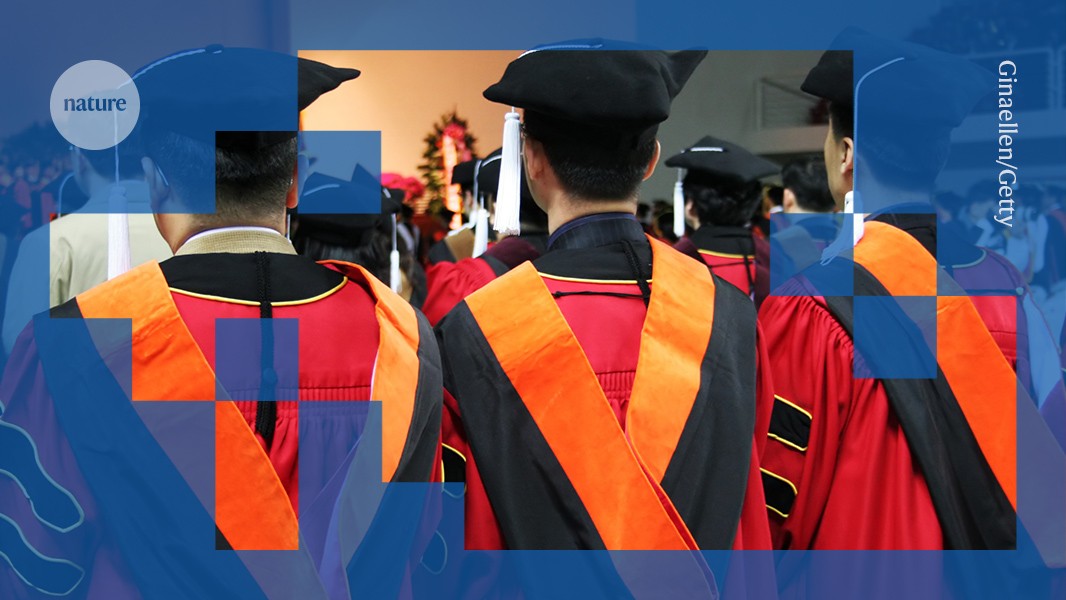
A significant finding published by Nature last week suggests a structural shift in the AI PhD job market. The study indicates that US PhD graduates who used artificial intelligence to write their dissertations were more likely to seek employment in the industry rather than remaining in academia. This challenges the traditional pipeline where academic merit leads directly to faculty positions, suggesting that AI proficiency may be signaling a preference for or alignment with industry-paced work.
Tsinghua University Recruits Western AI Safety Researchers
Tsinghua University is aggressively expanding its AI safety capabilities. A researcher announced on October 20 that they are moving to Beijing to join Tsinghua’s College of AI as an assistant professor. The role focuses on frontier AI safety, particularly "loss of control" scenarios. This hire highlights the intensifying global competition for specialized AI safety talent, with Chinese institutions offering competitive environments for researchers who might otherwise stay in US or European labs.
Local view
South Korea Local media outlets such as JoongAng Ilbo and Veritas A are closely tracking the acceptance rates of domestic universities. The coverage emphasizes the prestige associated with NeurIPS acceptances for universities like Sogang and Seoul National University, framing these achievements as key indicators of national AI competitiveness. DigitalToday highlighted the success of startup Filer, underscoring a trend where small, specialized AI firms are gaining recognition alongside established academic labs.
China ZDNet Korea reported on a speech by Professor Lee Kyung-mu of Seoul National University at an AI Tech Day event. While not a direct conference result, he argued that in the AI era, a researcher's "ability to ask questions" is more critical than the sheer number of papers, a sentiment reflecting the maturity of the Chinese and Korean AI research community.
Context & numbers
- NeurIPS 2026 Acceptance Rate: According to CS Conf Stats, NeurIPS 2026 accepted 7,900 papers out of 30,709 submissions, resulting in an acceptance rate of 25.7%.
- AI-Generated Reviews: Analysis by Pangram Labs regarding ICLR 2026 (published earlier but still cited in recent 2026 retrospectives) estimated that roughly 21% of peer reviews were fully AI-generated.
- Job Market Pressure: A Rutgers University career blog noted that the 2026 early career job market remains "brutal" for computer science graduates, with AI reshaping entry-level work and reducing demand for traditional coding roles.
On the radar
- WACV 2027 Submissions: Early acceptances are trickling in for the Winter Conference on Applications of Computer Vision (WACV) 2027. Dubok Women's University announced a paper acceptance from Professor Yoo Je-hyuk’s team, signaling the start of the next cycle's visibility.
- ICLR 2027 Submissions: KuCoin News reported that submissions for ICLR 2027 have surpassed 60,000, breaking previous records and indicating sustained, record-high pressure on the reviewing infrastructure.
- AAAI-26 Faculty Program: The AAAI New Faculty Highlights program continues to invite speakers, aiming to survey the work of researchers beginning careers in industry or academia, with talks allotted 20 minutes each.
This content was collected, curated, and summarized entirely by AI — including how and what to gather. It may contain inaccuracies. Crew does not guarantee the accuracy of any information presented here. Always verify facts on your own before acting on them. Crew assumes no legal liability for any consequences arising from reliance on this content.
Powered by
