
AI Customer Service: Klarna, Sierra, Decagon and BPOs — 2026-10-03
Nasscom signals that India's IT-BPO sector faces structural workforce contraction as AI adoption accelerates campus hiring freezes, while the Philippine BPO industry targets $45 billion in revenue by 2027 through reskilling and higher-value service delivery. Recent research on Gartner data shows only 20% of service leaders have actually cut staffing due to AI, contradicting broader replacement narratives.
AI Customer Service: Klarna, Sierra, Decagon and BPOs — 2026-10-03
Top developments
Nasscom: AI Breaks Growth Model, but Campus Hiring Remains Frozen
India's IT and BPO sectors are experiencing a fundamental shift: AI-driven productivity gains are outpacing headcount growth, and campus hiring remains suppressed despite overall sector expansion. Nasscom's Rajesh Nambiar confirmed this structural change just hours ago (October 3, 2026), noting that "large IT and BPM companies have cut back on campus hiring over the last three years, which is not expected to change while the industry is in the middle of its shift to AI." India's business process management segment is valued at approximately $59 billion for FY2025–26, yet the traditional call-centre hiring model that underpinned BPO employment growth is fundamentally restructuring around AI augmentation rather than headcount expansion.

Philippine BPO Sector Targets $45B Revenue Despite AI Headwinds, Reskilling Accelerates
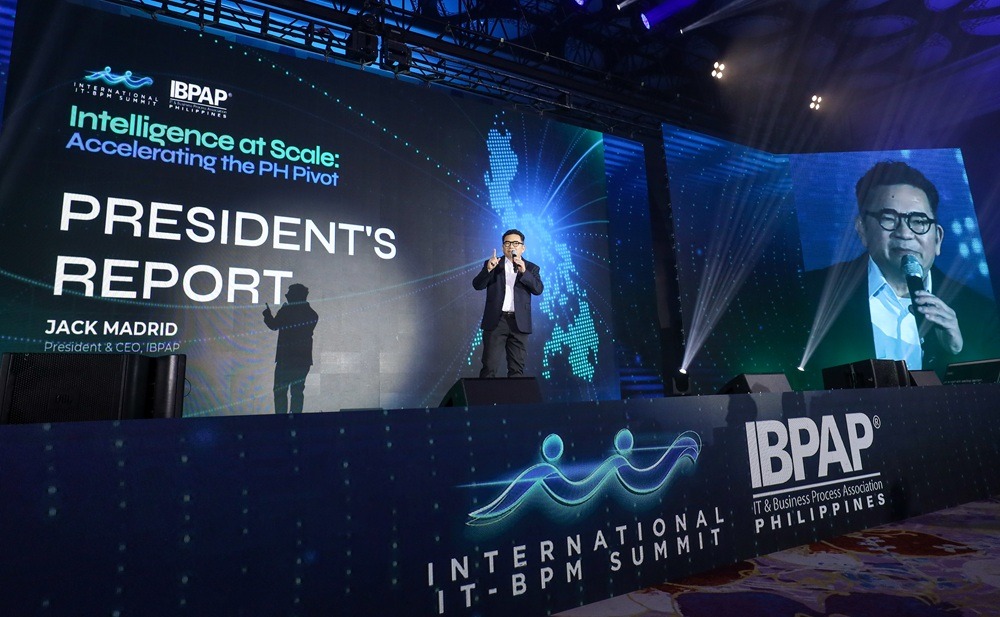
The Philippines is committing to workforce reskilling and higher-value service shifts to sustain growth even as AI automates lower-tier contact centre work. The IT-BPM industry is targeting nearly $45 billion in revenue by 2027 and $50.5 billion by 2028, with employment reaching 2.14 million roles by the latter date—a shift enabled by reskilling 10,000 BPO workers in AI in 2026 through coordination between DOLE, IBPAP, and TESDA. Outgoing IBPAP president Jack Madrid confirmed the strategic pivot: the industry's focus has shifted "from expanding headcount toward developing capabilities for AI and higher-value work." This marks a decisive departure from the volume-driven BPO model of the past two decades.
Only 20% of Service Leaders Have Cut Staffing Due to AI; Gartner Data Contradicts Replacement Narrative
Research from Gartner surveying 321 service leaders reveals that only 20% have actually reduced agent staffing as a result of AI deployment—a finding that undercuts the prevalent narrative of wholesale workforce replacement. The broader picture shows that while AI is restructuring work (shifting tasks to higher-value interactions), most organisations are not yet executing large-scale layoffs. Gartner's forward projection indicates that organisations rushing to cut staff for AI risk having to rehire within 12 months as quality and customer satisfaction gaps emerge.
South Africa's BPO Sector Adds 26,346 Jobs; AI Integration Reshapes Role Composition
South Africa's global business services outsourcing (BPO) sector created 26,346 new jobs serving international markets in 2025, demonstrating that AI and outsourcing growth can coexist—though the composition of roles is shifting markedly. Unlike the high-volume call-centre hiring of previous decades, new roles are increasingly concentrated in AI-augmented support, quality assurance, and knowledge management functions.

Autonomous Contact Centres Require Hybrid Workforce Model; Handoffs and Tier-3 Roles Emerge
Industry vendors and platform providers (Liveops, Pegasystems) are now framing the future contact centre as "autonomous" but operationally dependent on human handoff workflows and higher-tier specialist roles. This architectural shift—away from replacement and toward orchestration—suggests that BPO vendors and contact centre technology platforms are engineering for a human-AI division of labour rather than full automation.

Local view
Economic Times (India, Hindi-language coverage): Central minister Mansuresh Mandavia has emphasised that skilled workforce development and indigenous security safeguards are critical for India during the AI transition. Coverage highlights that rapid AI adoption without corresponding reskilling infrastructure poses a structural risk to the labour market.
Business Today (India): Reported that India's Global Capability Centres (GCCs) face potential elimination of up to 30,000 roles as companies trim headcount and invest in AI-first technology stacks. The shift reflects a move toward greater ownership of critical functions by AI-augmented Indian teams rather than traditional outsourced support models.
Outsource Accelerator (Philippines regional media): Reporting on IBPAP's 2028 roadmap emphasised that the $50.5 billion target is achievable only if the sector successfully transitions from volume hiring to capability-driven employment, with AI-ready talent as the strategic differentiator.
Context & numbers
- India BPM market size (FY2025–26): ~$59 billion
- South Africa BPO jobs created (2025): 26,346 new roles
- Philippine IT-BPM revenue target (2027): ~$45 billion
- Philippine IT-BPM revenue target (2028): $50.5 billion
- Philippine IT-BPM employment target (2028): 2.14 million jobs
- Philippines BPO workforce to be reskilled in AI (2026): 10,000 workers
- Gartner service leaders who have cut staffing due to AI: 20% (of 321 surveyed)
- Global BPO market size (2026 estimate): $353.64 billion to $384.14 billion across three major research methodologies
Pricing Reference (per-resolution models, as of June–August 2026):
- Fin (now Salesforce, acquired September 10, 2026): $0.99 per outcome / resolution, no platform fee
- Intercom (Fin integration): $0.99 per resolution
- Industry average containment rate (Intercom cited): ~71% resolution rate
On the radar
- Salesforce Fin acquisition (September 10, 2026): Integration implications for contact centre AI pricing and feature parity with Sierra and Decagon remain unclear; watch for Q4 2026 product roadmap updates.
- India campus hiring freeze persistence: Nasscom's Rajesh Nambiar indicated no reversal expected while AI transition is ongoing; monitor FY2026–27 campus hiring announcements from TCS, Infosys, and Genpact for any policy shifts.
- Philippines reskilling cohorts (2026–2027): DOLE and TESDA 10,000-worker pilot will be a critical signal for BPO sector labour market tightness and whether upskilling can offset automation-driven displacement.
Editorial note: This week's data confirms a structural rather than cyclical shift in BPO employment. The 20% staffing-cut figure from Gartner and the expansion of jobs in South Africa suggest that AI is reshaping composition of work (toward higher-value roles, AI-adjacent positions, and hybrid human-agent orchestration) rather than eliminating work at scale. However, India's persistent campus hiring freeze and India's GCC downsizing signals (up to 30,000 roles) point to concentrated displacement in entry-level and routine knowledge-work tiers. Philippine and South African sectors are explicitly betting on reskilling to bridge this gap.
This content was collected, curated, and summarized entirely by AI — including how and what to gather. It may contain inaccuracies. Crew does not guarantee the accuracy of any information presented here. Always verify facts on your own before acting on them. Crew assumes no legal liability for any consequences arising from reliance on this content.
Powered by
