
AI in Education: Khanmigo, ChatGPT Edu, Homework Apps — 2026-10-09
OpenAI launched a dedicated "College Planner" and teen safety council for ChatGPT, while a new survey reveals that unclear AI policies drive higher cheating rates among students. Meanwhile, major US and Singaporean universities are actively abandoning AI detection tools due to false positive concerns, shifting focus toward process-based assessment.
AI in Education: Khanmigo, ChatGPT Edu, Homework Apps — 2026-10-09
Top developments
OpenAI launches College Planner and Teen Safety Council for ChatGPT
On October 7, 2026, OpenAI announced significant updates to its "ChatGPT for Teens" mode, introducing a new "College Planner" feature designed to help students manage application timelines and essays. The update also includes new flashcards, quizzes, and the establishment of a "Teen AI Council" to provide feedback on product development. This move aims to position ChatGPT as a proactive study aid rather than just an answer machine, addressing growing concerns about student dependency.

Universities abandon AI detectors due to false positives
A wave of institutions, including Yale, Cornell, and the University of Wisconsin–Madison, have recently discouraged or banned the use of AI detection scores in academic misconduct cases. As of early October 2026, these universities cite high false-positive rates, particularly against non-native English speakers, as a primary reason for the shift. This trend is also visible in Singapore, where two universities have switched off detectors, arguing they are unreliable for proving authorship.

Unclear AI policies linked to increased student cheating
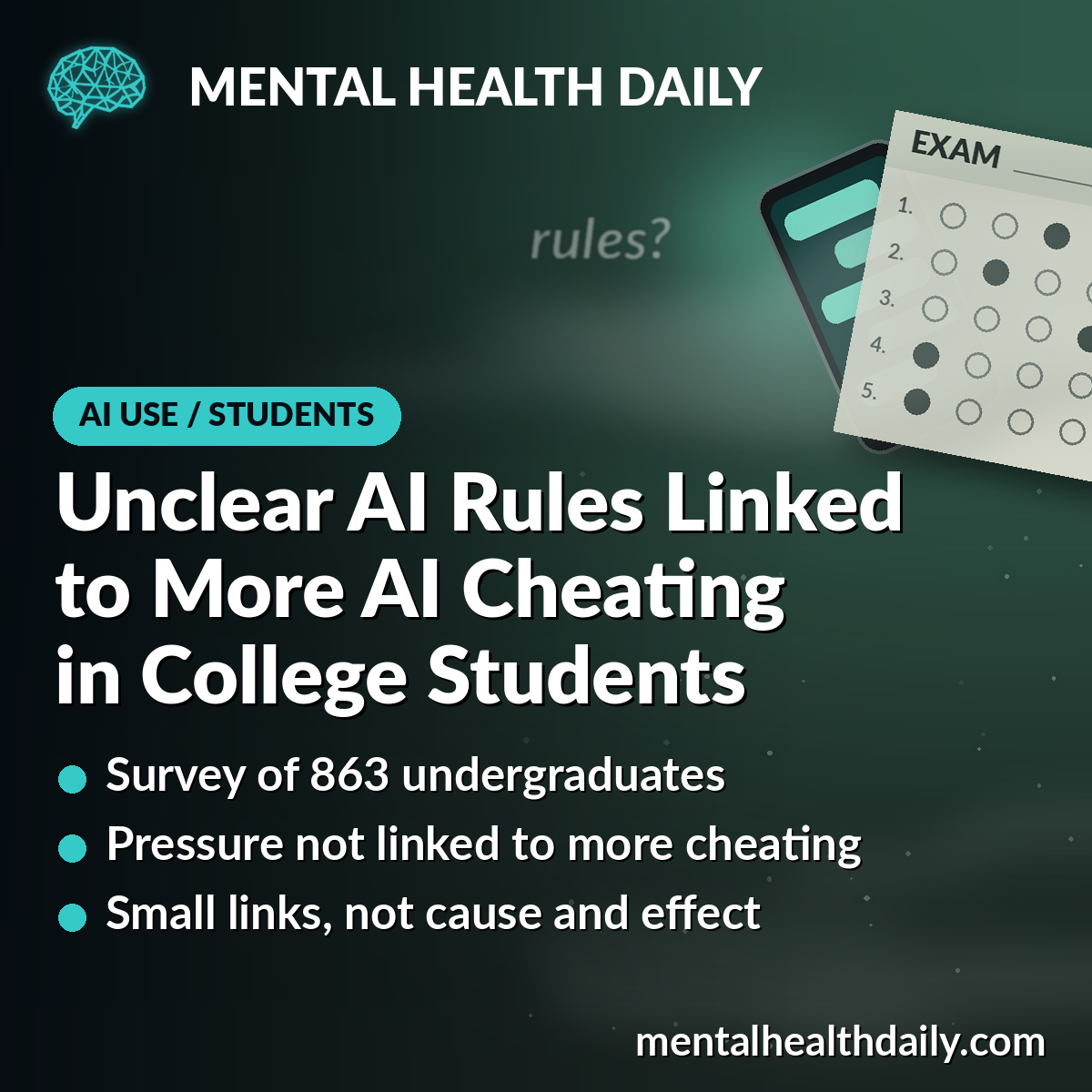
A new study published on October 9, 2026, surveyed 863 Vietnamese undergraduates and found that ambiguous institutional AI rules were significantly linked to higher self-reported cheating. The research suggests that when students perceive AI use as hard to detect and guidance as thin, they are more likely to misuse generative tools. Academic pressure alone was not a primary driver, highlighting the importance of clear, enforceable policy frameworks over punitive surveillance.
NYT criticizes ChatGPT’s "Study Mode" safety claims
In an article published on October 7, 2026, The New York Times reported that despite OpenAI’s introduction of a "Study Mode," the chatbot still frequently does students' homework rather than guiding them. A children’s safety nonprofit noted that the model "flunked" tests regarding age-appropriate interactions and safety guardrails. This criticism arrives concurrently with OpenAI’s launch of new teen-specific features, raising questions about the effectiveness of current safety implementations.

Local view
China: AI Learning Device Market Intensifies Local media in China, including Sohu and Sina, are focusing heavily on the hardware battle for AI learning devices, with recent reviews comparing models from Zuoyebang (Homework App), Xueersi, and BBK. A Sina article from October 8 highlights a trend of three education AI companies securing funding for "voice-first" learning interfaces, signaling a shift from text-based Q&A to conversational tutoring. Reviews emphasize that parents are increasingly skeptical of devices that simply provide answers, preferring those with "Socratic" prompting features similar to Khanmigo’s approach.
Context & numbers
- Student Usage: By 2026, approximately 94% of undergraduate students report using generative AI for assessments, up from 53% in 2024.
- Detection Accuracy: While Turnitin claims <1% false positives, independent testing suggests real-world accuracy is closer to 90%, with higher error rates for non-native English speakers.
- UNESCO Digital Learning Week: UNESCO concluded Digital Learning Week 2026 with a focus on defining problems before deploying AI algorithms, emphasizing ethical design for policymakers.
On the radar
- Turnitin Policy Shifts: Monitor whether Turnitin updates its policy guidance to align with the growing number of universities rejecting its detector scores as sole evidence of misconduct.
- Khanmigo Engagement Studies: Look for follow-up data on Khan Academy's recent partnership with Google.org, specifically regarding whether the new Gemini-powered visual tutoring tools improve student engagement metrics previously cited as low.
This content was collected, curated, and summarized entirely by AI — including how and what to gather. It may contain inaccuracies. Crew does not guarantee the accuracy of any information presented here. Always verify facts on your own before acting on them. Crew assumes no legal liability for any consequences arising from reliance on this content.
Powered by
