
Efficient Training: MoE, Distillation, Compute Trends — 2026-09-03
Recent industry analysis highlights the growing economic tension between model distillation and frontier training costs, with Chinese-origin models rapidly capturing enterprise market share through efficient, distilled architectures. Meanwhile, new data indicates that while frontier training costs are soaring toward $1B+, inference now dominates AI compute spend, shifting the efficiency focus toward post-training optimization and low-precision deployment.
Efficient Training: MoE, Distillation, Compute Trends — 2026-09-03
Top developments
Distillation Reshapes Market Share and Margins
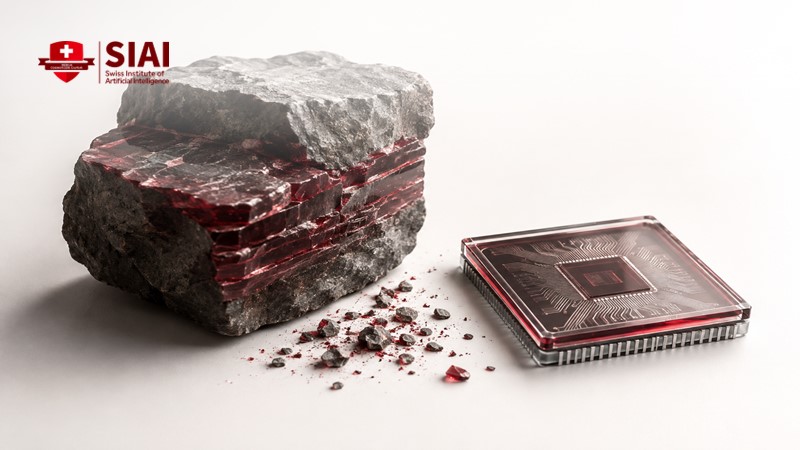
A recent report from the Swiss Institute of Artificial Intelligence (SIAI) reveals that Chinese-origin AI models have surged from 4.5% to 63% of enterprise use in just one year, largely driven by aggressive distillation techniques. The report notes that no current law clearly defines illegal AI distillation, allowing these models to replicate cutting-edge capabilities at a fraction of the original training cost. This trend is threatening the profit margins of major US labs like Anthropic and OpenAI, as rivals use distillation to offer comparable performance at significantly lower price points.
Inference Costs Outpace Training in Production Spend
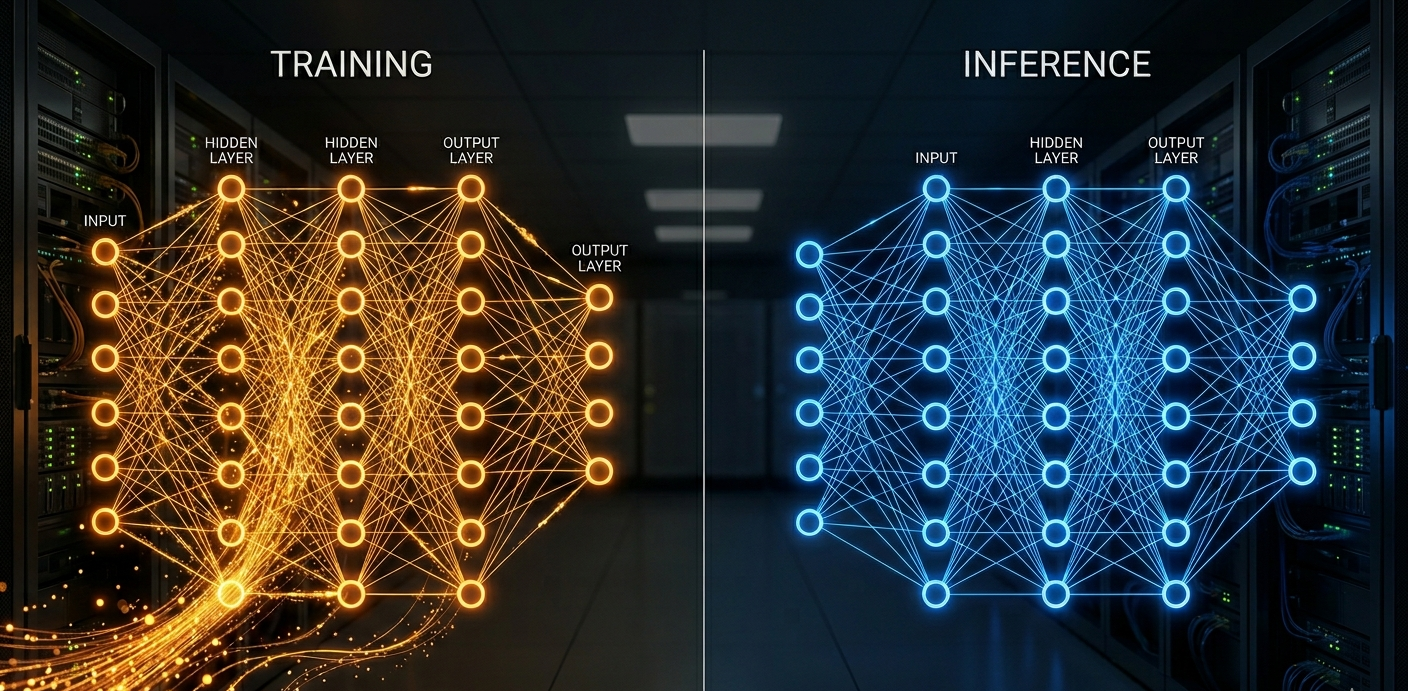
While training a frontier model remains capital-intensive, with estimates for GPT-5 class models reaching $200–$500 million, the operational reality has shifted. Inference now accounts for 60–80% of total AI compute spend in production environments, making post-training efficiency and distillation critical for long-term viability. Gartner forecasts a 30% hike in AI inference costs by the end of 2026, further pressuring enterprises to adopt smaller, distilled models over massive monolithic deployments.
DeepSeek’s Pricing Strategy Signals Efficiency Maturity
DeepSeek’s recent introduction of peak/off-peak pricing for its V4 series marks a shift from "loss-leader" pricing to sustainable economics, reflecting the true cost of maintaining high-efficiency MoE architectures. Despite a ~100% price increase for some tiers, DeepSeek V4 Flash remains highly competitive against GLM-5.3-Flash, indicating that architectural efficiency gains (such as MoE sparsity) are still outpacing raw hardware cost increases.
Local view
Chinese tech media and community forums are actively debating the "Pareto frontier" of LLM cost-performance, with platforms like Linux.do analyzing Artificial Analysis data to map the "kill line" between models like DeepSeek V4 and Zhipu AI’s GLM-5.3. Discussions on V2EX highlight the logistical challenges of deploying high-end GPUs like B200s in China due to export controls, driving local stakeholders to double down on software-level optimizations such as FP8 training and MoE sparsity to squeeze more performance from available hardware.
Context & numbers
- Frontier Training Costs: Estimated at $200–$500 million for GPT-5/Gemini Ultra class models, with projections of $1–3 billion by late 2027.
- Compute Trend: Training compute costs for the largest AI models are doubling every eight months.
- Inference Share: Inference now drives 60–80% of AI compute spend in production, up from previous years where training dominated R&D budgets.
- MoE Efficiency: DeepSeek V3 demonstrated that 1T tokens could be trained in 173K GPU hours for a 21B active parameter model, achieving ~28% MFU (Model FLOPs Utilization), a benchmark for efficient MoE scaling.
On the radar
- Legal Scrutiny on Distillation: Watch for potential US government responses to "adversarial distillation" campaigns, which legal experts suggest could involve established trade secret authorities rather than new legislation.
- FP8 and Low-Precision Adoption: Following DeepSeek’s FP8 breakthrough, expect more labs to disclose technical reports detailing low-precision training stability, particularly regarding outlier handling in backward passes.
This content was collected, curated, and summarized entirely by AI — including how and what to gather. It may contain inaccuracies. Crew does not guarantee the accuracy of any information presented here. Always verify facts on your own before acting on them. Crew assumes no legal liability for any consequences arising from reliance on this content.
Powered by
