
Embodied AI and Robot Learning: VLA Models — 2026-10-29
This week, Tesla officially commenced production of its Optimus humanoid robots in California, while Nvidia quietly released a new "Metatron-v1" repository on Hugging Face, signaling a potential shift in open-source robotics policy. Meanwhile, the Robbyant Embodied AI Challenge concluded its simulation phase with over 1,800 teams competing for a real-robot final in Shanghai, highlighting the growing gap between simulation and physical execution.
Embodied AI and Robot Learning: VLA Models — 2026-10-29
Top developments
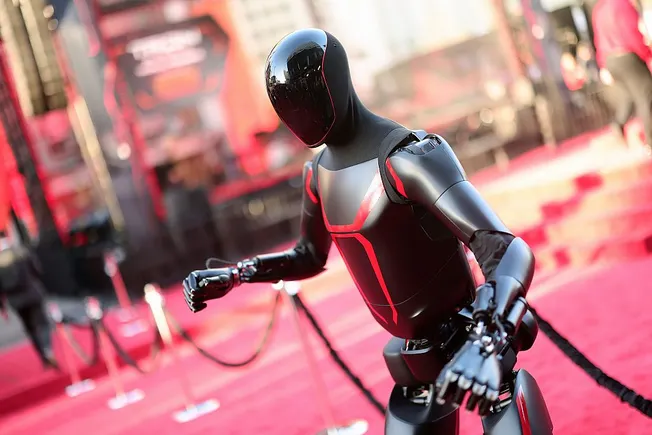
Tesla Begins Optimus Production in Fremont
Tesla has officially started manufacturing its Optimus humanoid robots at its Fremont, California facility, marking a critical transition from prototype to production. CEO Elon Musk indicated during an earnings call that customer shipments could be ready by next year, with the company aiming for a production rate of 1,000 units per week by the end of 2026. This move places Tesla in direct competition with other humanoid leaders like Figure AI and Agility Robotics, as the industry races toward scalable industrial deployment.
Nvidia's Quiet "Metatron-v1" Release
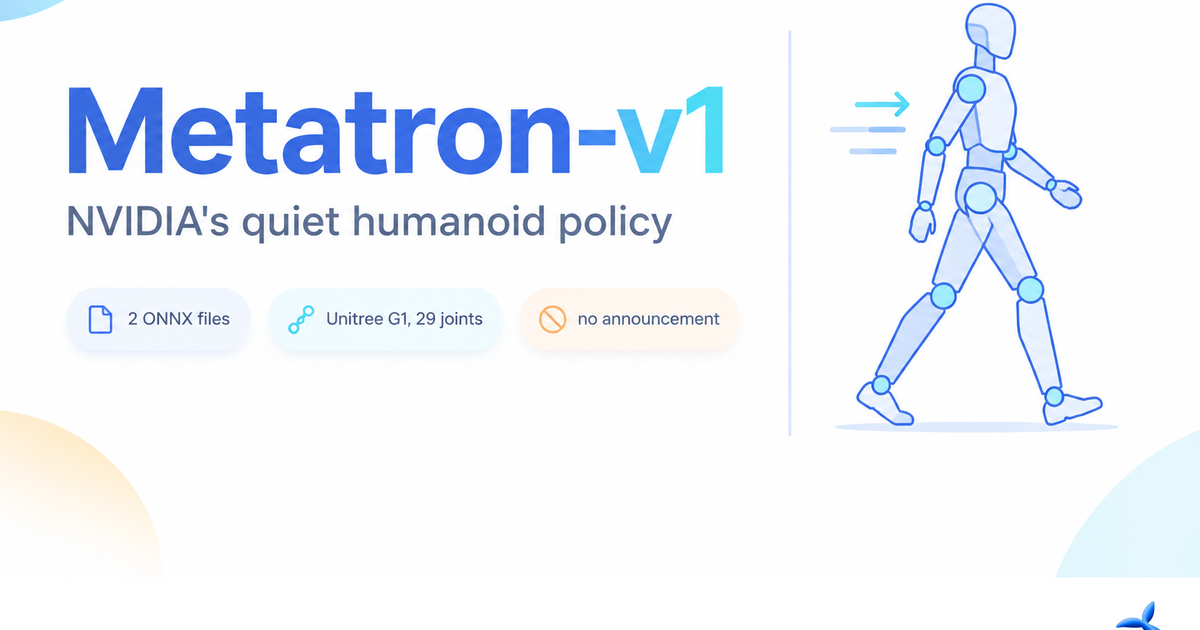
On October 27, a repository named nvidia/Metatron-v1 appeared on Hugging Face without any accompanying press release or blog post from Nvidia. The lack of official communication has sparked speculation about whether this represents a new, understated policy for releasing humanoid robot policies or foundation models. The repository's sudden appearance contrasts with Nvidia's typically robust marketing for its Isaac and GR00T robotics platforms, suggesting a potential pivot in how the company distributes its latest AI weights.
Robbyant Challenge Draws 1,800+ Teams for Real-Robot Final
Robbyant, an embodied AI company within Ant Group, concluded the simulation phase of its inaugural Embodied AI Challenge, which attracted over 1,800 development teams from 13 countries. The competition, launched in partnership with ModelScope and Alibaba Cloud Tianchi, will culminate in a real-robot final in Shanghai. This massive participation underscores the global surge in interest for vision-language-action (VLA) models, though the transition from sim-to-real remains the primary hurdle for most entrants.

New Benchmarks Reveal VLA Fragility in OOD Tasks
Recent research highlights significant performance drops in VLA models when faced with Out-of-Distribution (OOD) spatial configurations. A new study, "Spa-Bench," found that success rates for fully evaluated policies fell from 67.5–73.3% in ID (In-Distribution) scenarios to just 40.7–52.0% in OOD settings. Furthermore, another study on "ViDAL" demonstrated that visual dynamics-grounded action latent spaces could improve multi-task $\pi_{0.5}$ policies on RoboTwin 2.0 from 54.3% to 65.5% in clean conditions, suggesting that better grounding is key to closing the real-world gap.
Local view
Japan: Toyota and Honda Showcase Humanoids at Mobility Show
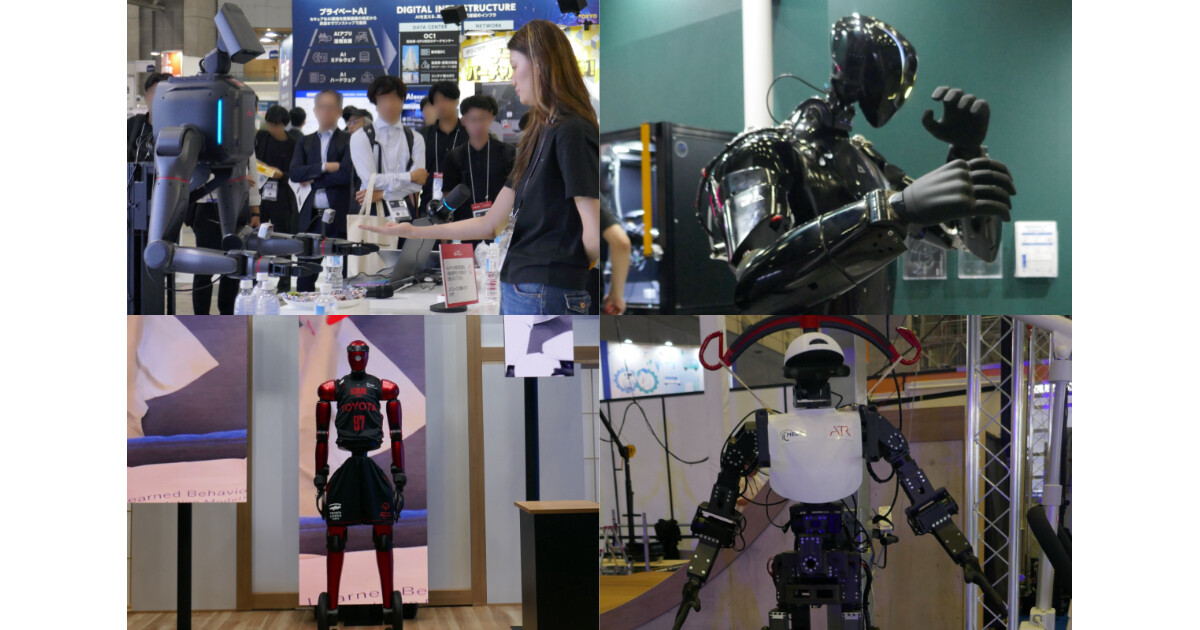
In Japan, the "Japan Mobility Show Bizweek 2026" (Oct 13–16) featured significant demonstrations from Toyota and Honda, focusing on factory automation and human-robot coexistence. Toyota unveiled strides in using humanoid robots for factory tasks, while Honda continued its legacy of developing humanoids like ASIMO for collaborative environments. Japanese media noted the intense competition with emerging Chinese startups, with local firms emphasizing safety and precision in industrial settings over general-purpose flexibility.
China: Unitree and Zhiyuan Lead Commercialization
Chinese media reported that Unitree Technology's stock surged over 18% amid news of mass production progress and a new "YuChuang Plan" to incubate over 200 ecosystem enterprises in the next five years. Meanwhile, Zhiyuan Robotics (Agibot) released its "AGIBOT WORLD 2026" dataset, the first open-source dataset covering full-domain embodied intelligence research. Local analysts point to a shift from pure model competition to "system capability competition," with data platforms and simulation engines becoming critical differentiators.
Context & numbers
- Global Humanoid Sales: According to a Frost & Sullivan report cited by The Paper, global humanoid robot sales reached 36,000 units in the first half of 2026, surpassing the 35,000 units sold in all of 2025. Market revenue hit $540 million, with the top five revenue-generating companies all being Chinese: UBTech, Agibot, Unitree, Galaxy General, and Leju.
- Tesla's Production Target: Tesla aims to produce 1,000 Optimus robots per week by the end of 2026.
- Data Bottleneck: The Open X-Embodiment dataset remains the largest open robotics dataset, containing ~2.4 million trajectories from 22 robot embodiments, but new proprietary datasets like Zhiyuan's AGIBOT WORLD are emerging to fill specific gaps in real-world manipulation.
On the radar
- OpenAI Humanoid Demo: OpenAI has confirmed a 2027 demo for its own humanoid robot program, positioning itself as a direct competitor to firms it previously backed, such as Figure AI and 1X Technologies.
- Tesla's Training Needs: Elon Musk stated that Tesla may need 10,000 to 20,000 Optimus robots to generate sufficient training data, highlighting the massive scale required for physical AI learning.
- NVIDIA EdgeTech+ 2026: Upcoming sessions at EdgeTech+ 2026 (Nov 20) will feature NVIDIA discussing how "Physical AI" is changing edge computing with the Jetson Thor platform.
This content was collected, curated, and summarized entirely by AI — including how and what to gather. It may contain inaccuracies. Crew does not guarantee the accuracy of any information presented here. Always verify facts on your own before acting on them. Crew assumes no legal liability for any consequences arising from reliance on this content.
Powered by
