
Embodied AI and Robot Learning: VLA Models — 2026-09-04
OpenAI has officially entered the humanoid robotics hardware race, while Japanese industrial giants Toyota and Highlanders accelerate their "Physical AI" strategies with new data factories and large-scale world models. Meanwhile, Chinese automakers are aggressively pivoting from electric vehicles to humanoid production, mirroring Tesla’s bet on robotics as the next major profit driver.
Embodied AI and Robot Learning: VLA Models — 2026-09-04
Top developments
OpenAI Confirms Humanoid Robot Development
On September 3, 2026, OpenAI CEO Sam Altman announced that the company is now committed to manufacturing humanoid robots, not just the AI software that powers them. Altman stated that "everyone should have one," signaling a major shift from pure software to integrated embodied hardware. This move places OpenAI directly in competition with Tesla, Figure, and Chinese startups, leveraging its advanced Vision-Language-Action (VLA) capabilities to control physical actuators.
Japan Launches Massive "Physical AI" Data Infrastructure
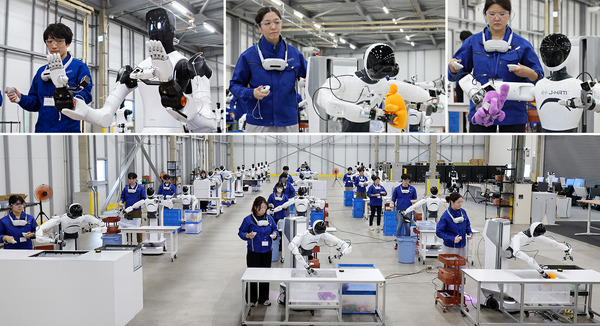
Japanese stakeholders are prioritizing data scarcity solutions for robot foundation models. On September 2, the company APTO opened a new lab in Toyosu, Tokyo, to support the "Data Factory" concept, while J-HRTI unveiled a facility housing 35 humanoid robots (including Unitree G1s) specifically for generating training data. Additionally, on September 3, startup Highlanders announced the development of "Kepler," a 10-billion-parameter world action model trained on AWS, aiming for mass production of domestic humanoids with Mitsubishi Motors.
Chinese Automakers Pivot to Humanoid Manufacturing
TechCrunch reported on August 28 that Chinese automakers are increasingly following Tesla’s strategy of treating humanoid robots as the next big profit center. Companies like XPeng are leveraging their existing EV supply chains to scale humanoid production, betting that technical progress in VLA models will soon allow these robots to perform general-purpose tasks in factories and homes. This trend highlights the convergence of automotive manufacturing and embodied AI in China.

Local view
In Japan, RobotStart highlights the government and industry alliance ("Robot Diet League") discussing a national "Physical AI Strategy" involving NVIDIA and Toyota. The focus is on creating standardized datasets to bridge the sim-to-real gap. Nikkei reports that Elon Musk predicts 1 billion humanoid robots will be in use within 10 years, with productivity five times that of humans, driving local investors to back domestic hardware champions like Highlanders and Unitree partners.
Context & numbers
- Tesla Optimus Timeline: Elon Musk stated that public sales of the Tesla Optimus humanoid robot are expected by the end of 2027.
- Highlanders Model Size: The new "Kepler" world action model developed by Highlanders utilizes 10 billion parameters, significantly larger than many current on-device VLAs, indicating a trend toward cloud-assisted or high-performance edge inference for complex reasoning.
- Data Factory Scale: J-HRTI’s new facility uses 35 humanoid units simultaneously to generate diverse manipulation trajectories, addressing the critical bottleneck of real-world robot data availability.
On the radar
- Toyota Level 2++ Autonomy: Toyota plans to market cars with "Level 2++" autonomous driving systems by 2028, which may share underlying perception stacks with their emerging robotics division.
- Datatang Dataset Release: Datatang began offering multimodal ego-centric datasets for Physical AI foundation models, including synchronized hand keypoints and SLAM data, starting late August.
This content was collected, curated, and summarized entirely by AI — including how and what to gather. It may contain inaccuracies. Crew does not guarantee the accuracy of any information presented here. Always verify facts on your own before acting on them. Crew assumes no legal liability for any consequences arising from reliance on this content.
Powered by
