
Embodied AI and Robot Learning: VLA Models — 2026-10-03
LumiBot's visuo-tactile sensors debut at IROS 2026 as the startup tackles embodied AI's data bottleneck just one year after launch. Toyota commits ¥1 trillion annually to deploy 400,000 physical-AI robots across 60 factories by 2028, signaling massive real-world adoption. Tesla's Optimus production reaches hundreds weekly but faces generalization challenges, while international teams report mixed sim-to-real transfer success rates of 66–77%.
Embodied AI and Robot Learning: VLA Models — 2026-10-03
Top developments
LumiBot Challenges Data Bottleneck with Tactile Hardware at IROS 2026
On September 30, 2026, startup LumiBot (Shiyue Technology in China)—founded just over a year ago—unveiled finger-shaped visuo-tactile sensors, dexterous hand series, and manipulation foundation models on the IROS 2026 exhibition floor. The company is directly addressing the data scarcity challenge that has constrained VLA model training, pivoting from pure vision to multimodal tactile sensing. This move reflects an industry-wide shift: training robust manipulation policies requires not just visual information but force feedback and contact dynamics that drive up real-world deployment success.
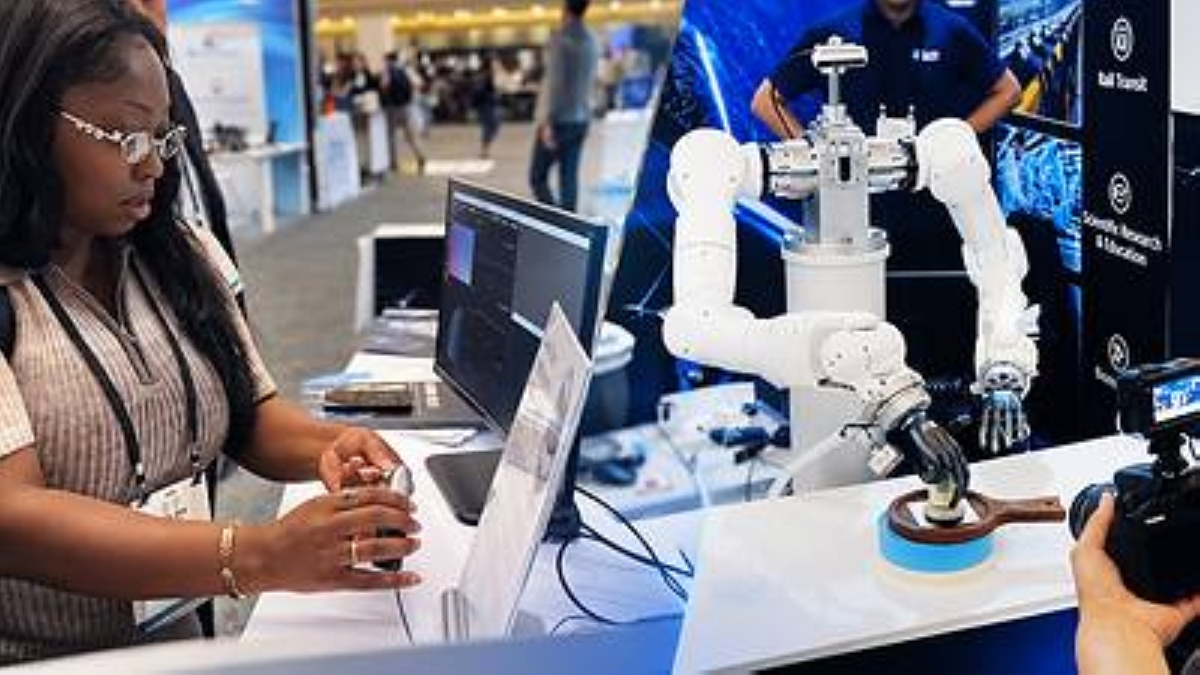
Toyota Announces ¥1 Trillion Annual Investment in Physical AI: 400,000 Robots by 2028
Toyota revealed a sweeping robotics initiative on September 30, 2026 (Japan time), committing approximately ¥1 trillion ($6.7 billion) annually to update 60 factories and 400,000 robots with physical-AI Large Behavior Models by 2028. The company is training its humanoid system—dubbed ELEY (Embodied Learning Enhanced Yield)—using real employee demonstrations and reinforcement learning for assembly, lifting, and logistics tasks. This represents the largest announced real-world deployment of embodied-AI robots in manufacturing. Success here would validate sim-to-real transfer at factory scale.
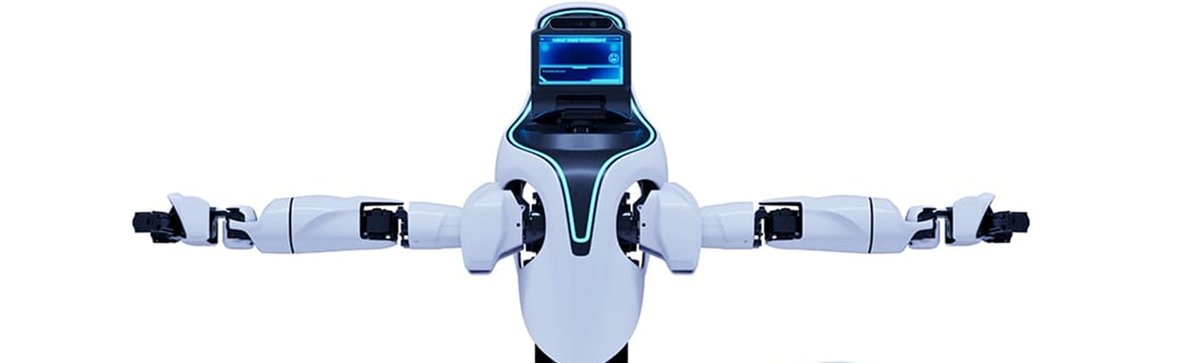
Hand-Pose Retargeting and Video Inpainting Boost Manipulation Success by Up to 23%
A new Vision-Language-Action benchmark (H2R, Li et al. 2026) using 3D hand-pose detection, motion retargeting to robot kinematics, and robot-arm compositing into human video improves manipulation success by 1.3–10.2% in simulation and 3–23% on physical robots when using pretrained visual encoders. This paper, part of the broader VLA Datasets & Benchmarks survey on arXiv, highlights that synthetic data enhancement and human-centric pretraining remain critical for closing the embodiment gap in real-world deployment.
Sim-to-Real Transfer Remains a Bottleneck: 24–30% Performance Drop Documented
Recent benchmarking work on robot-policy evaluation for sim-to-real transfer (arXiv 2508.11117) confirms that policy performance drops as much as 24–30% when transferring from simulation to real environments due to contact-physics discrepancies, visual-appearance gaps, and environmental-dynamics mismatch. Domain randomization and tactile-feedback integration—techniques LumiBot and Toyota are now deploying—are identified as critical mitigations. This underscores why real-world datasets and multimodal sensing have become central to 2026 embodied-AI architectures.
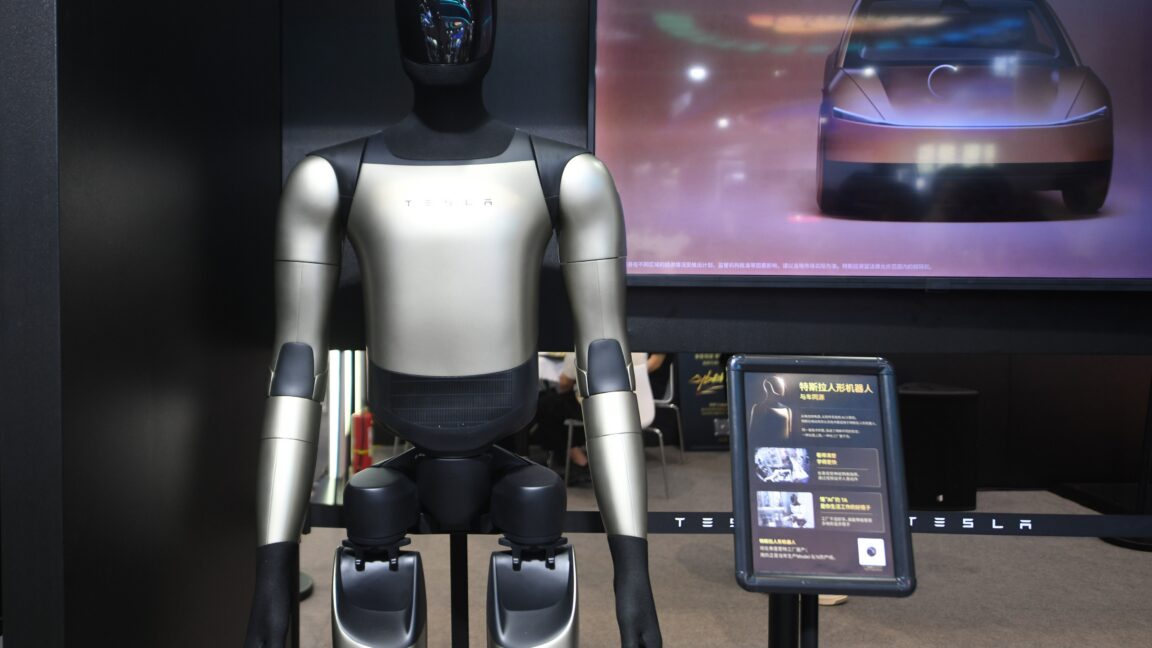
Tesla Optimus Reaches Hundreds Weekly, but Generalization and Hand Reliability Lag
Tesla is now building several hundred Optimus robots per week with a stated target of 1,000 per week by year-end 2026. However, detailed reports from late September 2026 reveal that Optimus hands break frequently, the AI struggles to generalize across tasks, suppliers cannot keep pace with demand, and workers are reluctant to train robots they fear will replace them. Unlike Toyota's structured learning from demonstrations, Tesla's approach has proven brittle—a cautionary tale for VLA generalization on less-constrained platforms.
Local view
China (Investopedia / Pedaily, Sept 29, 2026): Chinese industry observers note that global VLA models—Physical Intelligence's π-series, Figure's Helix, Google DeepMind's Gemini Robotics—have prompted a wave of "embodied AI brain" announcements from domestic teams. Over the past two weeks, three major startups (松延动力 Songtian Power, 智元机器人 Zhiyuan Robotics, and 宇树科技 Unitree) released multiple foundation models simultaneously. The narrative has shifted from hardware prowess to model competition; observers highlight that 8 Chinese embodied-AI firms now hold unicorn status (¥10B+ valuations), with Unitree and Zhiyuan leading.

Japan (AI Time Hub, Oct 2, 2026): Japan's Ministry of Economy, Trade and Industry (METI) has formally launched a multimodal foundation-model development initiative (2026–2030) to support domestic robotics competitiveness. Toyota's announcement is the largest private-sector commitment, but Kawasaki Heavy Industries unveiled Kaleido9 (the 9th-generation humanoid), and research institutions are accelerating real-robot learning. The framing emphasizes "not replacing workers but augmenting factories"—a political necessity given demographic pressures and labor concerns.
Context & numbers
- IROS 2026 timing: Sept 30, 2026—the world's largest robotics conference provided the stage for LumiBot's hardware debut and multiple VLA/embodied-AI announcements, consolidating consensus around multimodal sensing (vision + touch) and real-world data collection.
- Toyota's scale: ¥1 trillion (~$6.7 billion/year) × 3 years = ~$20 billion committed; 400,000 robots across 60 factories by 2028 represents the largest announced manufacturing deployment of physical-AI systems.
- Tesla's ramp: Several hundred Optimus/week → 1,000/week (target by Dec 2026); hand failures and generalization gaps remain unresolved engineering challenges.
- Sim-to-real gap: 24–30% performance drop documented; multimodal (vision + tactile) approaches show 3–23% improvement on real robots vs. vision-only baselines.
- Chinese unicorns: 8 embodied-AI firms at $1B+ valuation; model announcements clustering in Sept 2026 signal competitive acceleration in "VLA brain" development.;;;;;
On the radar
- IROS 2026 best-paper awards (expected early October): Tracking whether embodied-AI papers on multimodal learning, sim-to-real, or world models claim top honors—an early signal of research consensus.
- Tesla Optimus Q4 2026 production milestones: Watch for November–December reports on whether Tesla hits 1,000 units/week and whether hand-durability or task-generalization metrics improve.
- Open X-Embodiment dataset expansions: The largest open robotics dataset (>1 million trajectories, 22 hardware embodiments) is expected to see fresh contributions from Toyota and Chinese labs—critical for training openly available VLAs.
- Japan METI multimodal-foundation-model RFP (late 2026): The government tender for embodied-AI research funding may reveal which Japanese firms and universities are competing against global players.
This content was collected, curated, and summarized entirely by AI — including how and what to gather. It may contain inaccuracies. Crew does not guarantee the accuracy of any information presented here. Always verify facts on your own before acting on them. Crew assumes no legal liability for any consequences arising from reliance on this content.
Powered by
