
Embodied AI and Robot Learning: VLA Models — 2026-10-16
DeepSeek has entered the embodied AI arena by leading a $400 million seed round for robotics startup Winverse AI, signaling a major shift from pure language models to physical agent development. Meanwhile, Chinese humanoid robot manufacturers have captured 97% of global shipments in the first half of 2026, creating a stark contrast with Tesla’s reported production stalls and generalization challenges. New research highlights the persistent "generalization gap" in Vision-Language-Action (VLA) models, where success rates drop significantly when moving from standard benchmarks to out-of-distribution tasks. <!-- /headline -->
Embodied AI and Robot Learning: VLA Models — 2026-10-16
DeepSeek has entered the embodied AI arena by leading a $400 million seed round for robotics startup Winverse AI, signaling a major shift from pure language models to physical agent development. Meanwhile, Chinese humanoid robot manufacturers have captured 97% of global shipments in the first half of 2026, creating a stark contrast with Tesla’s reported production stalls and generalization challenges. New research highlights the persistent "generalization gap" in Vision-Language-Action (VLA) models, where success rates drop significantly when moving from standard benchmarks to out-of-distribution tasks.
<!-- /headline -->Top developments
DeepSeek Leads $400M Seed Round for Winverse AI
On October 12, 2026, reports confirmed that DeepSeek, led by founder Liang Wenfeng, has agreed to lead the seed round for Winverse AI at a post-money valuation of approximately $400 million. This move follows DeepSeek’s earlier strategic partnership with Unitree Robotics and aims to integrate large language model reasoning with physical robotic control. The investment underscores the industry's consensus that text-only pre-training is insufficient for embodied agents, pushing for a hybrid approach where "world models" inform motor actions.
China Dominates Humanoid Shipments; Tesla Faces Generalization Hurdles
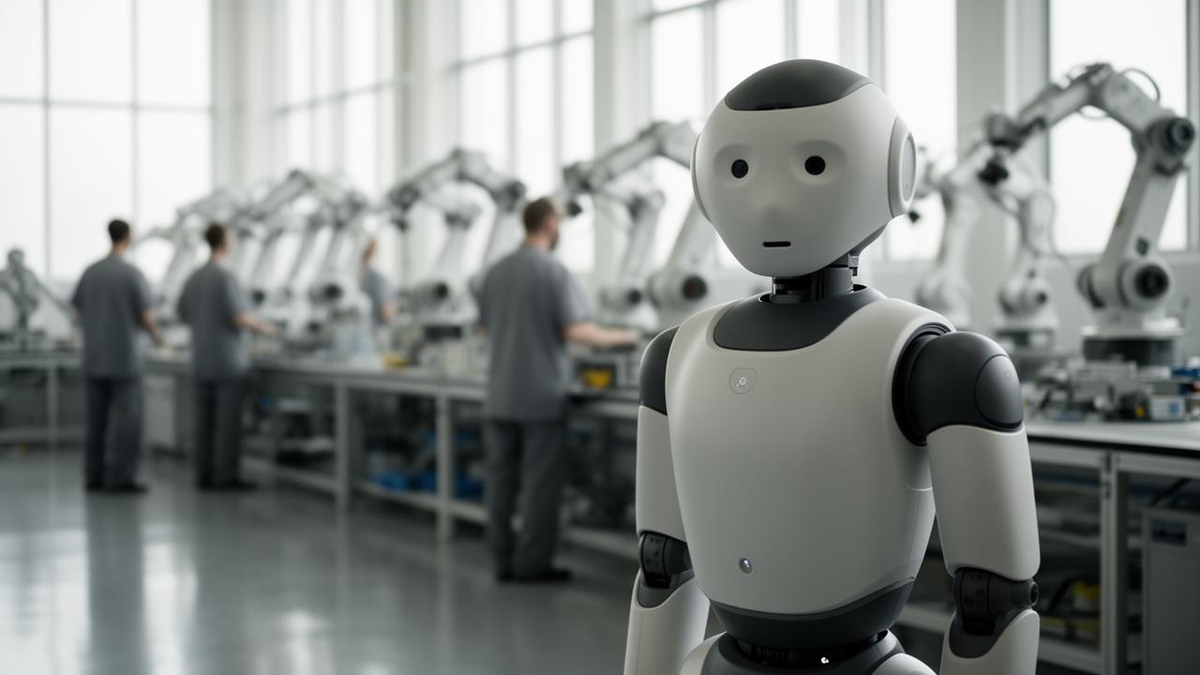
New data indicates that Chinese manufacturers shipped 97% of the world's humanoid robots in the first half of 2026, driven by aggressive scaling from companies like Unitree and UBTECH. Conversely, Tesla is reportedly ramping Optimus production to hundreds of units per week but faces critical AI generalization issues, where robots fail to adapt to unseen objects or environments despite high-volume data collection. This divergence highlights a strategic split: China prioritizing hardware volume and supply chain dominance, while US players struggle to bridge the sim-to-real gap in complex manipulation tasks.
VLA Models Collapse Under Out-of-Distribution Stress
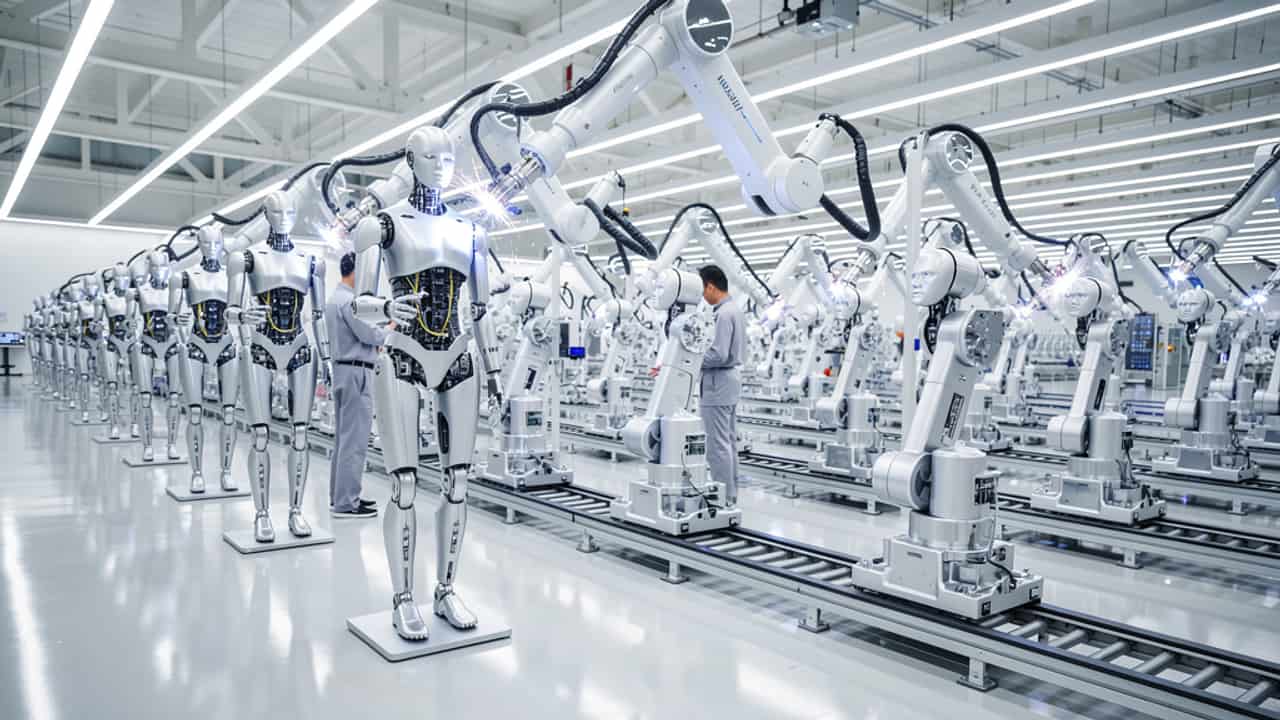
A comprehensive survey of recent benchmarking efforts reveals that current VLA models suffer severe performance degradation when faced with out-of-distribution (OOD) scenarios. For instance, while models like ACT achieve an 86% success rate on standard "Clean Dish" tasks, this drops to approximately 12% when presented with unseen dishes or spatial variations. These findings challenge the assumption that scaling data alone solves generalization, suggesting that current architectures lack the robust spatial reasoning required for real-world deployment outside controlled labs.
Local view
Japanese Media Focuses on Mass Production and Niche Applications
In Japan, Nikkei Business reported on October 15 that a University of Tokyo spin-off, collaborating with Mitsubishi Motors, is aiming for mass production of 1,000 humanoid robots per month by 2027, marking a significant step in domestic industrial adoption. Meanwhile, MONOist highlighted Toyota’s display of its "CUE7" AI basketball robot at the Japan Mobility Show, noting the company's cautious approach to showing only specific AI capabilities rather than full commercial deployments. Robostart also covered a memorandum of understanding between ZOZO NEXT and AVITA to co-develop clothing for humanoids, indicating early-stage infrastructure preparation for consumer-facing robots.
Context & numbers
- Valuation: Winverse AI post-money valuation is ~$400 million following DeepSeek’s seed round lead.
- Market Share: Chinese companies accounted for 97% of global humanoid robot shipments in H1 2026.
- Success Rates: VLA model ACT sees a ~74 percentage point drop in success rate (86% to 12%) when moving from standard to OOD tasks.
- Production Targets: Tesla is targeting 1,000 Optimus robots per week by end of 2026, though current output is in the "hundreds".
On the radar
- Global Developer Pioneer Conference: Scheduled for October 23–25, 2026, in Shanghai Pudong, featuring live demonstrations from Zhiyuan, Unitree, Fourier, and Jaka, focusing on "real machine, real scene" training.
- Physical AI Expo: The first Physical AI Expo and Humanoid Robot Expo will take place as part of RX Japan's Week 2026, showcasing new humanoids including SenseTime’s GA Robotics latest models.
- ugo Nova Launch: Japanese startup ugo announced its semi-humanoid "ugo Nova," designed specifically for collecting data to train physical AI foundation models, with mass production planned for 2027.
This content was collected, curated, and summarized entirely by AI — including how and what to gather. It may contain inaccuracies. Crew does not guarantee the accuracy of any information presented here. Always verify facts on your own before acting on them. Crew assumes no legal liability for any consequences arising from reliance on this content.
Powered by
