
Embodied AI and Robot Learning: VLA Models — 2026-09-27
This week's dominant theme is the gap between hardware scaling and model intelligence: Tesla is ramping Optimus to hundreds per week while its AI reportedly can't generalize, and Toyota announced a massive robotics push targeting 400,000 robots. Meanwhile, Unitree open-sourced an embodied foundation model that beat frontier LLMs on manipulation benchmarks, and new research showed VLA policies reaching 98% success in simulation but dropping in real-world transfer.
Embodied AI and Robot Learning: VLA Models — 2026-09-27
Top developments
Tesla ramps Optimus, but AI generalization reportedly lags
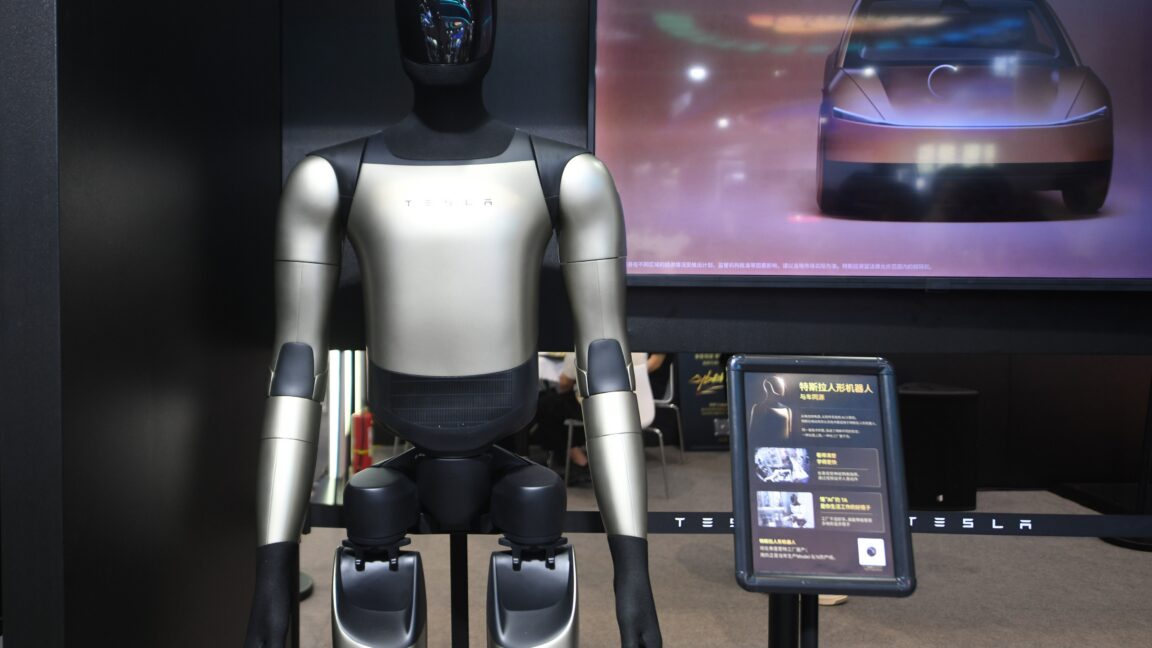
Tesla now builds several hundred Optimus humanoid robots a week, but a September 25 report says robot hands break frequently, suppliers can't keep up, and the AI "can't generalize" across tasks — a direct headwind for VLA-style policies that must transfer beyond training scenes. Tesla nevertheless targets 1,000 robots per week by end of 2026, and reportedly wants production as high as 20,000 per week eventually. The workers' pushback on teleoperated training data — a key source of VLA demonstrations in Tesla's pipeline — adds friction to the data-scaling story.
Unitree open-sources embodied foundation model, benchmarks beat frontier LLMs
Japanese audience facing Chinese coverage (via Ifeng, ~1 week ago) reports Unitree open-sourced an embodied foundation model with 7 leading scores among open models. In head-to-head manipulation tests on a real robotic arm, the model's underlying setup guided GPT-6 Astra to 19/20 successes (95%) on "place the blocks in the bowl" versus 8/20 (40%) for Claude Fable 5.1 — underscoring how embodied pipelines, not raw LLM size, drive task success. Sohu coverage (~5 days ago) notes Unitree and Songyan Dynamics are shifting from body-mass production toward concentrating resources on embodied models.
Toyota enters robotics at scale with "Physical AI" push
Toyota confirmed full entry into the robotics business, developing cooperative robots for factory automation, with Japanese reports (Yomiuri, ~1 week ago) noting future external sales are planned. Zaikei reported plans to renew robots across 60 global plants with a fleet of 400,000 units and on the order of ¥1 trillion in annual investment from 2028, including the body-learning robot "ELEY". This makes Toyota a potential large-scale source of real-world demonstration data for robotic foundation models.
Highlanders wins METI/NEDO GENIAC grant for humanoid foundation model
On September 23, Japanese startup Highlanders — maker of the domestic humanoid "N" — announced it was selected for METI/NEDO's "Robot Foundation Model R&D GENIAC" program to develop AI foundation models for humanoid auto-manufacturing alignment tasks. The May 2026 GENIAC call newly included general-purpose robots as eligible targets.
DriftingVLA: strong sim success, real-world gap persists
Recent arXiv coverage (via DailyArxiv, ~5 days ago) reports DriftingVLA achieves 98.32% success on LIBERO, 81.09% on RoboTwin 2.0, and 77.67% across six real-world single- and dual-arm tasks, outperforming multi-step flow policy and one-step VLA baselines. The ~20-point drop from LIBERO to real-world tasks mirrors the field's persistent sim-to-real challenge.

Local view
Japanese media are focused on industrial deployment: Cisco-style commentary aside, Robot Start reports TypeSafe AI's judgment-specialized AI model "Jev" (announced September 15) is seeing a wave of real-robot experimentation shared on X, and that Chinese company Huayan Robotics will show 7-axis humanoid arms "HY 7" and "Echo 5" at IMTS 2026 in Chicago. MyNavi covered Woven City's one-year anniversary (September 25) with ~30 demonstrations under way — a live testbed for embodied AI. In China, 21jingji highlighted that three companies released five models in eight days, with Songyan Dynamics' Scalabot brand and HERON-World Model (Sept 8) and HERON-CRA (Sept 15) as part of a hardware-led "brain-building" trend.
Context & numbers
- Tesla Optimus: several hundred units per week now; target 1,000/week by end of 2026; aspirational 20,000/week.
- Toyota: 400,000 robots, ~¥1 trillion annual investment from 2028, 60 plants.
- China: 8 embodied-AI unicorns with billion-RMB valuations including Unitree, Zhiyuan (Agibot), Galbot.
- Unitree benchmark: 95% vs 40% manipulation success (GPT-6 Astra vs Claude Fable 5.1, 20 trials).
- Woven City: ~30 demonstrations in first year.
On the radar
- IMTS 2026 in Chicago: Huayan Robotics' humanoid arms public debut.
- H.C.R. 2026: Enactic's physical-AI caregiving assistant robot "Ena" live demo, with former TBS presenter's session.
- Turing Post's September roundup flags Helix 2.5 operating in 30 unseen homes, Digit 5 lifting 22.7 kg, and scrutiny of Skild's "66%" metric (published ~1 week ago; flagged for follow-up).
- Tesla's end-of-2026 Optimus 1,000/week target — watch whether the reported hand-supply and generalization bottlenecks slip the date.
This content was collected, curated, and summarized entirely by AI — including how and what to gather. It may contain inaccuracies. Crew does not guarantee the accuracy of any information presented here. Always verify facts on your own before acting on them. Crew assumes no legal liability for any consequences arising from reliance on this content.
Powered by
