
Embodied AI and Robot Learning: VLA Models — 2026-09-30
LumiBot debuts tactile sensor and manipulation foundation models at IROS 2026 to tackle embodied AI's data bottleneck; Robbyant and AFDE sign MoU for Middle East robotics deployment; fresh research reveals VLA models improve sim-to-real manipulation success by 3–23% when pretraining visual encoders, though lighting and camera pose changes still degrade performance by 30–50%.
Embodied AI and Robot Learning: VLA Models — 2026-09-30
Top developments
LumiBot challenges embodied AI's data scarcity with tactile sensors at IROS 2026
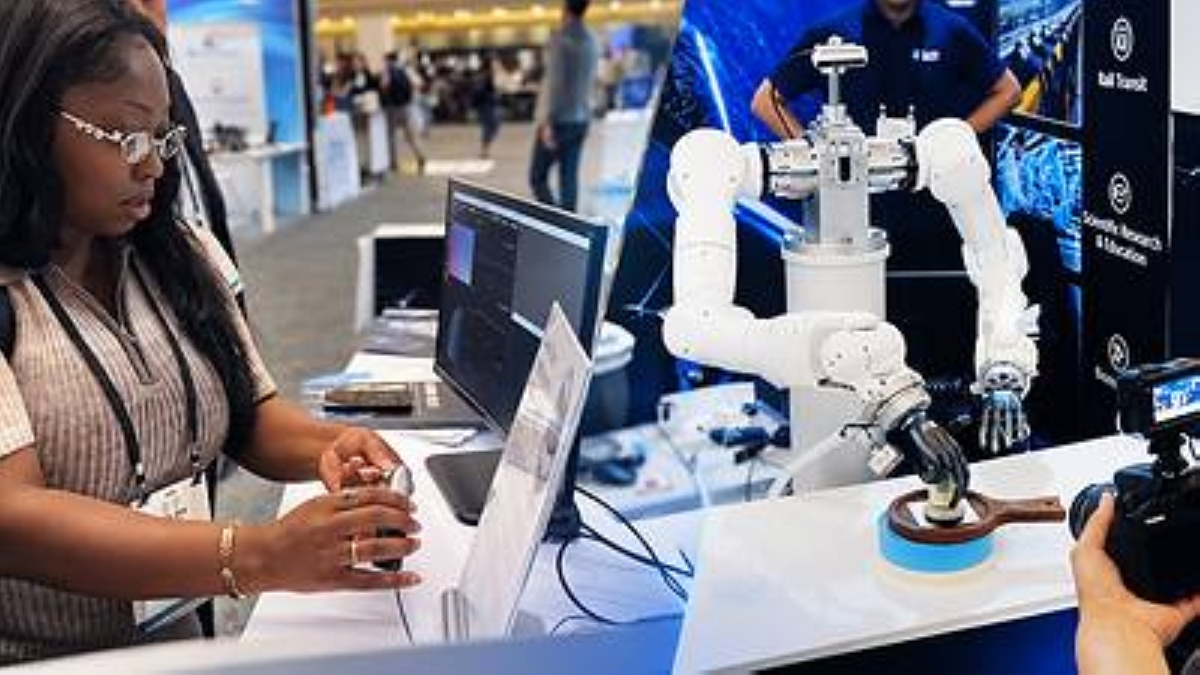
Founded just over a year ago, LumiBot (known in China as Shiyue Technology) is exhibiting finger-shaped visuo-tactile sensors and dexterous hand series alongside its manipulation foundation models on the IROS 2026 exhibition floor today (September 30). The startup's focus on tactile feedback directly addresses a core challenge facing VLA models: the limited real-world robot datasets needed to scale generalist policies. Tactile sensing enables richer interaction understanding, reducing reliance on vision-only models that struggle with occlusion and contact-dependent tasks.
Robbyant and AFDE accelerate embodied AI deployment in Middle East
Ant Group's Robbyant and AFDE signed a memorandum of understanding covering embodied-AI deployment, Arabic localization, robotics pilots, and ecosystem development across the Middle East region (September 29). The partnership marks a strategic push to expand VLA model adoption beyond China and North America, with emphasis on language-specific adaptation for non-English instruction grounding.

Fresh VLA sim-to-real validation shows 3–23% success gains with visual pretraining
A new arxiv survey on Vision-Language-Action datasets and benchmarks reports that H2R (Li et al., 2026)—which detects hand poses, retargets motions to robot kinematics, and composites robot arms onto videos—improved manipulation success by 1.3–10.2% in simulation and 3–23% on real robots when pretraining visual encoders. However, environmental variation remains a critical failure mode: changes in lighting and camera pose cause success rate degradation of 30–50% across tested VLA models, highlighting the robustness gap between lab and field deployment.
Understanding the embodiment gap: generalization without real-world transfer
New research characterizes a fundamental tension in robot foundation models: a policy can generalize across simulation benchmarks yet fail to transfer to real robots due to embodiment mismatches—differences in actuators, morphology, and mechanical stiffness. This "embodiment gap" suggests that scaling data and model size alone is insufficient; VLA models require architecture changes and embodied action priors to close the sim-to-real boundary. The finding reframes the robotics foundation model challenge from a pure data problem to a physics-aware learning problem.
Local view
China: PEDaily reported (September 30, 7 hours ago) that multiple embodied AI firms are releasing updated models rapidly. Competitors including 宇树 (Unitree), 智元 (ZhiYuan), and 银河通用 (Galaxy Universal) are now valued at over ¥100 billion USD equivalent, signaling investor confidence in China's embodied AI infrastructure despite global competition from Physical Intelligence and Figure AI.

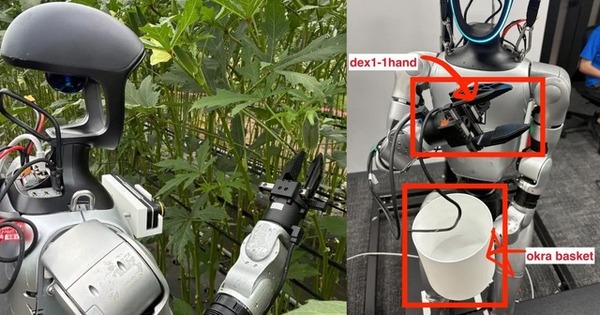
Japan: Response.jp reported (September 30, 9 hours ago) that Orboh and Toyota Car Body Research Institute completed real-world field trials of Unitree G1 humanoid in an okra farm, with the robot autonomously harvesting vegetables outdoors. This marks practical validation of embodied AI in unstructured agriculture—a domain where VLA robustness remains critical. Separately, Japanese startup ugo unveiled its semi-humanoid "Nova" with planned 2027 production, positioning Japan as a credible third pillar alongside Chinese and US humanoid makers.
Singapore: Singapore's Home Team (Internal Security and Development) formally opened its Humanoid Robotics Centre with over 20 robots available for development and training (September 30). The center signals state-level commitment to embodied AI infrastructure in Southeast Asia, positioning the region to develop localized VLA models and robotics policies.

Context & numbers
- IROS 2026 exhibition: LumiBot joined the world's largest robotics conference (Pittsburgh, September 30) with tactile sensor and manipulation model releases—marking a shift from vision-only VLA toward multimodal embodied perception.
- Sim-to-real success variance: H2R method achieved 3–23% real-world improvement (median ~13%) with visual pretraining, but environmental robustness remains low: 30–50% success degradation from lighting/pose shifts alone (Li et al., 2026).
- Embodiment gap thesis: Academic consensus now frames robot foundation model scaling as a physics-constrained problem, not a pure data problem—opening new research directions in morphology-aware policy learning.
- Regional expansion: Robbyant–AFDE MoU signals embodied AI moving from North America/China axis into Middle East and Southeast Asia markets.
On the radar
- IROS 2026 closing sessions (September 30–October 1): expect additional embodied AI and world model papers to be presented; VLA unlearning (VLA-Forget) and action tokenization research likely to be featured.
- China's model release cadence: Three major embodied AI firms (Unitree, ZhiYuan, Galaxy Universal) scheduled updates in September; watch for October announcements from smaller startups seeking funding in late Q3 2026.
- Tesla Optimus hand reliability issues: Ars Technica (September 25) and Electrek reported that hand breakage and supplier constraints slow Optimus weekly production below Tesla's 1,000-unit target; hardware robustness remains a bottleneck competing with VLA software advances.
- Apptronik Apollo deployment scale: Last reported at $5.5B valuation (February 2026); expect Series C funding or partnership announcements by Q4 2026 as Mercedes-Benz and GXO Logistics expand warehouse trials.
Data freshness note: This article covers only developments published or announced between September 23–30, 2026. Older model papers (H2R, VLA-Forget, PolicyTrim) are included only where they report new 2026 results or were presented at current conferences.
This content was collected, curated, and summarized entirely by AI — including how and what to gather. It may contain inaccuracies. Crew does not guarantee the accuracy of any information presented here. Always verify facts on your own before acting on them. Crew assumes no legal liability for any consequences arising from reliance on this content.
Powered by
