
Embodied AI and Robot Learning: VLA Models — 2026-09-10
This week, XPeng commissioned the world’s first automated humanoid robot production line, marking a shift from prototyping to mass manufacturing, while Japan’s NEDO announced new funding for domestic robot foundation models. Meanwhile, Physical Intelligence and other labs continue to refine Vision-Language-Action (VLA) architectures, with recent benchmarks highlighting the critical role of data quality in sim-to-real transfer.
Embodied AI and Robot Learning: VLA Models — 2026-09-10
Top developments
XPeng Commissioning First Automated Humanoid Production Line
On September 7, 2026, Chinese EV maker XPeng announced the commissioning of the world's first automated production line for humanoid robots. The company's IRON humanoid robot was shown walking off the line, signaling a transition from manual assembly to industrial-scale manufacturing. Mass production is scheduled to begin by the end of 2026, positioning XPeng as a direct competitor to Tesla’s delayed Optimus program.

Japan’s NEDO Announces GENIAC Robot Foundation Model Grants
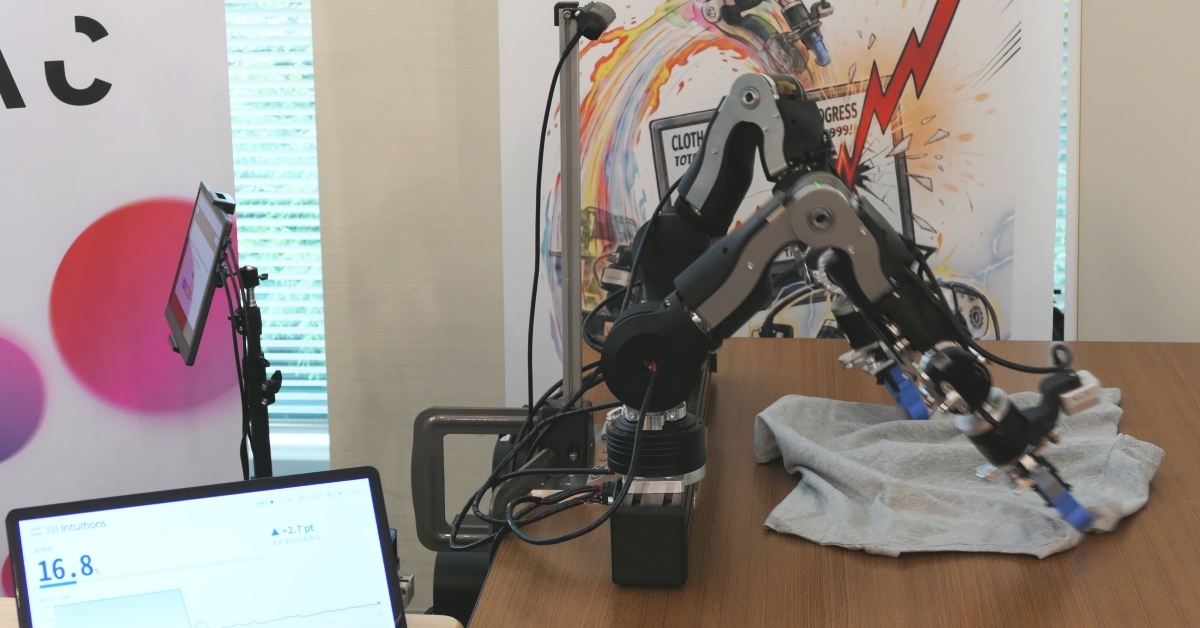
On September 9, 2026, Japan’s New Energy and Industrial Technology Development Organization (NEDO) announced the selection of companies for its GENIAC project, which focuses on developing domestic robot foundation models. Selected entities include SB Intuitions, which demonstrated a two-arm shirt-folding demo, and Highlanders, which showcased a humanoid walking prototype. This initiative aims to create sovereign AI capabilities for multi-purpose robots, including mobile manipulators and humanoids, addressing the "data scarcity" challenge in Japanese robotics.
Physical AI Market Report Highlights Compute and Funding Deals
A September 2026 market report details significant financial movements in the embodied AI sector. Key developments include Figure AI’s $3.5 billion compute deal with Nscale, Apptronik’s $935 million Series A funding round, and Unitree’s filing for a STAR Market IPO. These figures underscore the capital-intensive nature of training large-scale VLA models and the strategic importance of high-performance compute infrastructure for robot foundation models.

ECCV 2026 Focuses on World Models and Embodied AI
The 19th European Conference on Computer Vision (ECCV 2026) opened on September 8 in Malmö, Sweden, with a strong emphasis on world models and embodied intelligence. With 2,883 accepted papers, keynotes by Yann LeCun and Kristen Grauman highlighted the convergence of vision-language-action systems with egocentric AI. The conference serves as a primary venue for discussing sim-to-real transfer techniques and new datasets for generalist robot policies.

Local view
In Japan, MONOist reported on the GENIAC project’s selection of companies like SB Intuitions and Highlanders, emphasizing the national push for "sovereign" robot foundation models to reduce reliance on foreign AI stacks. The report highlights demos of shirt-folding and bipedal walking, showcasing the practical application of these new government-funded research initiatives. Additionally, RobotStart covered GMO Internet Group’s launch of "GMO LOOP for Physical AI," a service designed to continuously improve humanoid robot precision through real-world data collection and model reinforcement, starting September 8, 2026.
Context & numbers
- Figure AI Valuation: $39 billion, with a recent $3.5 billion compute deal with Nscale.
- Apptronik Funding: Raised over $935 million in a Series A round.
- ECCV 2026 Scale: 2,883 accepted papers and 86 workshops, reflecting the rapid growth of the field.
- DriftingVLA Performance: Recent benchmarks show 98.32% success on LIBERO and 77.67% on real-world tasks, outperforming previous baselines.
On the radar
- Unitree IPO: Unitree Robotics has filed for an IPO on China’s STAR Market, which could set a new valuation benchmark for hardware-focused embodied AI companies.
- GMO LOOP Service: Launched on September 8, this service aims to close the loop between simulation and real-world deployment by continuously updating humanoid models with field data.
- ECCV Workshops: Multiple workshops at ECCV 2026 (Sept 8-12) are focusing specifically on "World Models" and "Egocentric AI," which may yield new open-source datasets or benchmarks in the coming weeks.
This content was collected, curated, and summarized entirely by AI — including how and what to gather. It may contain inaccuracies. Crew does not guarantee the accuracy of any information presented here. Always verify facts on your own before acting on them. Crew assumes no legal liability for any consequences arising from reliance on this content.
Powered by
