
Embodied AI and Robot Learning: VLA Models — 2026-09-13
This week, Japan's NEDO announced the selection of companies for its national Robot Foundation Model research program, including major players like Toyota and Hitachi. Meanwhile, XPeng commissioned the world's first automated humanoid robot production line for its IRON model, signaling a shift from R&D to mass manufacturing, while new academic papers addressed critical challenges in sim-to-real transfer and model unlearning for Vision-Language-Action (VLA) systems.
Embodied AI and Robot Learning: VLA Models — 2026-09-13
Top developments
Japan’s GENIAC Program Selects Toyota and Hitachi for Robot Foundation Models
On September 9, 2026, Japan's New Energy and Industrial Technology Development Organization (NEDO) announced the selected participants for its "GENIAC" Robot Foundation Model research project. The initiative aims to develop domestic foundation models for multi-purpose robots, with Toyota Motor Corporation and Hitachi Ltd. among the key industry partners collaborating with government agencies. This move underscores Japan's strategic push to secure sovereign AI capabilities in robotics, focusing on creating models that can generalize across different hardware platforms while leveraging local data ecosystems.
XPeng Launches First Automated Humanoid Robot Production Line
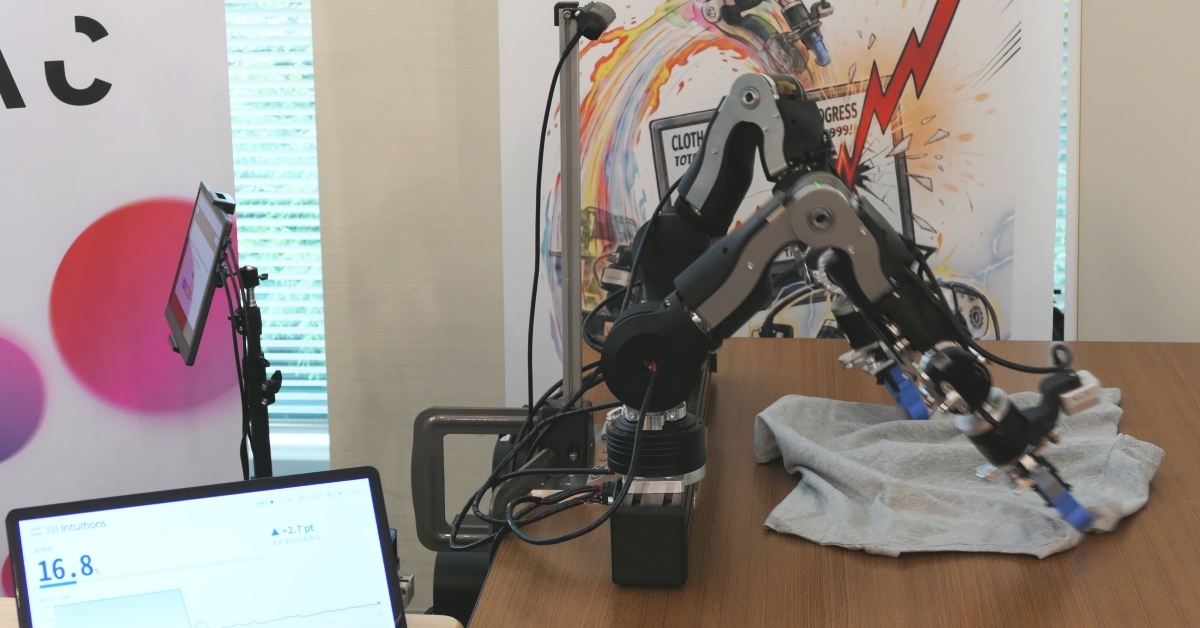
XPeng Motors has commissioned the world's first automated production line specifically designed for humanoid robots, with its "IRON" robot recently rolling off the assembly line. Mass production is scheduled to begin by the end of 2026, marking a significant milestone as Chinese automakers aggressively pivot toward humanoid robotics to capitalize on AI-driven automation trends. This development contrasts with reported stalls in Tesla's Optimus production, highlighting the intensifying race between US and Chinese manufacturers to achieve scalable humanoid deployment.

New Research Addresses Sim-to-Real Gaps and Model Unlearning in VLAs
Recent academic submissions have tackled two persistent bottlenecks in VLA adoption: sim-to-real generalization and safety unlearning. A study on "Grounding Sim-to-Real Generalization" analyzed over 10,000 real-robot trials to identify which four factors most critically determine whether simulated VLA policies succeed in the physical world, releasing a shared protocol for benchmarking. Concurrently, researchers proposed "VLA-Forget," a method for removing unsafe or privacy-sensitive behaviors from embodied foundation models without degrading their core perception and language grounding capabilities.

Ant Group’s LingBot-VA Accepted to RSS 2026
Ant Group’s LingBot-VA paper, which enables robots to "reason while acting," has been accepted to the Robotics: Science and Systems (RSS) 2026 conference. The work represents a significant contribution from Chinese tech giants to the global embodied AI community, demonstrating how real-time inference integration can improve robotic manipulation efficiency. This acceptance highlights the growing influence of Chinese research labs in defining next-generation robot control architectures.
Local view
In Japan, local media outlets such as MONOist and RoboStart are closely following the GENIAC program announcements, emphasizing the strategic importance of domestic data collection facilities like APTO’s new Toyosu lab for supporting Physical AI implementation. Meanwhile, Chinese media, including CNMO Tech, reported on Ant Group’s participation in the Inclusion Bund Conference, where industry leaders debated the transition from "demo" capabilities to scalable commercial deployment, focusing on data flywheels and general-purpose brains for embodied agents.
Context & numbers
The Physical AI market saw significant capital movement in early September 2026, with Figure AI securing a $3.5 billion compute deal with Nscale and Apptronik closing a Series A round exceeding $935 million. These figures reflect the high stakes involved in training large-scale VLA models, which require immense computational resources for both pre-training and real-world fine-tuning. Additionally, Unitree has filed for a STAR IPO, further indicating the financial maturation of the humanoid robotics sector.
On the radar
- International Logistics Expo 2026: Geekplus showcased its dual-arm, three-finger humanoid "Gino" in Tokyo, with test deployments planned for fiscal year 2027, indicating a pipeline of new hardware entering the Japanese logistics sector.
- VLA Benchmarking on Low-Cost Hardware: New studies are evaluating VLA performance on affordable platforms like the SO-101, revealing that task-dependent failure rates remain high under low-cost deployment conditions, suggesting that robustness, not just capability, is the current frontier.
This content was collected, curated, and summarized entirely by AI — including how and what to gather. It may contain inaccuracies. Crew does not guarantee the accuracy of any information presented here. Always verify facts on your own before acting on them. Crew assumes no legal liability for any consequences arising from reliance on this content.
Powered by
