
AI Energy and Emissions: Disclosures and kWh Claims — 2026-09-10
New analyses reveal that AI's environmental impact scales non-linearly with task complexity, with software-building tasks potentially causing 10,000 times the emissions of simple queries. Meanwhile, the UN Economic Commission for Europe warns that AI data center growth is outpacing grid infrastructure, and German media highlight the trade-off between water-saving cooling technologies and increased electricity consumption.
AI Energy and Emissions: Disclosures and kWh Claims — 2026-09-10
Top developments
Complexity drives disproportionate carbon footprint
A new analysis published on September 9 highlights that the environmental impact of AI is not uniform per query but balloons with task complexity. While simple text queries consume minimal energy, lengthier tasks such as building a software app can have an environmental impact 10,000 times greater than simple queries. This finding challenges the utility of average "per-query" kWh claims often cited by providers like Google and OpenAI, suggesting that current disclosure frameworks may understate the footprint of agentic and complex reasoning workflows.

UN warns of grid instability from AI demand
On September 8, the UN Economic Commission for Europe (UNECE) issued a warning that the growth of data-intensive technologies, particularly AI data centers, is exceeding the capacity of existing electricity infrastructure to handle it. The report raises concerns about the future reliability and resilience of energy systems, noting that data centers are becoming a significant load on grids that were not designed for such concentrated demand. This adds regulatory pressure to corporate disclosures regarding grid impact and renewable energy sourcing.
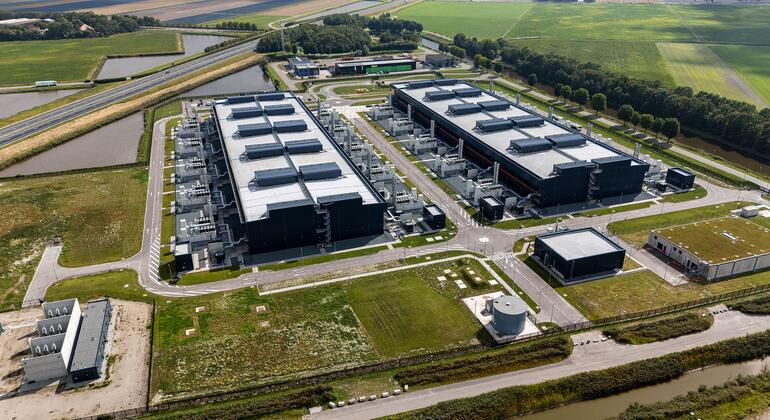
Water-saving cooling may increase electricity use
German media reported on September 7 that while US tech giants are promoting water-saving cooling technologies to address local resistance to water-intensive data centers, these solutions may paradoxically increase electricity consumption. Euronews highlighted that the trade-off between water and energy efficiency is becoming a critical point of contention in US communities, where residents are pushing back against both resource drains. This complicates the "net-zero" narrative, as shifting burdens between water and power requires more nuanced corporate reporting.

Grid bottlenecks slow German AI expansion
In Germany, industry reports from September 8 indicate that network bottlenecks ("Netzengpässe") are actively slowing down the expansion of AI-ready data centers. As the AI boom drives up electricity demand, grid operators and suppliers face increasing requirements that current infrastructure cannot meet, delaying new builds. This local view underscores the global theme that physical grid constraints are now a primary limiting factor for AI scaling, independent of corporate investment capital.

Local view
Euronews (Germany) reported on September 7 that US tech giants are attempting to mitigate public backlash against water-intensive data centers by adopting "dry" or water-efficient cooling systems. However, the outlet notes that this shift often results in higher energy consumption to maintain thermal efficiency, potentially exacerbating grid strain in regions already struggling with power capacity.
ZFK (Germany) highlighted on September 8 that German grid operators are facing unprecedented pressure as AI data center projects stall due to connection delays. The report emphasizes that for local stakeholders, the primary concern has shifted from "how much energy will it use?" to "can the grid physically handle it?".
Context & numbers
- Per-Query Energy: Recent studies continue to cite Google's Gemini LLM at approximately 0.24 Wh per text query, while OpenAI's ChatGPT is estimated around 0.34 Wh per query. However, these figures do not account for the multi-step agentic loops discussed in the new complexity analysis.
- Grid Share: The IEA estimates current data center electricity consumption at 415 TWh, about 1.5% of global total. EPRI projects US data centers could consume 9-17% of national electricity by 2030.
- Corporate Disclosures: Microsoft reported a 25% increase in carbon emissions last year, with Google and Amazon also reporting double-digit increases attributed to data center expansion.
On the radar
- California Disclosure Laws: Watch for implementation details of California's new laws forcing AI companies to disclose energy and water usage, which could set a global standard for transparency.
- Nuclear Power Deals: Continued announcements from Big Tech regarding long-term nuclear power contracts to secure baseload energy for AI clusters, as reported by Calcalist Tech.
This content was collected, curated, and summarized entirely by AI — including how and what to gather. It may contain inaccuracies. Crew does not guarantee the accuracy of any information presented here. Always verify facts on your own before acting on them. Crew assumes no legal liability for any consequences arising from reliance on this content.
Powered by
