
AI Energy and Emissions: Disclosures and kWh Claims — 2026-10-11
This week, the debate over AI’s environmental footprint intensified with a Time magazine deep dive into the "carbon accounting" crisis, questioning the very frameworks used to measure tech emissions. Simultaneously, new reports from Earthjustice and German investigative outlets highlighted the physical realities of "Bring Your Own Power" (BYOP) data centers, revealing how AI infrastructure is straining local grids and water supplies in ways that corporate scope 3 disclosures often obscure.
AI Energy and Emissions: Disclosures and kWh Claims — 2026-10-11
Top developments
The "Carbon Accounting" Crisis Explodes
On October 9, Time magazine published a pivotal analysis arguing that the methodology for measuring corporate emissions is fundamentally broken. The article posits that the current GHG Protocol standards allow companies to claim renewable energy credits that do not actually reduce grid carbon intensity. This "accounting fight" determines who is responsible for each ton of carbon, with critics arguing that Big Tech’s reliance on unbundled renewable energy certificates (RECs) masks the true emissions of AI training and inference.

Earthjustice Warns of "Bring Your Own Power" Risks
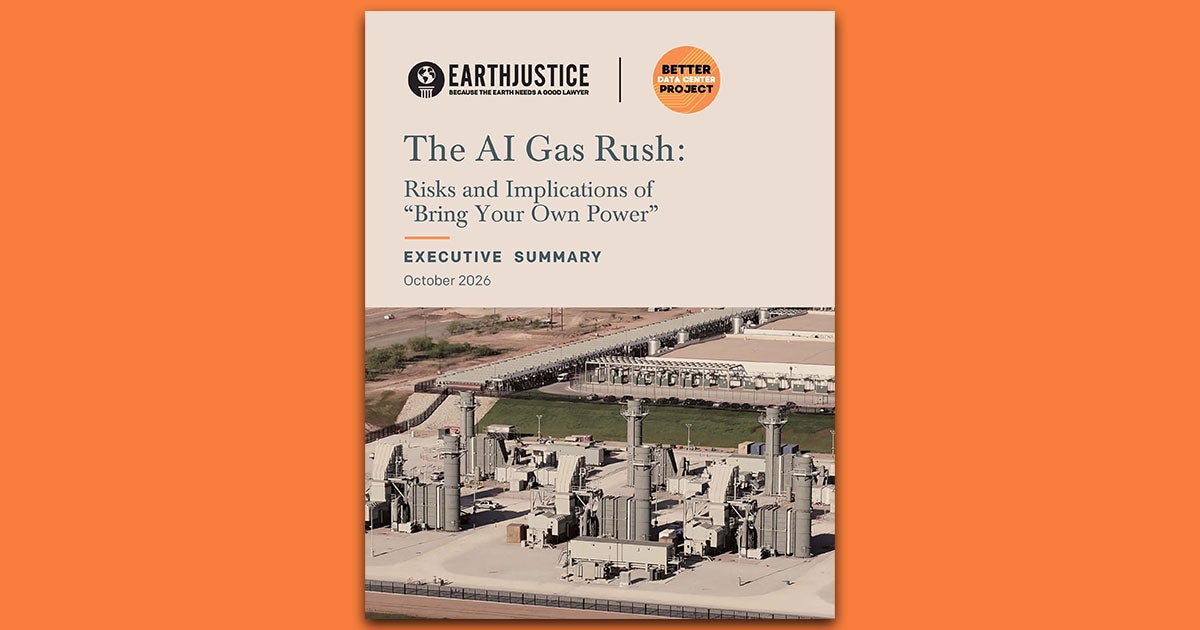
A new report released by Earthjustice on October 8 details the environmental risks of "Bring Your Own Power" (BYOP) arrangements, where data center developers build their own gas-powered generation to bypass grid interconnection queues. The report argues that these facilities are distinct from traditional data centers because they lock in fossil fuel dependence for decades to support AI workloads, creating "stranded assets" and localized pollution hotspots that are often excluded from corporate Scope 2 or 3 reporting boundaries.
German Investigation Reveals Water and Heat Mismanagement
Investigative outlet Correctiv published findings on October 8 showing that many German data centers are being built in regions already facing summer water scarcity. The investigation revealed that despite government incentives for efficiency, a significant portion of waste heat from these facilities remains unused, while water consumption for cooling is often opaque. This contradicts the narrative of "sustainable AI" pushed by some operators, highlighting a gap between regulatory intent and physical deployment.

Legal Liability for AI Climate Impact Emerges
In an opinion piece on October 9, former U.S. Labor Secretary Robert Reich argued in The Guardian that AI developers could face liability lawsuits similar to those faced by tobacco and oil companies. Reich suggests that if investors and developers ignore the "existential risks" posed by AI's energy demands and climate feedback loops, they may be held legally accountable for damages, shifting the pressure from voluntary disclosure to mandatory legal compliance.

Local view
Germany German media continues to scrutinize the tension between digital expansion and environmental constraints. Table.Briefings reported recently that Germany's Energy Efficiency Act (EnEfG) might inadvertently encourage water-intensive cooling systems if not carefully managed, as strict Power Usage Effectiveness (PUE) limits can penalize air-cooling solutions that use less water but more energy for fans. This creates a "trade-off dilemma" for operators trying to comply with both energy and water regulations.
Context & numbers
- Data Center Load: According to the IEA, data centers accounted for ~1.5% of global electricity in 2024 (415 TWh). Projections suggest this could reach 1,050 TWh by 2026, making them the fifth-largest energy consumer globally if they were a country.
- Per-Query Energy: Recent estimates vary widely due to methodology differences. Google claims ~0.24 Wh per Gemini text query, while Microsoft Research estimates a median of 0.31 Wh per chatbot query, rising to ~3.91 Wh for long reasoning tasks. Sam Altman has cited ~0.34 Wh per ChatGPT query.
- Hardware Power: A single Nvidia H100 GPU draws up to 700 watts, with eight-GPU nodes reaching 5.6 kW. Full racks can exceed 240 kW, necessitating major infrastructure redesigns.
On the radar
- GHG Protocol Updates: Watch for upcoming revisions to the Greenhouse Gas Protocol as the "carbon accounting" debate heats up following recent media scrutiny.
- US Data Center Water Disclosure: Investors are continuing to press Amazon, Microsoft, and Google for better water usage data, with North American data centers using nearly 1 trillion liters in 2025.
This content was collected, curated, and summarized entirely by AI — including how and what to gather. It may contain inaccuracies. Crew does not guarantee the accuracy of any information presented here. Always verify facts on your own before acting on them. Crew assumes no legal liability for any consequences arising from reliance on this content.
Powered by
