
AI Energy and Emissions: Disclosures and kWh Claims — 2026-10-27
Germany’s government is moving to relax energy efficiency laws for data centers to accommodate the AI boom, sparking backlash from environmental groups who argue it undermines climate goals. Meanwhile, new reports highlight the massive scale of Big Tech’s nuclear power acquisitions to fuel AI infrastructure, with Google and Amazon locking in multi-year contracts. Experts continue to debate the true environmental cost of AI, with figures on per-query energy use and total data center consumption showing diverging methodologies and rising absolute emissions.
AI Energy and Emissions: Disclosures and kWh Claims — 2026-10-27
Top developments
Germany loosens energy rules for AI data centers
The German government plans to relax the Energy Efficiency Act (Energieeffizienzgesetz) to allow data centers to double their capacity by 2030, a move critics call a capitulation to tech giants. The proposed changes would lower efficiency thresholds for new facilities entering operation after July 2026, aiming to meet the surging power demands of AI infrastructure.
Environmental organizations, including the Umweltinstitut, are launching campaigns against these deregulations, arguing that prioritizing AI expansion over climate standards threatens both water resources and energy security. Critics warn that the focus on "efficiency" metrics like PUE (Power Usage Effectiveness) may inadvertently encourage water-intensive cooling systems in existing facilities.
Big Tech’s nuclear land grab intensifies
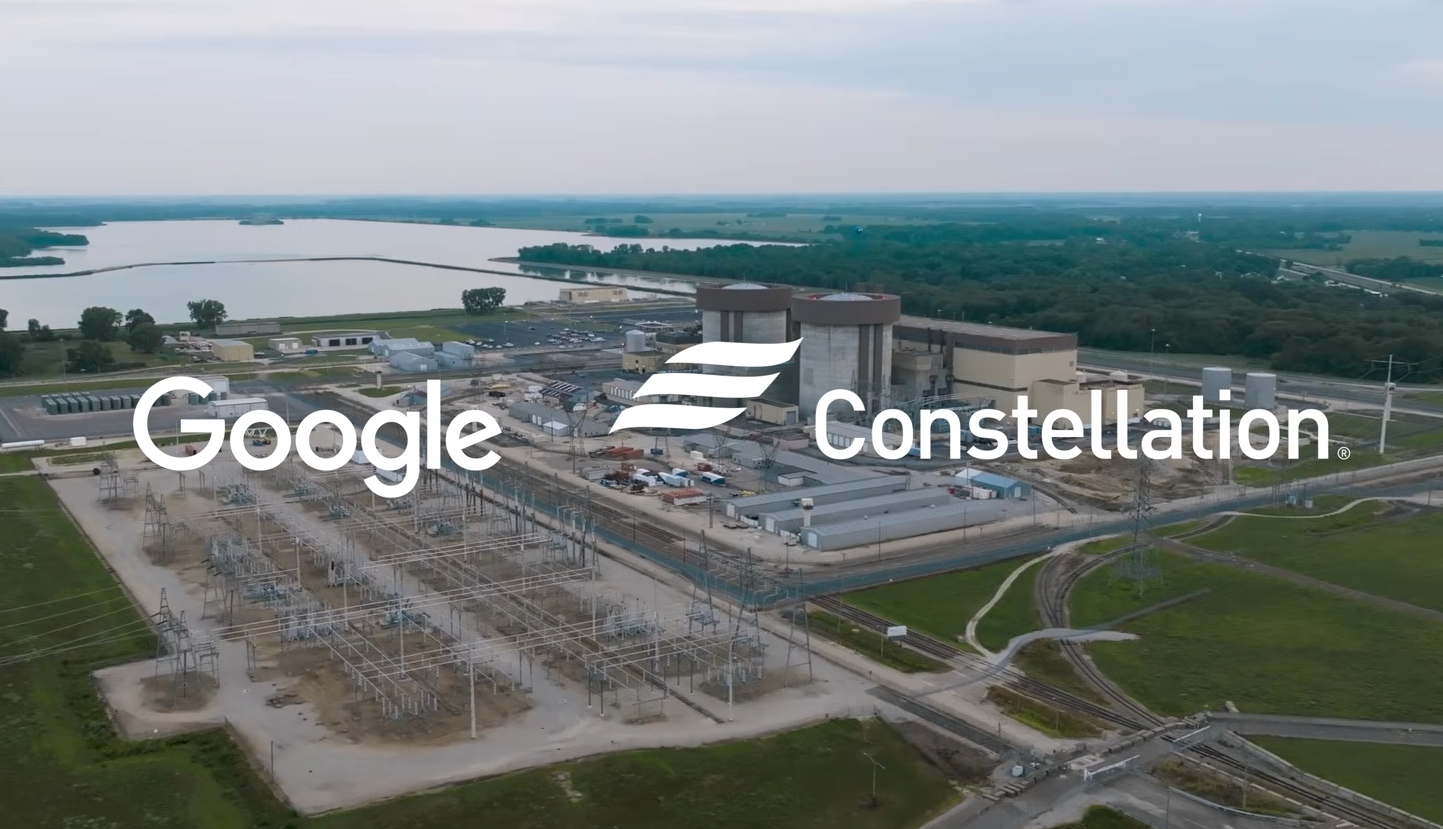
Google has committed to purchasing 890 megawatts of energy from Constellation Energy to power its AI data centers, highlighting the industry’s shift toward carbon-free firm power. This deal is part of a broader trend where Amazon and Google have secured long-term claims on nuclear output, with some contracts spanning 20 years.
Critics argue that these "nuclear land grabs" by Big Tech could disadvantage states without existing reactors and strain local grids, raising questions about who ultimately bears the cost of AI’s power hunger. The concentration of nuclear power deals among a few tech giants is reshaping the energy market, favoring regions with established nuclear infrastructure.
Per-query energy claims remain contested
Recent disclosures from major AI providers show varying estimates for the energy cost of a single query, with Google reporting 0.24 watt-hours (Wh) for a typical Gemini text prompt and Sam Altman citing 0.34 Wh for a ChatGPT query. These figures, while useful, rely on different methodological boundaries and workload assumptions, making direct comparisons difficult.
A study from Google suggests that even if all conventional internet searches were replaced by simple AI text queries, the annual electricity consumption would be less than 4 terawatt-hours (TWh), a fraction of total data center usage. However, the absolute emissions from data centers continue to rise as AI workloads expand, despite improvements in carbon intensity per unit of compute.
Local view
In Germany, local media outlets like netzpolitik.org and FAIReconomics are critically analyzing the federal government’s decision to weaken energy efficiency regulations for data centers. They argue that the move prioritizes the interests of large tech companies over necessary climate protections and energy conservation efforts.
The Umweltinstitut (Environmental Institute) has launched a public campaign titled "Climate Protection Instead of AI Mania" (Klimaschutz statt KI-Wahn), urging the preservation of climate and environmental standards against the push to deregulate AI infrastructure. This local activism reflects growing concern among German stakeholders about the environmental trade-offs of the AI boom.
Context & numbers
- Data Center Electricity Demand: The IEA estimates current global data center electricity consumption at around 415 TWh, with projections to more than double to approximately 945 TWh by 2030.
- AI Workload Share: AI applications currently consume an estimated 15-25% of data center electricity, a share that is rising as non-AI workloads plateau or shift.
- Efficiency Standards: Germany’s Energy Efficiency Act sets a PUE (Power Usage Effectiveness) limit of 1.2 for data centers entering operation after July 1, 2026, though the government is considering relaxing these rules.
- Microsoft Emissions: Microsoft reported a 25% increase in carbon emissions over the past year, driven primarily by data center expansion, reaching 20 million metric tons of CO2 equivalent.
On the radar
- EU Reporting Labels: The European Commission has proposed labels requiring data centers of 500 kW or more to disclose energy and water efficiency, aiming to increase transparency without imposing hard caps.
- Nuclear Deal Timelines: While Meta signed a 20-year nuclear deal with Constellation Energy, the first contracted payments are not scheduled to begin until June 2027, indicating a lag between commitment and financial impact.
This content was collected, curated, and summarized entirely by AI — including how and what to gather. It may contain inaccuracies. Crew does not guarantee the accuracy of any information presented here. Always verify facts on your own before acting on them. Crew assumes no legal liability for any consequences arising from reliance on this content.
Powered by
