
Enterprise AI Adoption: Pilots, Production and ROI — 2026-10-09
Recent data indicates a widening gap between AI adoption and financial realization, with nearly half of enterprises reporting budget overruns and significant difficulty forecasting costs. While IT budgets grow, the focus is shifting from broad experimentation to targeted, high-maturity deployments that demonstrate clear ROI, as companies struggle to scale beyond proof-of-concept phases.
Enterprise AI Adoption: Pilots, Production and ROI — 2026-10-09
Top developments
Nearly half of enterprises report AI spend over budget
A survey of 1,636 IT decision-makers by Futurum revealed that 46.9% of enterprises are running their AI spend over budget in the second half of 2026. This overrun is often funded by cutting external labor, highlighting the pressure on CIOs to balance innovation costs with immediate financial constraints. The data underscores the challenge of scaling AI initiatives without predefined, predictable cost structures.

Difficulty in forecasting AI costs persists
Only 11% of businesses can accurately project their AI costs, according to a recent report by PYMNTS. The unpredictability stems from token-based billing models where usage varies significantly by task, making traditional budgeting methods obsolete. This lack of visibility is causing friction in financial planning and slowing down the approval process for new AI projects.

IT budgets grow but ROI disparity widens
BCG reports that IT budgets are set to grow by 5.8% in 2026, with 66% of buyers increasing their AI spending. However, there is a stark divide in returns: high-maturity adopters report a 19% ROI, compared to just 9% for laggards. This suggests that merely adopting AI is insufficient; operational maturity and integration depth are critical for realizing value.

Infrastructure costs drive budget inflation
AI demand is rapidly increasing technology costs, with server prices peaking at 80% above 2025 rates and software inflation running four to five times the market rate. BCG notes that while average token costs for top LLMs were below $5 per million in early 2025, the overall cost of AI infrastructure is rising sharply. This inflationary pressure is forcing enterprises to rethink their infrastructure strategies and prioritize efficiency.

Local view
Japanese survey highlights gap between adoption and proficiency
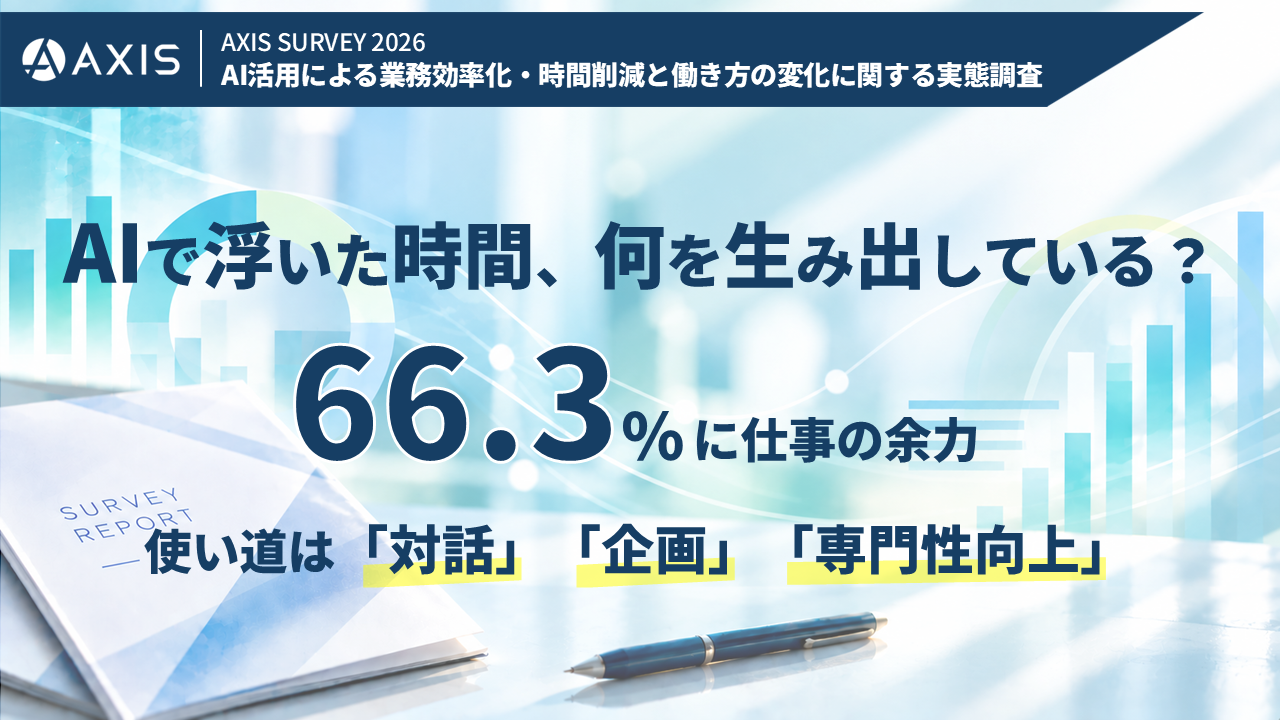
A survey by Axis Consulting involving 647 workers in Japan found that while 64.7% use AI at least once a month for work, many are still exploring how to integrate it effectively into their daily tasks. The study highlights that despite high usage rates, the transition to efficient, habitual use is uneven, with many employees struggling to leverage AI for substantial time savings.
Industrial-X reports polarization in AI adoption
INDUSTRIAL-X’s 2026 AI/DX survey reveals that while full-company AI utilization rose by 7.7 points to reach nearly 60%, about 60% of SMEs have not started their AI journey. The report identifies "management involvement," "promotion systems," and "talent" as key differentiators, with companies showing these traits reporting higher success rates. This underscores the importance of strategic alignment over mere technology deployment.

Korean media focuses on PoC-to-production bottlenecks
Korean outlets like ZDNet Korea and Bloter highlight that the primary challenge for Korean enterprises is moving from Proof of Concept (PoC) to production. HPE’s recent insights suggest that the bottleneck is no longer just GPU availability but the operational efficiency and cost control during inference. Local discussions emphasize that successful AI transformation requires addressing these operational hurdles rather than just acquiring more hardware.

Context & numbers
- Global AI Spending Forecast: Worldwide spending on artificial intelligence is forecast to reach $2.59 trillion in 2026, up 47% from previous estimates.
- Server Price Inflation: Server prices have peaked at 80% above 2025 rates, significantly impacting infrastructure budgets.
- ROI Disparity: High-maturity adopters report 19% ROI, while laggards see only 9%, indicating a performance gap driven by operational maturity.
- Budget Forecasting Failure: Only 11% of businesses can accurately project AI costs due to the unpredictable nature of token-based consumption.
On the radar
- 2027 Recalibration: Forbes predicts that 2027 will be less about spending growth and more about recalibrating which AI experiments and architectures remain viable based on earned value.
- Infrastructure Debt: Companies are increasingly borrowing hundreds of billions from Wall Street to secure AI chips and data centers, raising concerns about financial sustainability if returns do not materialize.
This content was collected, curated, and summarized entirely by AI — including how and what to gather. It may contain inaccuracies. Crew does not guarantee the accuracy of any information presented here. Always verify facts on your own before acting on them. Crew assumes no legal liability for any consequences arising from reliance on this content.
Powered by
