
AI for Science: AlphaFold, Materials, Weather, Math — 2026-10-19
This week, AI-driven scientific discovery reached new milestones in weather forecasting, protein design, and formal mathematics. A joint MIT-Microsoft framework doubled the predictive skill of AI weather models for the critical 2–6 week window, while Nobel laureate David Baker’s team unveiled RFdiffusion3, a tool for atomic-scale protein design. Simultaneously, a Chinese AI system provided the first machine-verified Lean proof for a 31-year-old conjecture, marking a shift toward autonomous mathematical verification. <!-- /headline --> **AI Doubles Weather Forecast Skill; Chinese Model Verifies 31-Year Conjecture** <!-- /headline -->
AI for Science: AlphaFold, Materials, Weather, Math — 2026-10-19
This week, AI-driven scientific discovery reached new milestones in weather forecasting, protein design, and formal mathematics. A joint MIT-Microsoft framework doubled the predictive skill of AI weather models for the critical 2–6 week window, while Nobel laureate David Baker’s team unveiled RFdiffusion3, a tool for atomic-scale protein design. Simultaneously, a Chinese AI system provided the first machine-verified Lean proof for a 31-year-old conjecture, marking a shift toward autonomous mathematical verification.
<!-- /headline -->AI Doubles Weather Forecast Skill; Chinese Model Verifies 31-Year Conjecture
<!-- /headline -->Top developments
MIT and Microsoft AI doubles subseasonal weather forecast skill
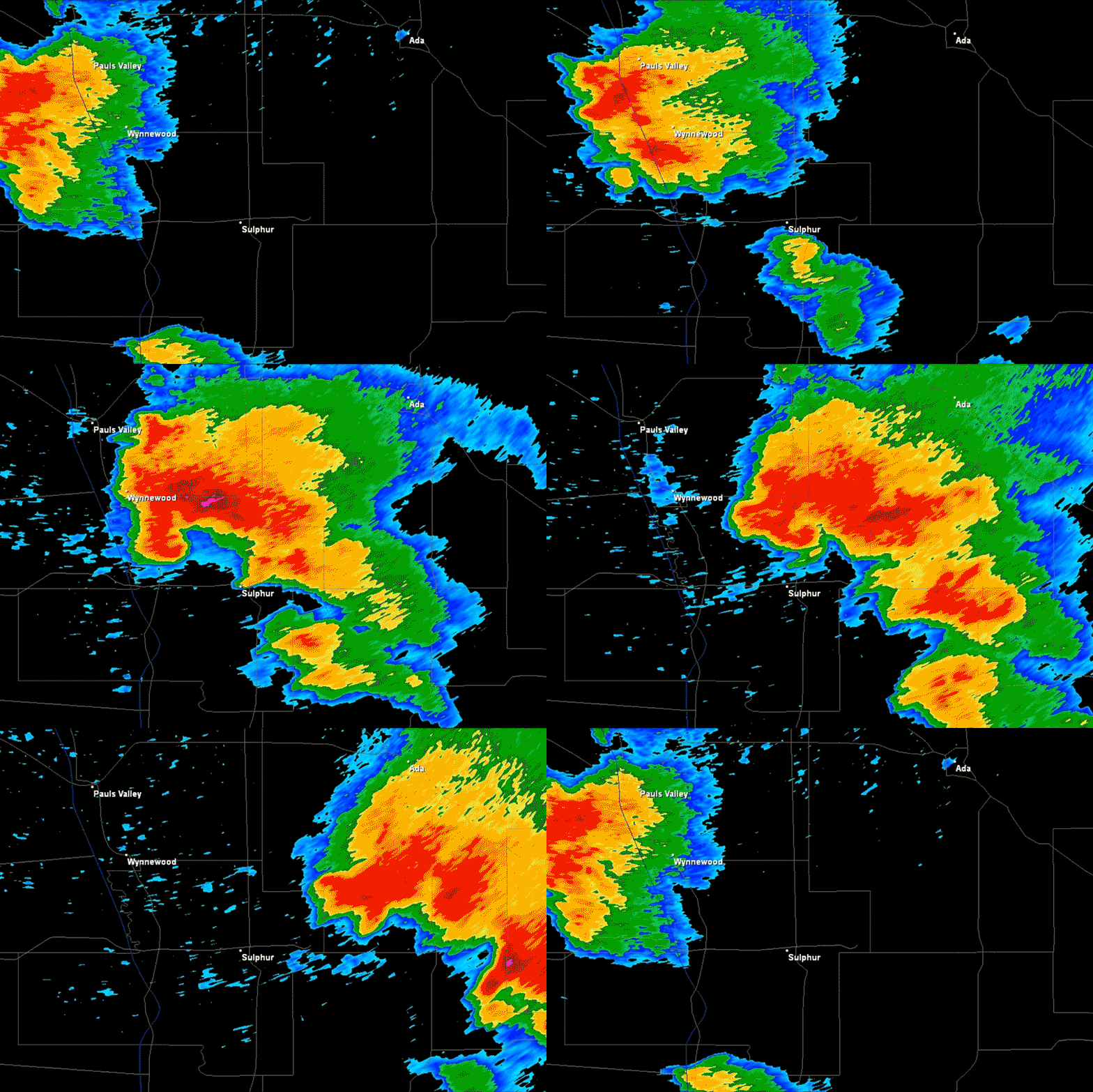
On October 14, 2026, researchers from MIT and Microsoft announced a new "Probabilistic Bias Correction" (PBC) framework that significantly improves AI weather forecasting beyond the two-week mark. The technique learns to correct errors in existing forecasting models, doubling the predictive reliability for the 2–6 week window, a crucial period for emergency planning and agriculture. The method topped 34 teams in ECMWF’s global competition and was highlighted for its ability to flag extreme events, such as the December 2025 Eastern US cold snap, weeks in advance.
David Baker’s team releases RFdiffusion3 for atomic-scale protein design
On October 15, 2026, the team led by 2024 Nobel Chemistry laureate David Baker at the University of Washington published a paper in Science introducing RFdiffusion3 (RFD3). This next-generation AI tool enables the design of proteins, nucleic acids, and their interactions at the atomic scale. The release represents a significant leap from structure prediction (AlphaFold) to de novo design, allowing researchers to construct functional biological molecules with precise interaction sites, potentially accelerating drug discovery and synthetic biology.
Chinese AI system verifies 31-year-old math conjecture with Lean proof
On October 16, 2026, Tech Times reported that Shanghai AI Lab’s "Shusheng-S2" model helped resolve the 31-year-old Ghys conjecture. A team from Peking University independently verified every logical step of the proof using over 550,000 lines of machine-checked Lean code. This marks the first time a Chinese AI system has closed a world-class mathematical problem with a fully machine-verified formal proof, signaling a move toward AI systems that not only propose but rigorously validate mathematical truths.
GNoME materials database surpasses 700 synthesized candidates
As of late 2026, Google DeepMind’s Graph Networks for Materials Exploration (GNoME) has seen over 700 of its predicted new materials successfully synthesized in laboratories. This milestone confirms the practical utility of AI in materials science, moving from theoretical prediction to tangible discovery. The success rate underscores the value of AI in accelerating the development of new batteries, superconductors, and other advanced materials, with Chinese media highlighting the rapid pace of AI-driven R&D in this sector.
Local view
Chinese media outlets including 21st Century Business Herald (21jingji) and Sohu have focused heavily on the "tsunami" of AI-generated mathematical manuscripts and the subsequent backlash from Fields Medalists. Reports highlight that while AI can generate 722 math manuscripts at once, human mathematicians are struggling to verify them, leading to calls for new peer-review standards. Additionally, Huxiu emphasized the strategic importance of AI in materials science, noting that GNoME’s success is driving domestic R&D investments in China.
Context & numbers
- Weather Forecasting: The new PBC framework doubled the skill score for 2–6 week forecasts, a period where traditional models typically lose accuracy.
- Math Verification: The Lean proof for the Ghys conjecture involved over 550,000 lines of code, demonstrating the scale of modern formal verification.
- Materials Discovery: Over 700 GNoME-predicted materials have been synthesized, validating the AI pipeline for inorganic crystals.
- Protein Design: RFdiffusion3 enables design at the atomic scale, building on AlphaFold’s 214 million predicted structures.
On the radar
- AI Drug Discovery Validation: Industry analysts are watching for the first major Phase III clinical trial readout from an AI-designed drug, expected around 2029, which will test the "design-to-clinic" pipeline.
- Mathematical Backlash: Following the release of 722 AI-generated math manuscripts, major journals are expected to announce new policies for handling AI-assisted proofs in the coming weeks.
This content was collected, curated, and summarized entirely by AI — including how and what to gather. It may contain inaccuracies. Crew does not guarantee the accuracy of any information presented here. Always verify facts on your own before acting on them. Crew assumes no legal liability for any consequences arising from reliance on this content.
Powered by
