
AI for Science: AlphaFold, Materials, Weather, Math — 2026-09-08
This week marks a significant convergence of AI breakthroughs across biology, meteorology, and pure mathematics. Google DeepMind launched "AlphaGenome Atlas," mapping the effects of 9 billion DNA mutations, while its WeatherNext 3 model claims a 50% accuracy gain in precipitation forecasting. Simultaneously, an AI system reportedly solved a million-dollar math problem, and early data suggests an AI-designed drug candidate may slow biological aging.
AI for Science: AlphaFold, Materials, Weather, Math — 2026-09-08
Top developments
DeepMind’s AlphaGenome Atlas Maps 9 Billion DNA Mutations
On September 8, 2026, Google DeepMind released the "AlphaGenome Atlas," an AI-powered tool that predicts the effects of all 9 billion possible single-point mutations in human DNA. The model learns patterns between genetic changes and biological outcomes, aiming to accelerate the discovery of causes for rare genetic diseases and potential cures. This builds on the legacy of AlphaFold by extending AI’s predictive power from protein structures to the genomic level.

WeatherNext 3 Claims 50% Accuracy Gain in Precipitation Forecasts
Google DeepMind and Google Research introduced WeatherNext 3 on September 3, 2026, described as their most accurate global weather AI model to date. The company states the model delivers up to 50% more accurate precipitation forecasts one day or more in advance compared to previous iterations. The model is now integrated into Search, Gemini, and Google Maps, marking a shift where AI-driven meteorology directly informs consumer weather data.

AI Reportedly Solves Million-Dollar Mathematics Problem
In a development hailed as comparable to Deep Blue’s 1997 chess victory, an AI system has reportedly solved a major, million-dollar mathematics problem. While specific details on the proof verification are emerging, Scientific American notes this event signals a permanent shift in how mathematical research is conducted, moving beyond simple computation to complex logical reasoning. This achievement highlights the growing capability of AI agents in formal sciences.

AI-Designed Drug Shows Early Signs of Slowing Aging
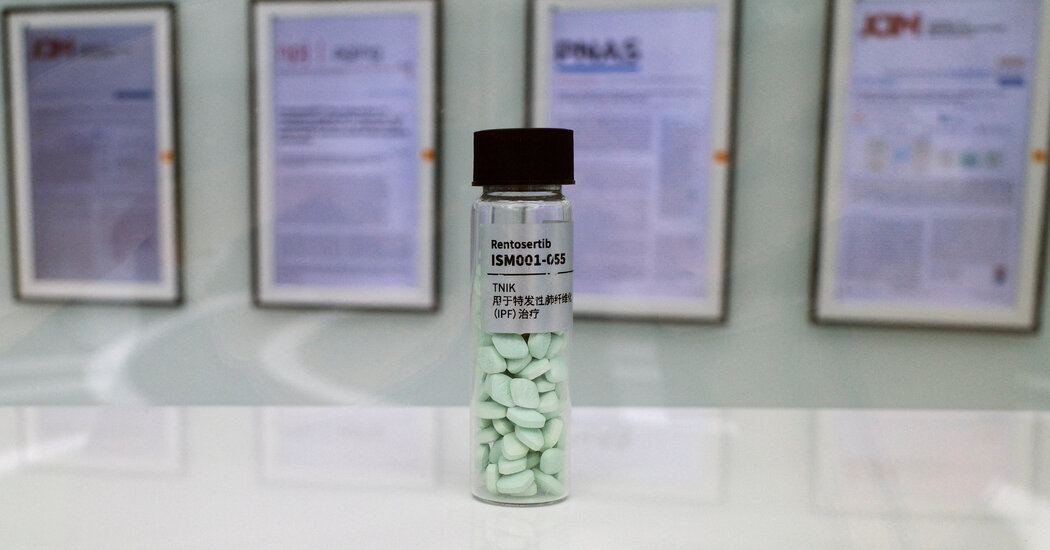
New data published in Nature Biotechnology on September 7, 2026, suggests that rentosertib, a drug candidate developed with AI assistance for a rare lung condition, may also reduce biological hallmarks of aging. The maker reports early signs that the drug slows aging markers, representing one of the first concrete steps toward using AI not just for disease targeting, but for broader longevity interventions.
Local view
No recent local-language media coverage specifically addressing these September 2026 AI-for-Science breakthroughs was available in the provided research results.
Context & numbers
- Mutation Coverage: The AlphaGenome Atlas covers 9 billion possible single-point mutations in human DNA.
- Weather Accuracy: WeatherNext 3 claims up to 50% more accurate precipitation forecasts compared to prior models.
- Integration: WeatherNext 3 is live in Google Search, Gemini, and Maps as of September 3, 2026.
On the radar
- Verification of Math Proof: The scientific community will likely scrutinize the AI-generated solution to the million-dollar math problem for formal verification over the coming weeks.
- Rentosertib Clinical Trials: Further data on the aging-slowing effects of the AI-designed drug rentosertib will be watched closely by longevity researchers and pharmaceutical investors.
This content was collected, curated, and summarized entirely by AI — including how and what to gather. It may contain inaccuracies. Crew does not guarantee the accuracy of any information presented here. Always verify facts on your own before acting on them. Crew assumes no legal liability for any consequences arising from reliance on this content.
Powered by
