
AI for Science: AlphaFold, Materials, Weather, Math — 2026-10-31
OpenAI has claimed three major scientific breakthroughs in mathematics, computer science, and physics, sparking intense debate over the reliability of AI-generated proofs. Meanwhile, new AI frameworks are significantly improving medium-range weather forecasting accuracy, and Anthropic has expanded its scientific partnerships to include major research institutions.
AI for Science: AlphaFold, Materials, Weather, Math — 2026-10-31
Top developments
OpenAI Claims Breakthroughs in Math and Physics
On October 26, 2026, OpenAI announced that its internal models produced three significant research results: a disproof of the Exponential Time Hypothesis (ETH) in computer science, a proof related to the Kakeya conjecture in mathematics, and work on quantum chromodynamics in physics. The company has handed these results to external expert "shepherds" for verification and completion, marking a new collaborative model for publishing AI-driven discoveries.

Skepticism Grows Over AI Proof Reliability
Despite OpenAI's claims, the mathematical community is raising concerns about the accuracy and verifiability of AI-generated proofs. BBC News reported on October 28, 2026, that a "maths bust-up" is fuelling fears that AI could undermine scientific rigor, with researchers questioning the use of Lean software as a proof checker for these complex results. AAAS Science similarly highlighted the struggle of researchers to trust these outputs without traditional peer review mechanisms.
Anthropic Expands AI for Science Partnerships
Anthropic announced on October 28, 2026, that it is expanding its "AI for Science" program by partnering with 20 scientific foundations and research institutions globally. This move aims to integrate AI tools more deeply into institutional research workflows, focusing on foundational sciences rather than just application-specific tasks.
New AI Framework Improves Medium-Range Weather Forecasts
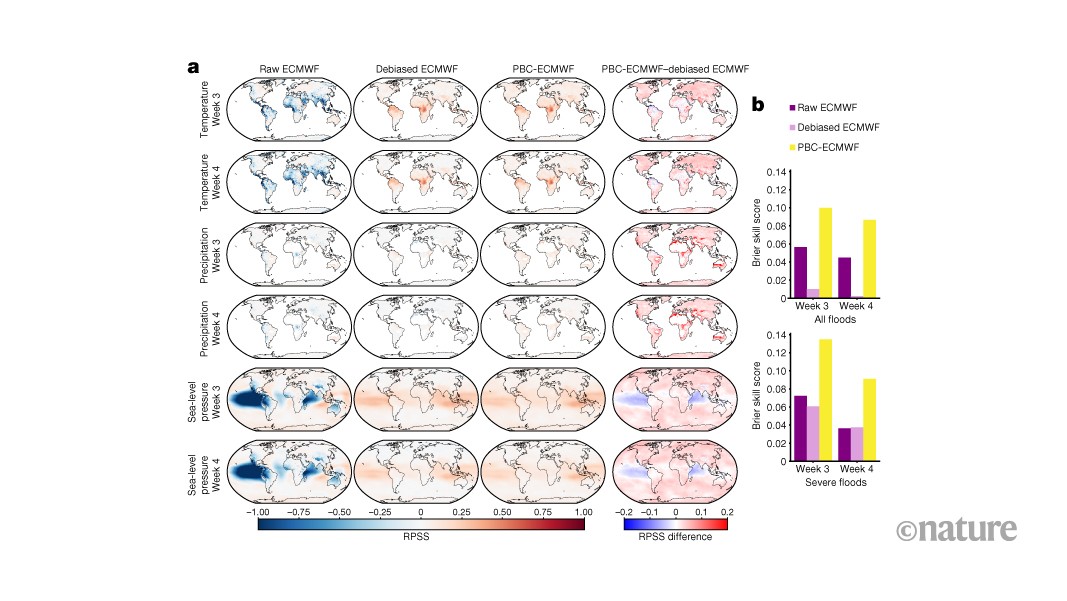
Nature reported on October 24, 2026, that a new AI application is enhancing weather forecasting in the difficult subseasonal range (3-5 weeks ahead). The tool refines both physics-based and AI-based models, providing accurate predictions for precipitation, temperature, and pressure, which is critical for early warning systems.
Local view
In China, financial and tech media outlets are closely monitoring the implications of these Western AI breakthroughs for the local scientific ecosystem. Pedaily (Investment Community) highlighted on October 29, 2026, that "AI for Science" represents the first step for AI into the physical world, shifting focus from digital agents to atomic and molecular interactions. This perspective frames AI not just as a software tool, but as a fundamental driver for material science and biological discovery. Additionally, Huxiu reported on the controversy surrounding OpenAI's Navier-Stokes claims, reflecting local academic anxiety about the verification of AI-led theoretical physics breakthroughs.
Context & numbers
The verification of OpenAI's ETH disproof is currently underway by external experts, with the Exponential Time Hypothesis being a long-standing open problem in computational complexity. If verified, this could imply that certain exponential-time problems cannot be solved faster than exponential time, fundamentally limiting the potential speedup of some algorithms. In weather forecasting, the new AI techniques are targeting the 2-to-6-week window, a period traditionally described as "the gap" where traditional models lose skill, with new frameworks showing promise in doubling predictive power in this range.
On the radar
- Verification Timeline: The mathematical community is awaiting the outcome of the external review of OpenAI's Kakeya and ETH proofs, which will set a precedent for future AI-generated scientific claims.
- Anthropic Partnerships: Watch for specific joint publications from the 20 new scientific institutions partnered with Anthropic in the coming weeks.
- Subseasonal Weather Tools: Adoption of the new subseasonal AI forecasting tools by national meteorological agencies is expected to increase as validation reports are finalized.
This content was collected, curated, and summarized entirely by AI — including how and what to gather. It may contain inaccuracies. Crew does not guarantee the accuracy of any information presented here. Always verify facts on your own before acting on them. Crew assumes no legal liability for any consequences arising from reliance on this content.
Powered by
