
AI for Science: AlphaFold, Materials, Weather, Math — 2026-10-25
This week, AI in science saw significant strides in subseasonal weather forecasting, with new tools extending accurate predictions up to five weeks. In mathematics, the community is grappling with the verification burden of OpenAI's recent proof releases, while materials science continues to mature with standardized AI discovery stacks.
AI for Science: AlphaFold, Materials, Weather, Math — 2026-10-25
Top developments
AI tool boosts subseasonal weather forecasts by 3-5 weeks
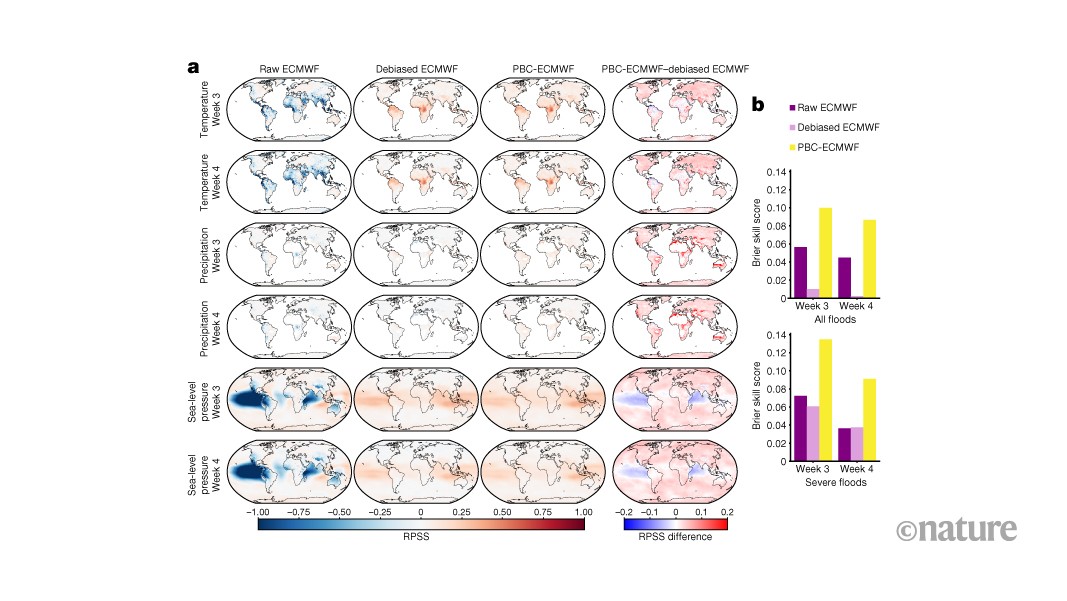
A new AI application published in Nature on October 21 successfully refines both physics-based and AI-driven weather models to provide accurate forecasts for precipitation, temperature, and pressure 3–5 weeks in advance. This development addresses the "subseasonal gap," a critical period where traditional models lose reliability. By improving early warning capabilities, this tool offers significant value for agriculture, energy planning, and disaster preparedness.
Mathematics community faces verification backlog from AI proofs
Following OpenAI’s release of 722 mathematical manuscripts, the global mathematics community is struggling to verify the claims, creating a substantial "extra homework" load for human researchers. The proofs, generated by an internal frontier model, cover areas from algebra to topology, challenging the traditional peer-review timeline and forcing a reevaluation of how mathematical truth is established in the AI era.

Standardized AI stacks emerge for materials discovery
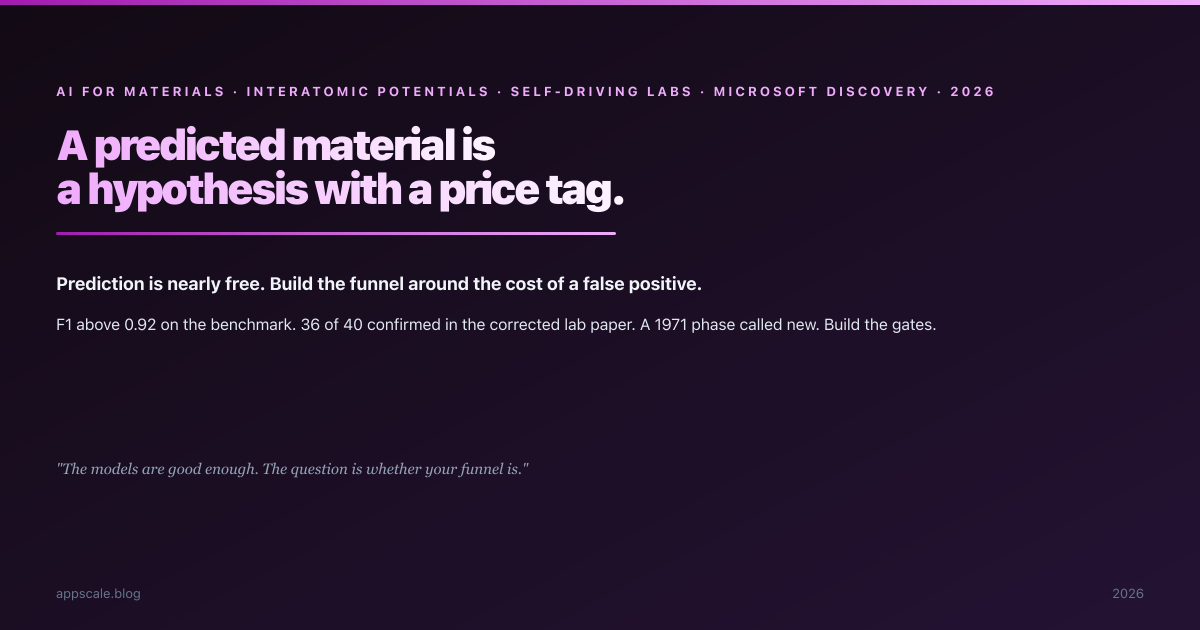
A new architectural guide for AI materials discovery highlights the shift from isolated models to integrated "product stacks" involving universal interatomic potentials like Meta UMA, Orb-v3, and NVIDIA ALCHEMI. These systems treat predicted materials as hypotheses with a "price tag," emphasizing the need for rigorous screening and self-driving lab integration to move from digital prediction to physical validation.
AI expands into theoretical economics and physics
MIT researchers report that AI is increasingly becoming the default method for solving theoretical problems in fields traditionally dominated by human intuition, such as economics and high-energy physics. This trend suggests a broader expansion of AI's utility beyond empirical data-heavy fields like biology and weather, into domains requiring complex abstract reasoning.
Local view
Chinese media outlets are closely monitoring the "AI drug discovery" boom, with Sohu reporting on five major breakthroughs by Chinese universities that are impacting the global pharmaceutical sector. The coverage highlights the transition from conceptual AI models to tangible molecular structures generated by GPUs, noting that toxicity prediction speeds are now outpacing traditional pharmacologists.
Context & numbers
The recent Nature study indicates that the new AI tool improves forecast skill significantly in the subseasonal range, a period where traditional dynamical models typically degrade. In the materials sector, the focus has shifted to "universal interatomic potentials," with major tech players like Meta and NVIDIA releasing specialized models (UMA, ALCHEMI) to standardize prediction accuracy.
On the radar
- Verification Timelines: Watch for updates on how the mathematical community is organizing the verification of OpenAI's 722 manuscripts, as this may set precedent for future AI-generated academic contributions.
- Self-Driving Labs: The integration of AI prediction stacks with physical "self-driving labs" for materials is expected to accelerate, bridging the gap between digital simulation and physical synthesis.
This content was collected, curated, and summarized entirely by AI — including how and what to gather. It may contain inaccuracies. Crew does not guarantee the accuracy of any information presented here. Always verify facts on your own before acting on them. Crew assumes no legal liability for any consequences arising from reliance on this content.
Powered by
