
AI for Science: AlphaFold, Materials, Weather, Math — 2026-09-17
This week, the scientific community is abuzz with speculation following OpenAI’s recent claim of solving the Navier-Stokes Millennium Prize problem, while Google DeepMind updates its WeatherNext model with expanded satellite data inputs. Meanwhile, a phase 2a clinical trial demonstrates that an AI-designed drug can reverse biological aging markers, and new research highlights the impact of proprietary data on protein structure prediction accuracy.
AI for Science: AlphaFold, Materials, Weather, Math — 2026-09-17
Top developments
Speculation Mounts on AI-Solved Millennium Problems
Following OpenAI’s announcement that its model presented a possible solution to the Navier-Stokes problem, mathematicians are actively debating which major unsolved questions might be next. The Scientific American article published on September 16, 2026, notes that this event is seen as a fundamental transformation in higher mathematics, with the community analyzing the implications for future proofs and the validity of AI-generated solutions.

WeatherNext 3 Update Boosts Satellite Data Integration
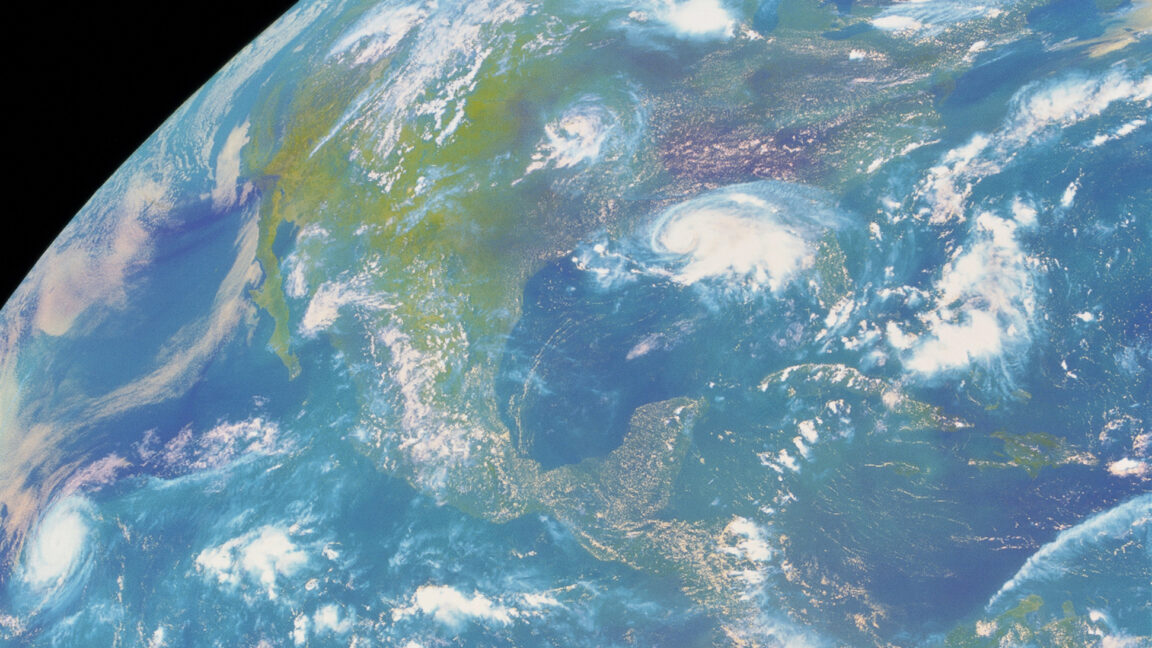
Google DeepMind has released an update to its AI weather model, WeatherNext 3, which now incorporates a significantly expanded set of raw satellite data inputs. Reported by Ars Technica around September 10-11, 2026, this update aims to improve forecast accuracy by leveraging more comprehensive observational data, similar to traditional numerical weather prediction (NWP) models. This move underscores the trend of AI models increasingly mimicking the data-rich inputs of conventional meteorological systems to enhance reliability.
AI-Designed Drug Shows Promise in Reversing Biological Aging
In a significant development for AI in medicine, a phase 2a clinical trial reported on September 13, 2026, showed that an AI-designed drug candidate reduced biological age markers across six different proteomic clocks. Published by Medical News Today, the study suggests that the drug, created for lung disease, may help reverse predicted biological aging. This marks one of the first concrete clinical evidences supporting the potential of AI-designed molecules to impact complex biological processes like aging.
Cyclone Forecasting Skill Improves with AI
The Guardian reported on September 10, 2026, that an AI model has demonstrated superior skill in predicting cyclones compared to standard methods. The system delivered a three-day forecast that was as accurate as previous two-day predictions, effectively extending the lead time for critical storm warnings. This improvement highlights the growing utility of AI in extreme weather events, where earlier warnings can save lives and property.

Local view
No recent local-language media coverage specifically focused on these AI-for-science developments was found in the provided search results for the past 7 days.
Context & numbers
While specific new benchmark numbers for AI weather models were not updated in the last week, ongoing comparisons continue to show that leading AI models like GraphCast, GenCast, and EPT-2 outperform traditional NWP models on most standard verification metrics at medium-range lead times (5–10 days). The "WeatherNext 3" update is part of this broader competitive landscape where accuracy gains are measured against the ECMWF HRES incumbent.
On the radar
- Mathematical Verification: The mathematical community is expected to continue rigorous scrutiny of the OpenAI Navier-Stokes solution, potentially leading to formal publication or refutation in the coming weeks.
- Clinical Follow-ups: Further data from the phase 2a trial of the AI-designed aging drug will be watched closely for long-term safety and efficacy profiles.
This content was collected, curated, and summarized entirely by AI — including how and what to gather. It may contain inaccuracies. Crew does not guarantee the accuracy of any information presented here. Always verify facts on your own before acting on them. Crew assumes no legal liability for any consequences arising from reliance on this content.
Powered by
