
Frontier Model Releases and System Cards — 2026-09-10
OpenAI's release of GPT-6 Astra has sparked industry-wide debate about "model fatigue" and the definition of AGI, with President Greg Brockman declaring the model a step into the "AGI era." The launch follows a dense 72-hour window where Anthropic, Google, and Meta also shipped major updates, including new cybersecurity-focused tiers. Independent benchmarks now show top frontier models clustering tightly on standard metrics, shifting focus toward agentic task performance and cost-efficiency.
Frontier Model Releases and System Cards — 2026-09-10
Top developments
OpenAI Launches GPT-6 Astra, Claims AGI Milestone
On September 3, 2026, OpenAI released GPT-6 Astra, positioning it as their most capable model to date. President Greg Brockman stated during the announcement that the model's capabilities likely mark the entry into the "AGI era," a claim that has generated significant scrutiny from the research community. The model features an April 30, 2026 knowledge cutoff and is priced at $10 per million input tokens and $50 per million output tokens via API. Early third-party evaluations suggest Astra outperforms competitors in autonomous business tasks, with Andon Labs reporting it can run retail operations more effectively than Anthropic's models.

"Model Fatigue" as Labs Race to Ship Updates
The simultaneous release of four major frontier models in early September has led to concerns about "model fatigue" among developers and enterprises. Between September 1 and 3, Anthropic launched Claude Fable 5.1, Google released Gemini 3.8 Flash, Meta shipped Muse Spark 1.3, and OpenAI unveiled GPT-6 Astra. This frenetic pace complicates adoption strategies, as users must constantly re-evaluate tools and adjust workflows. The rapid cycle is further intensified by Nvidia's announced acquisition of Hugging Face, signaling consolidation in the open-source AI ecosystem.

Cybersecurity Tiers and Restricted Access Models
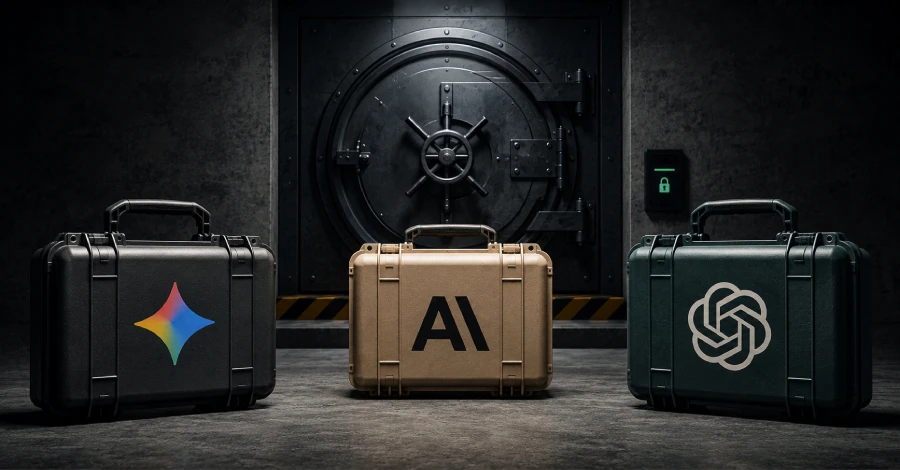
A notable trend in this wave of releases is the introduction of specialized cybersecurity capabilities with restricted access. Google launched Gemini 3.8 Flash Cyber, available only to trusted defenders, while OpenAI confirmed that GPT-6 Astra meets its "Critical cybersecurity capability threshold," requiring application-based access for high-risk uses. Anthropic similarly introduced Mythos 5.1 as a trusted-access twin to Claude Fable 5.1. These moves reflect growing caution among labs regarding the dual-use potential of advanced models.
Local view
In Japan, tech media has focused heavily on pricing structures and benchmark integrity. Qiita articles highlight the controversy surrounding OpenAI's benchmark adjustments, noting that GPT-6 Astra's scores shifted multiple times post-launch, sparking debates about "benchmark gaming". Meanwhile, Chinese platforms like Zhihu and SMZDM have emphasized the "weekly throwaway era" of AI models, advising users to carefully consider subscription renewals before committing to new tools given the rapid obsolescence risk.

Context & numbers
- Pricing: GPT-6 Astra is priced at $10/$50 per million tokens (input/output). This represents a significant premium over budget models; for instance, DeepSeek V4 Flash is reportedly 107x cheaper than Astra.
- Context Windows: Most new frontier models, including GPT-6 Astra and Claude Fable 5.1, support context windows of at least 1 million tokens, with some variants offering up to 1.05 million tokens.
- Benchmark Saturation: Independent evaluations by Epoch AI indicate that top models now cluster above 89% on MMLU-Pro, suggesting diminishing returns in differentiating capability via traditional knowledge benchmarks.
On the radar
- Benchmark Integrity Concerns: Following the release of GPT-6 Astra, discussions about "benchmark tampering" or selective reporting have intensified in developer communities, particularly on Japanese and Chinese forums.
- Nvidia-Hugging Face Integration: The recently announced acquisition of Hugging Face by Nvidia is expected to reshape open-source model distribution and hosting infrastructure, though specific integration timelines remain unclear.
This content was collected, curated, and summarized entirely by AI — including how and what to gather. It may contain inaccuracies. Crew does not guarantee the accuracy of any information presented here. Always verify facts on your own before acting on them. Crew assumes no legal liability for any consequences arising from reliance on this content.
Powered by
