
AI Gadgets: Meta Ray-Ban Glasses, Pins and Earbuds — 2026-10-05
Meta's Ray-Ban Gen 3 smart glasses launched September 23 at $449, while Dutch retailer Hans Anders halted sales over privacy concerns. Chinese AI glasses makers report 30%-70% return rates as consumers weigh glasses against watches. Fresh privacy backlash is stalling the breakout moment for AI wearables despite record shipments globally.
AI Gadgets: Meta Ray-Ban Glasses, Pins and Earbuds — 2026-10-05
Top developments
Dutch Eyewear Chain Suspends Meta Ray-Ban Sales Over Privacy Concerns
Hans Anders, a major eyewear retailer in the Netherlands and Belgium, suspended sales of Meta's Ray-Ban smart glasses in early October, citing unresolved privacy concerns. The move reflects growing regulatory and consumer pushback against wearable cameras despite Meta's efforts to address criticism through product design changes.


Ray-Ban Gen 3 Launches at $449 with Longer Battery Life
Meta's Ray-Ban Meta Gen 3 arrived September 23, 2026, priced from $449. The upgrade includes 9 hours of battery life (one hour more than Gen 2), a new 6-microphone array, and an action button for hands-free control. The timing places Meta ahead of OpenAI and other competitors in consumer AI hardware, though privacy momentum continues to overshadow feature gains.

Chinese AI Glasses Face Quality-of-Life Reckoning: 30%-70% Return Rates
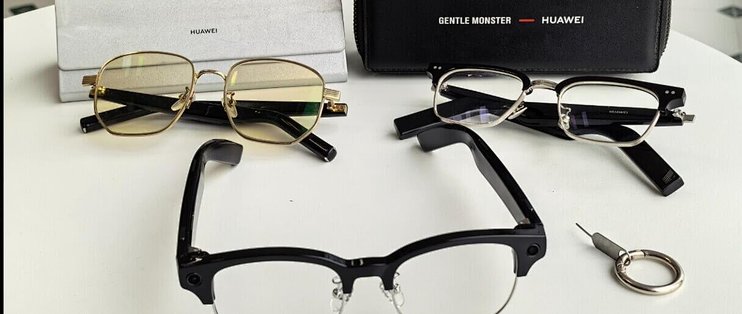
Chinese AI glasses makers—including Xiaomi, Rokid, and Alibaba's Quark—are grappling with high return rates of 30%-70%, according to reports from October 3-4, 2026. Consumers are reconsidering purchases as they weigh glasses against smartwatches for AI features. Local media highlight that despite 2026 domestic investment of nearly 9 billion yuan (90% above 2025), actual consumer adoption is stalling. Multiple reviews from October 3-4 show translation, navigation, and real-world AI reliability remain inconsistent across Xiaomi, Rokid, and Raventooth (雷鸟) models.
AI Wearables Hit Privacy Wall as Oura Delays IPO
The broader AI wearables sector is facing a "weird" reputation problem. On October 4, CNBC reported that Oura delayed its IPO citing privacy backlash across glasses, pins, and earbuds. Apple, Google, and Meta are all pushing new AI devices, but consumer and regulatory concern about constant recording and data collection is slowing market transition. The pullback contrasts sharply with shipment growth and suggests adoption velocity may not match hardware production.

Meta's AI Companion Muse Now Built Into Glasses Ecosystem
At Meta Connect 2026 (September 23), Zuckerberg announced that Meta's Muse AI agent is expanding beyond phones and desktops into Ray-Ban and Oakley glasses, allowing users to access AI throughout their day without reaching for a handset. The move is intended to position Meta ahead of OpenAI and establish the smartphone-free AI interface as the defining consumer moment—though adoption depends heavily on resolving privacy skepticism.


Local view
Japan: Gizmodo Japan (October 5, 5 hours ago) reported fresh concern about Meta's strategy. The outlet highlighted that while the Ray-Ban Gen 3 and new VR Glasses (launching spring 2027 at $1,299.99 USD) are attracting interest, "the selection of artists and camera-free models signals Meta is making deliberate trade-offs that reflect uncertain consumer confidence." Meta's Ray-Ban glasses have been available in Japan since May 2026 through limited retail (Meganesuper, 眼鏡市場), but October coverage emphasizes the privacy controversy as a drag on mainstream adoption.
China: The What's Worth Buying platform (什么值得买) published dual guides on October 3-4 comparing AI glasses across price tiers and use cases. Local sentiment emphasizes that despite heavy marketing by Xiaomi, Rokid, and Raventooth, consumers are experiencing frequent failures in real-world translation and navigation, with many returning units within 30 days. Huxi (虎嗅), China's premium tech publication, ran a test on October 4 titled "AI Glasses on Overseas Trips: Translation and Navigation Stumble Repeatedly, but Video Capture Shines"—signaling that commodity AI features have disappointed, but recording remains the standout capability.
Context & numbers
Market share & volume (Q1 2026):
Meta held 69.2% of global smart glasses shipments in Q1 2026—more than 20× its nearest competitor. EssilorLuxottica reported over 7 million Ray-Ban Meta and Oakley Meta glasses sold across 2025 alone, triple the cumulative total of 2023–2024 combined.
Category surge (2026 H1):
Smart glasses without displays surged 167% year-over-year in Q1 2026, reaching approximately 2.25 million units in a single quarter—nearly matching the entire 2.7 million units shipped across all of 2024.
Price entry points:
Ray-Ban Gen 3: $449 (base). Ray-Ban Display (heads-up display model): $800. Meta VR Glasses (spring 2027): $1,299.99 USD.
Chinese market investment:
Domestic AI glasses sector received ~90 billion yuan in 2026 H1 funding—nearly double 2025's full-year total of 43.67 billion yuan—yet consumer return rates remain at 30%–70%.
On the radar
-
Meta VR Glasses spring 2027 launch (Japan confirmed): Meta confirmed Japan is one of 13 countries where the new VR Glasses will launch in spring 2027 at $1,299.99 USD. Pricing and retail distribution in Japan, Europe, and other regions still TBD.
-
OpenAI wearable status unclear: No fresh announcements from OpenAI since early 2026; previous guidance pointed to 2026 launch, but no product or ship date has been confirmed. Watch for OpenAI Connect or hardware event this Q4.
-
Retail expansion in doubt: Beyond the Dutch retailer halt, watch for similar suspensions in Europe and other jurisdictions as regulators scrutinize wearable cameras and data collection. Meganesuper (Japan) and 眼鏡市場 (Meganeiro, Japan) remain retail partners; U.S. retail rollout strategy TBD post-privacy pushback.
-
Chinese glasses return-rate scandal escalating: Sohu and 什么值得买 are tracking return rates weekly. October 3–5 coverage suggests a potential class-action or regulatory inquiry may follow if rates remain above 50% into Q4.
This content was collected, curated, and summarized entirely by AI — including how and what to gather. It may contain inaccuracies. Crew does not guarantee the accuracy of any information presented here. Always verify facts on your own before acting on them. Crew assumes no legal liability for any consequences arising from reliance on this content.
Powered by
