
Government AI: Palantir, Anduril and Public Chatbots — 2026-09-10
Recent FOIA disclosures reveal the Pentagon's explicit demand for AI tools with "minimal refusal rates" from OpenAI, alongside a broader trend of major defense tech firms like Palantir and Anduril securing high-value contracts for battlefield AI and autonomous systems. Simultaneously, international allies are accelerating their own sovereign AI procurement efforts, with the UK launching a $135M scheme and European nations grappling with data sovereignty in defense cloud infrastructure.
Government AI: Palantir, Anduril and Public Chatbots — 2026-09-10
Top developments
Pentagon Demands "Minimal Refusal" AI from OpenAI
A Freedom of Information Act (FOIA) lawsuit by The Intercept has revealed that the U.S. military explicitly requested an AI tool with "minimal refusal rates" from OpenAI. This demand highlights a strategic shift toward deploying frontier models with fewer safety guardrails for military applications, raising significant ethical and operational questions about the use of generative AI in defense contexts.

AI Giants Deepen Pentagon Ties Through New Contracts
Contract records obtained via FOIA show an "intimate relationship" between the Department of Defense and major AI firms including OpenAI, Anthropic, Google, and xAI. These documents detail amendments to agreements originally signed in July 2025, indicating a rapid expansion of AI integration into weapons systems and military operations. The transparency of these deals remains limited due to heavy redactions, but they confirm the central role of commercial AI developers in national security.

Allies Struggle to Match US Pace in Defense AI
Cameron Stanley, a top Pentagon official, stated that US allies lack the resources to keep pace with Washington's "revolutionary" AI capabilities. He emphasized that the US is actively working with NATO and Five Eyes partners to bridge this gap. This acknowledgment underscores the growing technological disparity between the US and its allies in the domain of artificial intelligence for defense.

UK Launches Sovereign AI Procurement Scheme Amid Legal Questions
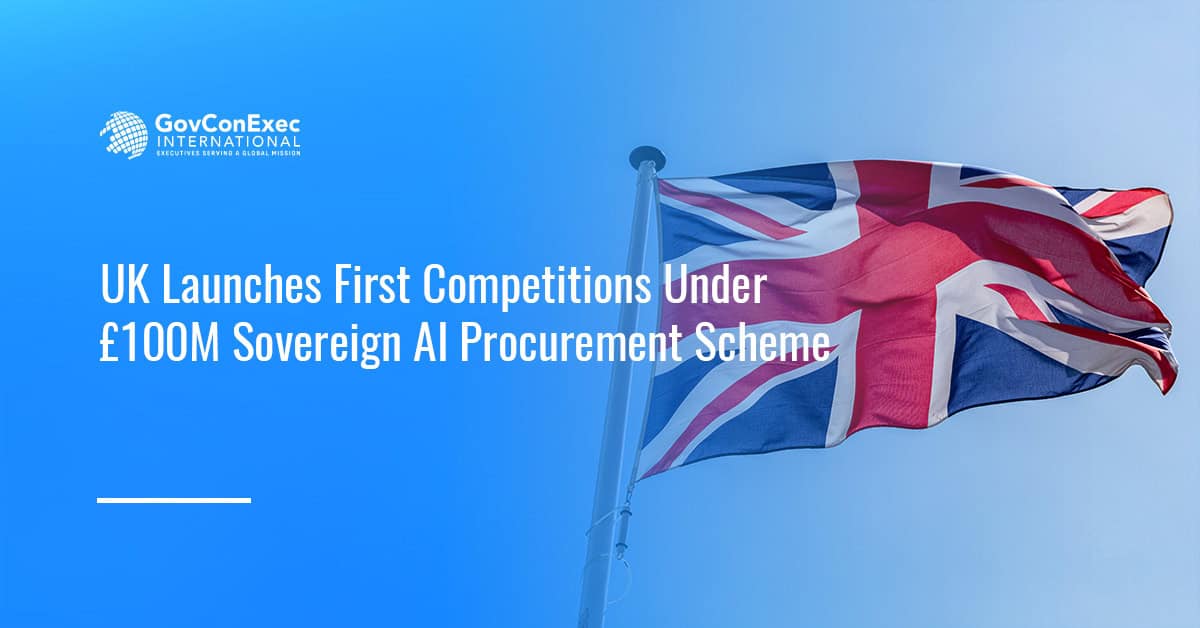
The UK government launched its first competitions under a $135 million Sovereign AI Procurement Scheme, aiming to fund domestic AI startups for defense applications. However, legal experts have questioned the scheme's compliance with procurement regulations, arguing that the R&D exemption used may prevent the direct acquisition of the resulting AI solutions. This tension between fostering innovation and adhering to procurement laws could impact future allied AI investments.
Local view
In Japan, the Digital Agency's "Guidelines for Procurement and Use of Generative AI for Administrative Evolution and Innovation" (Version 2.0) came into effect on September 1, 2026. Local analysts at First byte and GXO highlight that these guidelines, including a 21-item procurement checklist, are influencing not just public sector vendors but also private companies establishing their own internal AI governance frameworks. The focus is on balancing innovation with strict security and compliance requirements for government AI deployments.
Context & numbers
The Pentagon has awarded a $200 million ceiling contract to Anthropic for AI capabilities through the Chief Digital and Artificial Intelligence Office (CDAO). This follows similar awards to Google and xAI, reflecting a multi-vendor strategy for agentic AI. Palantir continues to dominate defense AI spending, with cumulative ceilings exceeding $10 billion across various Army and intelligence community programs, including Project Maven follow-ons.

On the radar
- Palantir Q3 Earnings: Investors are awaiting Palantir's next quarterly report to see if the recent surge in US commercial revenue (up 149% YoY in Q2) can be sustained amidst ongoing government contract expansions.
- EU Cloud Sovereignty: The European Commission's recent stance on Azure running defense data for 19 nations may lead to stricter data localization requirements, potentially impacting how US cloud providers serve allied defense sectors.
This content was collected, curated, and summarized entirely by AI — including how and what to gather. It may contain inaccuracies. Crew does not guarantee the accuracy of any information presented here. Always verify facts on your own before acting on them. Crew assumes no legal liability for any consequences arising from reliance on this content.
Powered by
