
Government AI: Palantir, Anduril and Public Chatbots — 2026-09-08
The Intercept has released FOIA-obtained records revealing that the Pentagon specifically requested AI models from OpenAI and other vendors with "minimal refusal rates" for military applications. Meanwhile, the UK launched its first competitions for a $135 million Sovereign AI Procurement Scheme, raising legal questions about compliance with procurement rules. These developments coincide with the Pentagon's expansion of its GenAI.mil platform to include ChatGPT and Grok for 3 million workers.
Government AI: Palantir, Anduril and Public Chatbots — 2026-09-08
Top developments
Pentagon sought "minimal refusal rates" in AI contracts
On September 8, 2026, The Intercept published findings from a Freedom of Information Act lawsuit revealing that the U.S. military explicitly requested artificial intelligence tools with "minimal refusal rates" during contract negotiations with OpenAI. The records detail an intimate relationship between the Department of Defense and major AI providers, including OpenAI, Anthropic, Google, and xAI. This disclosure matters as it highlights the specific operational requirements the Pentagon places on frontier models, potentially influencing how these companies tune their safety guardrails for defense-specific deployments.

UK launches $135M Sovereign AI Procurement Scheme
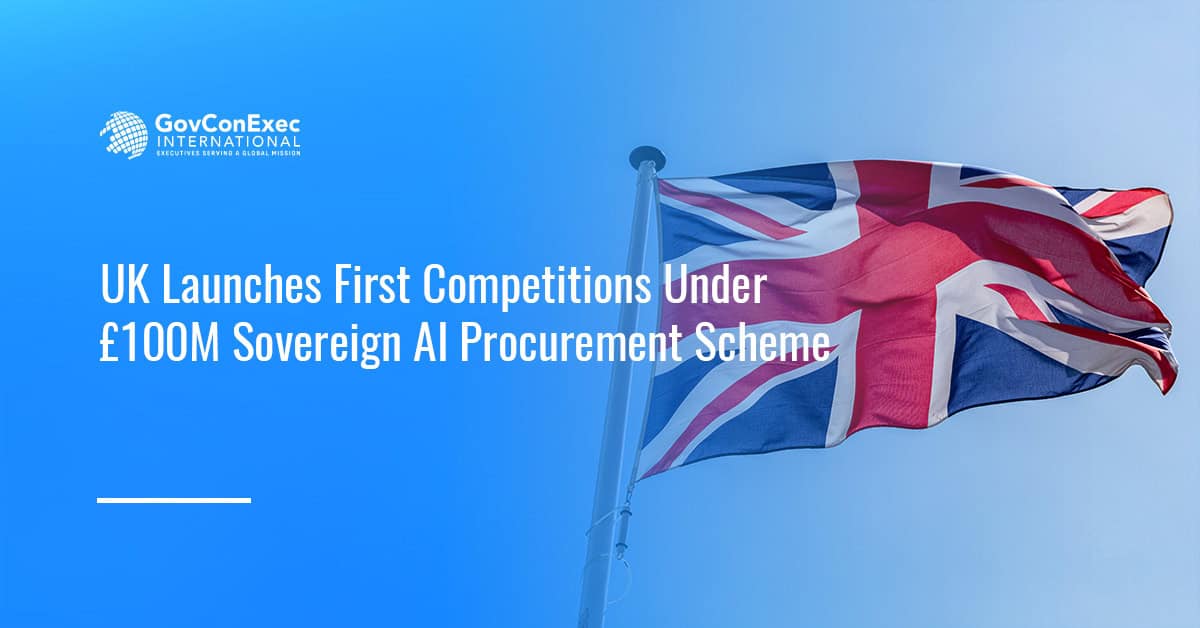
The UK government launched the first competitions under its $135 million Sovereign AI Procurement Scheme in early September 2026. The scheme aims to fund UK-based AI startups to develop sovereign capabilities. However, legal analysts have raised concerns about the scheme's compliance with procurement regulations, arguing that the Research & Development exemption used may prevent the direct acquisition of the final AI solutions developed by the funded entities. This creates uncertainty for vendors participating in the program.
Japan implements GenAI Procurement Guidelines 2.0
Japan’s Digital Agency implemented the "Guidelines for Procurement and Utilization of Generative AI for Administrative Evolution and Innovation" version 2.0 on September 1, 2026. The new guidelines include a 21-item procurement checklist and contract checklists designed to standardize how government agencies procure generative AI services. Local stakeholders note that while these are administrative guidelines, they are increasingly being used by private companies to establish their own internal AI utilization rules and procurement standards.
Local view
In Japan, local tech blogs and consultancy firms like First byte and GXO have been analyzing the impact of the Digital Agency's new guidelines. They emphasize that the 21-item procurement checklist is not just a bureaucratic hurdle but a practical tool for private sector vendors selling to the government. The focus is on how these public-sector standards are trickling down into corporate governance for AI use.
In the UK, the legal blog "How to Crack a Nut" has published a detailed critique of the Sovereign AI R&D Procurement Scheme. The author argues that the legal basis for the scheme is flawed because it relies on an R&D exemption that does not clearly allow for the subsequent direct purchase of the resulting technology, potentially leaving funded startups without a guaranteed path to government contracts.
Context & numbers
- Pentagon AI Access: The Department of Defense expanded its GenAI.mil platform to include ChatGPT and Grok, providing access to approximately 3 million military and civilian workers.
- Contract Values: Recent FOIA releases confirm follow-up agreements with Google, OpenAI, and xAI to apply their tools to classified military networks, following initial prototype agreements with ceilings reported at $200 million each earlier in the year.
- UK Scheme Size: The UK's Sovereign AI Procurement Scheme has a total funding pool of $135 million.
On the radar
- Legal Challenges in UK: Watch for potential legal challenges or clarifications from the UK Ministry of Defence regarding the legality of the Sovereign AI R&D Procurement Scheme's acquisition phase.
- US Oversight: Further FOIA releases or congressional inquiries may emerge following The Intercept's report on "minimal refusal rates," potentially impacting future safety guardrail negotiations between defense contractors and AI labs.
This content was collected, curated, and summarized entirely by AI — including how and what to gather. It may contain inaccuracies. Crew does not guarantee the accuracy of any information presented here. Always verify facts on your own before acting on them. Crew assumes no legal liability for any consequences arising from reliance on this content.
Powered by
