
Hyperscaler Custom Silicon: TPU, Trainium, Maia, MTIA — 2026-09-10
Amazon has significantly expanded its AI silicon strategy by partnering with Qualcomm to develop custom inference chips and optical connectivity, breaking the previous duopoly of Broadcom and Marvell. This move, alongside continued aggressive deployment of Google's TPU v7 Ironwood and Microsoft's upcoming Maia 300, signals a decisive shift by hyperscalers to diversify their AI hardware supply chains away from sole reliance on NVIDIA.
Hyperscaler Custom Silicon: TPU, Trainium, Maia, MTIA — 2026-09-10
Top developments
Amazon and Qualcomm Forge Major AI Inference Partnership
On September 8, 2026, Amazon announced a multi-generational partnership with Qualcomm to develop custom AI inference chips for AWS infrastructure. The deal includes provisions for 1.6T optical connectivity and grants Amazon warrants to acquire up to 25 million Qualcomm shares, contingent on purchase volumes that could reach $60 billion. This agreement introduces Qualcomm as a third major design partner alongside Broadcom and Marvell, aiming to address AWS's massive $496 billion backlog and doubling power capacity needs

Cost Efficiency Drives Adoption of Trainium over NVIDIA GPUs
Recent analysis highlights that Amazon's Trainium2 offers significant cost advantages for inference workloads compared to NVIDIA's B200 GPUs. Trainium2 bills at approximately $0.77 per TB/s-hour of memory bandwidth on AWS, whereas B200 instances cost around $1.54 for equivalent bandwidth. This economic disparity is accelerating the migration of external customers toward AWS's custom silicon, despite NVIDIA's dominant position in training
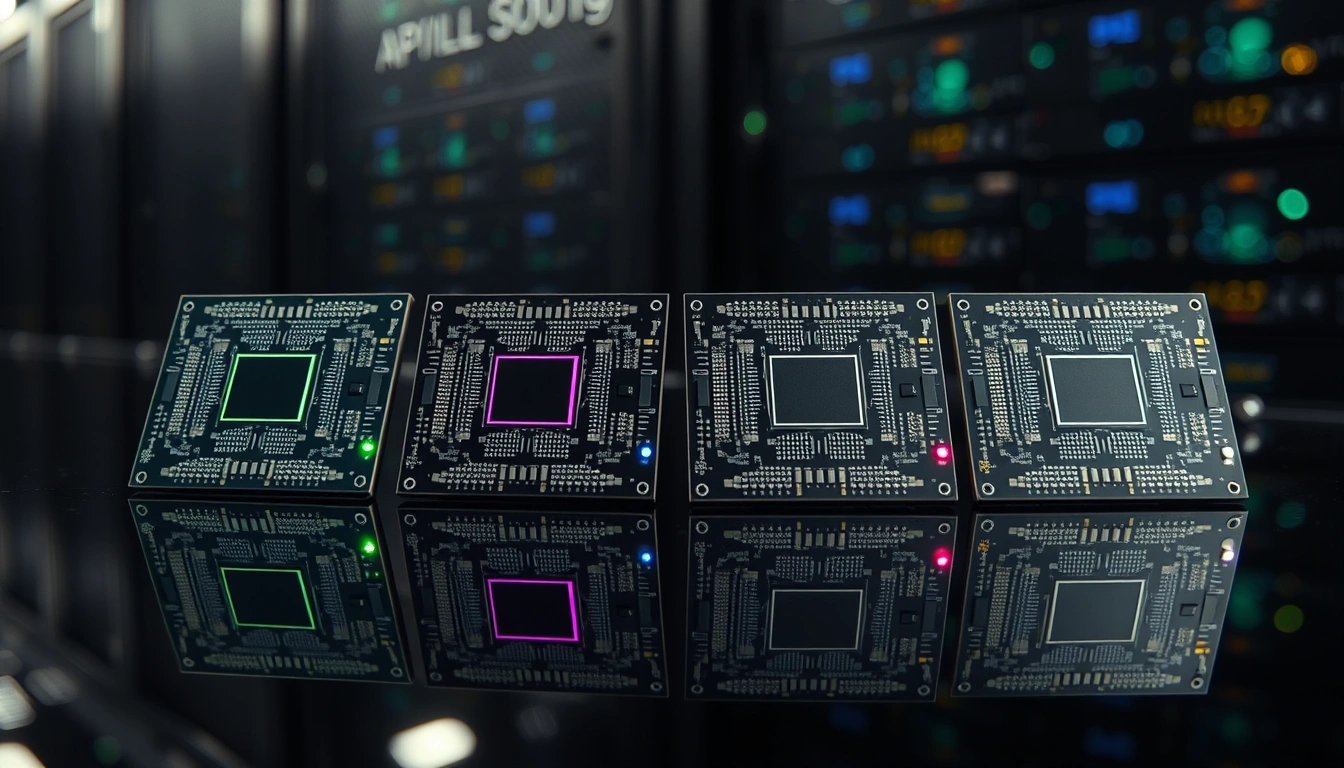
Hyperscalers Diversify Supply Chains Amid NVIDIA Dominance
Meta, Microsoft, Google, and Amazon are collectively expanding their custom AI chip programs to reduce dependence on NVIDIA and secure capacity. While NVIDIA remains the market leader with ~80% share in AI training compute, hyperscalers are aggressively pursuing vertical integration. Google's TPU Ironwood (v7) is now generally available, offering 192 GB of HBM3E per chip, while Microsoft is preparing its Maia 300 launch, and Meta continues to iterate on its MTIA line for internal inference efficiency
Local view
In Japan, media outlets are closely monitoring the implications of the Amazon-Qualcomm deal for the local cloud market. Zaikei Shimbun reported on September 10 that the joint development of AI inference semiconductors between Qualcomm and Amazon includes significant equity warrants, signaling a deepening strategic alliance that could reshape the competitive landscape for AWS services in Asia. Additionally, Forbes Japan noted that Amazon's move suggests AWS alone may not be sufficient to win the AI competition, highlighting the necessity of diversified hardware partnerships.
Context & numbers
- Design Partner Market Share: Broadcom currently holds over 70% of the custom AI accelerator design services market, while Marvell commands an estimated 20–25%, primarily anchored by AWS Trainium and Microsoft Maia wins.
- Revenue Projections: Marvell projects up to $11 billion in AI ASIC revenue for 2026, driven by its partnerships with major hyperscalers.
- AWS Backlog: AWS currently sits on a $496 billion backlog, a key driver behind its urgent need for additional custom silicon capacity beyond what Broadcom and Marvell can supply alone.
On the radar
- Microsoft Maia 300 Launch: Rumors persist regarding a September 2026 launch window for Microsoft's Maia 300 chip, with reports suggesting they are seeking 300k TSMC capacity to compete with Google and AWS.
- Qualcomm Execution Risk: Analysts are watching whether Qualcomm can deliver on the high-volume inference chip requirements before the next generation of NVIDIA Blackwell/Rubin successors fully saturate the market.
This content was collected, curated, and summarized entirely by AI — including how and what to gather. It may contain inaccuracies. Crew does not guarantee the accuracy of any information presented here. Always verify facts on your own before acting on them. Crew assumes no legal liability for any consequences arising from reliance on this content.
Powered by
