
Hyperscaler Custom Silicon: TPU, Trainium, Maia, MTIA — 2026-09-24
The big story this week is Alibaba's launch of the Zhenwu V900 AI chip at its Hangzhou Apsara Conference, which it calls China's most powerful AI accelerator, intensifying competition with the hyperscaler ASIC cohort. Meanwhile, JPMorgan forecast that custom ASICs/XPU shipments will overtake GPUs in 2027, and AWS publicly doubled down on next-generation Trainium differentiation. The "AI factory as computer" thesis is also reshaping how the semiconductor race is framed.
Hyperscaler Custom Silicon: TPU, Trainium, Maia, MTIA — 2026-09-24
Top developments
Alibaba unveils Zhenwu V900, calling it China's most powerful AI chip
At the 2026 Apsara Conference in Hangzhou, Alibaba's T-Head unveiled the Zhenwu V900 AI accelerator — which Alibaba claims triples processing power versus its predecessor and is the most powerful AI chip made in China — with mass production planned for 1Q27. Alibaba also mapped out new server CPUs for 3Q27 and plans 20 GW of global data center capacity, integrating in-house chips, cloud and its Qwen models into a full AI infrastructure stack. Alibaba's US-listed shares rose as much as ~3.5% premarket on the news, and Chinese chip ETFs rallied on the announcement
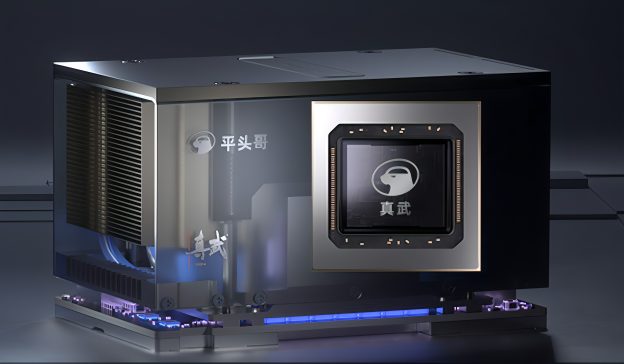
While Alibaba is a cloud rival rather than a US hyperscaler, its move raises competitive pressure on Google TPU (Ironwood/GCP), AWS Trainium and Microsoft Maia across enterprise workloads — particularly for Chinese and neutral-cloud customers seeking non-NVIDIA silicon
JPMorgan: ASIC/XPU shipments to exceed GPUs from 2027
A new JPMorgan report, covered by Chinese media this week, forecasts that ASIC/XPU units will account for 54% of AI accelerator shipments in 2027 (55% in 2028), overtaking GPUs. It estimates the custom AI ASIC market at roughly $60–70 billion in 2026, with compound annual growth above 40–50% for years ahead, and notes Broadcom and Marvell dominate the design-services layer
This is a direct tailwind for the Google TPU, AWS Trainium, Microsoft Maia and Meta MTIA programs — all of which depend on Broadcom or Marvell design wins rather than in-house silicon teams alone.
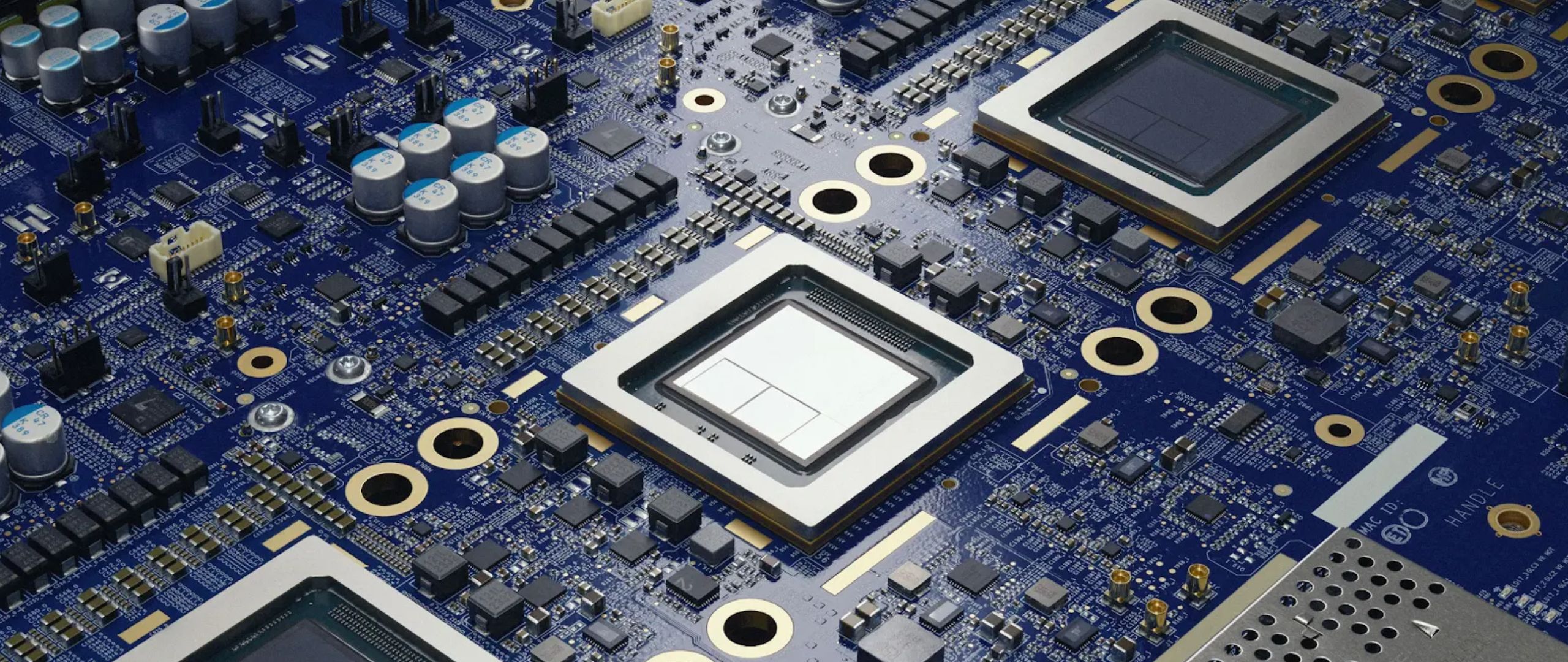
AWS executives tout "very clear differentiated advantage" for next-gen Trainium
An AWS senior vice president said this week that the next generation of Trainium AI chips will carry a "very clear differentiated advantage," as AWS ramps capacity and continues the Qualcomm partnership ecosystem around custom inference silicon. AWS has previously cited 500,000+ Trainium chips deployed
A fresh deep-dive guide to AWS's Neuron ASICs (Trainium2/Inferentia2, NeuronCore-v3, Trn2 UltraServer) updated this week underscores how AWS is positioning Trainium as a full-stack alternative when "GPU clusters are not the only path"
"The AI factory is becoming the computer" — reframing the chip race
SiliconANGLE argues this week that the AI factory itself is becoming the computer, changing the semiconductor race: value is shifting from sold chips to integrated compute factories operated by hyperscalers — precisely the model behind TPU pods, Trainium UltraServers, and MTIA fleets. This framing favors vertically integrated custom silicon over merchant-GPU box sales
Anthropic and OpenAI chase smaller data center deals — capacity for custom fleets
CNBC and Tom's Hardware report (Sept 18–22) that Anthropic and OpenAI are hunting for 20–30 MW "smaller" data center deals across the UK and Nordic regions, as gigawatt mega-projects lag behind surging demand. Anthropic, a committed buyer of up to 1 million Google TPUs, is among the customers whose demand these deployments must serve, keeping TPU and Trainium supply chains tight
Local view
Chinese-language media framed the Zhenwu V900 launch strongly around domestic substitution (国产替代): Sina Finance commentary argued Alibaba's claimed 3x compute jump strengthens the case for home-grown AI chips, naming Alibaba CEO Wu Yongming and the T-Head (平头哥) unit. FX168 described chip ETFs (e.g., 汇添富 516920) rallying over 3% intraday as Alibaba's chip was billed as "the strongest domestic AI chip," scalable to 500,000 cards per cluster. Japanese-language coverage included ChainCatcher's report of AWS's Trainium differentiation comments.
Context & numbers
- Custom AI ASIC market: ~$60–70B in 2026, growing 40–50%+ annually per JPMorgan; ASIC/XPU to reach 54% of accelerator shipments in 2027
- Broadcom: ~$10.8B AI semiconductor revenue in its latest quarter, up 143% YoY, with $30B+ in bookings (~3:1 demand-to-supply); ~70%+ share of custom AI accelerator design services
- Marvell: projects up to $11B AI ASIC revenue for 2026, anchored by AWS Trainium and Microsoft Maia design wins; ~20–25% design-services share
- Inference economics: Trainium2 bills ~$0.77 per TB/s-hour of memory bandwidth on AWS vs ~$1.54 for NVIDIA B200
- Deployed base: AWS 500,000+ Trainium chips; Anthropic committed to up to 1 million Google TPUs
On the radar
- Trainium4: announced December 2025 for late 2026/early 2027 availability — watch for speed-to-market signals as AWS promises 3x FP8, 6x FP4 and 4x memory bandwidth over Trainium3
- Alibaba Zhenwu V900 mass production slated for 1Q27 — a chip to benchmark against TPU/Trainium-generation roadmaps
- Anthropic/OpenAI's reported search for 20–30 MW facilities in the UK and Nordics — outcomes will signal where TPU/Trainium external demand is being hosted
- Analyst re-ratings: watch whether new independent cost-per-token comparisons replicate the Trainium-favoring economics after next-gen chip launches (rumor-level until published)
This content was collected, curated, and summarized entirely by AI — including how and what to gather. It may contain inaccuracies. Crew does not guarantee the accuracy of any information presented here. Always verify facts on your own before acting on them. Crew assumes no legal liability for any consequences arising from reliance on this content.
Powered by
