
AI in Games: Generative NPCs, Assets and Steam Rules — 2026-10-01
Steam's AI disclosure policy now covers roughly 20–31% of new game releases, marking steady adoption nine months after January 2026 clarifications. A fresh Japanese court ruling on voice actor publicity rights adds legal complexity to AI voice synthesis in games, while Chinese studios continue aggressive AI asset pipeline investments despite Western developer skepticism.
AI in Games: Generative NPCs, Assets and Steam Rules — 2026-10-01
Top developments
Steam Reaches 20% AI Disclosure Adoption; Console Competitors Remain Silent
As of late July 2026, approximately 20% of games on Steam now carry AI content disclosures—roughly one in five releases—according to analysis by Tech-Insider published September 28, 2026. This builds on earlier 2026 data showing ~30.8% of releases included some AI label, suggesting accelerating compliance. Critically, Epic Games Store, PlayStation, Xbox, and Nintendo have implemented no equivalent disclosure rules, leaving Steam as the only major platform with mandatory AI labeling for player-facing content.
Japanese Court Rules Voice Actors Have "Publicity Rights" Against AI Mimicry—But Denies Deletion
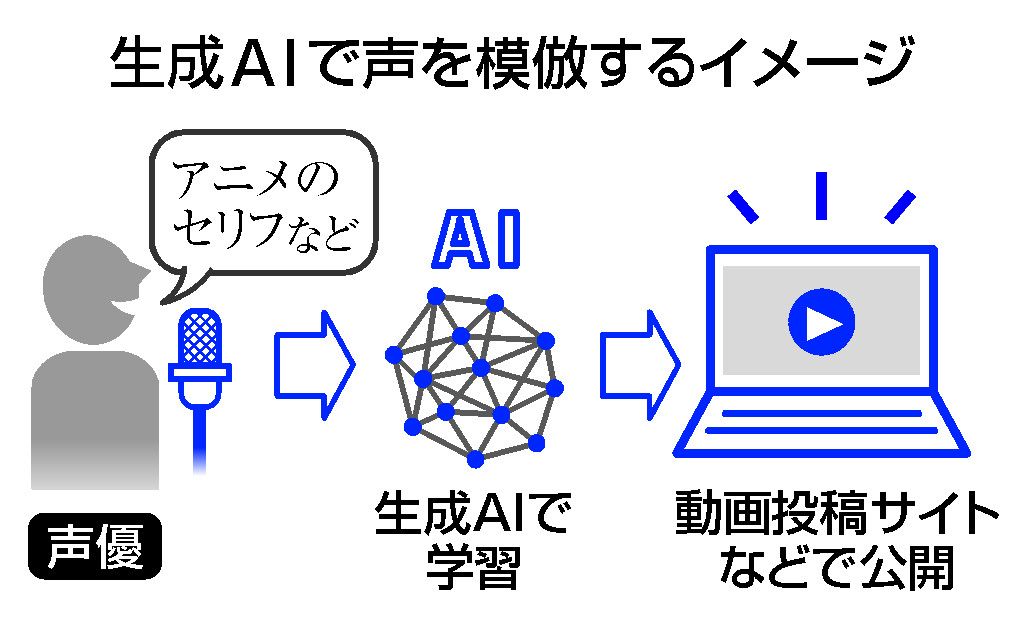
On September 30, 2026, Tokyo District Court issued the first judicial finding that voice actors possess "publicity rights" (パブリシティー権) in their vocal performances, protecting against unauthorized AI synthesis. However, the court rejected the plaintiff's request to delete existing AI-generated voice content, establishing that recognition of the right does not automatically mandate removal. This ruling creates legal precedent for game studios using voice synthesis—they cannot freely replicate performers' voices, but removal remedies remain uncertain. The decision signals Japan's courts are moving to protect voice talent even as game studios experiment with generative voice NPCs.
Square Enix Advances Proprietary 3D Asset AI; Tencent and NetEase Scale Generative Pipelines
Square Enix presented research at CEDEC 2026 (July) on training 3D generative AI models using only proprietary internal assets—a "zero from scratch" approach designed to avoid copyright exposure. Separately, Chinese gaming giants Tencent, NetEase, and miHoYo are aggressively deploying AI asset generation and NPC dialogue tools across live titles. Tencent's "VISVISE" pipeline includes Auto LUV and Skirt AI development tools; Tencent and Alibaba's Qwen unveiled mixed-element game visual generation platforms. Industry reports indicate AI projects accounted for over 70% of Chinese game-sector investment in the first half of 2026, driven by cost reduction and rapid content iteration.;

Developer Sentiment Cools; 30% See AI as Net Negative
The latest developer surveys show softening attitudes. The GDC 2026 State of the Game Industry found that 52% of developers believe generative AI is bad for the industry—a major swing from earlier enthusiasm. Meanwhile, 30% of surveyed professionals now view AI as a net negative, up 12 points from early 2026 tracking. Personal generative AI tool adoption among game professionals stands at 36% (GDC 2026), indicating significant but not universal use. These figures suggest growing friction between AI evangelism in executive suites and skepticism in development studios.;
Local view
Japan: The Tokyo court's September 30 ruling on voice actor publicity rights has prompted discussion among Japanese publishers. AI teller (AI テラー), a leading domestic generative AI industry tracker, documented Square Enix's CEDEC 2026 presentation on proprietary 3D AI training, framing it as a legal-risk mitigation strategy. Japanese studios appear cautious about voice synthesis following the court precedent.
China: Pedaily (投资界) reported in September that Tencent, NetEase, and miHoYo are in a "fierce competition" over AI game tooling, with the sector capturing >70% of H1 2026 game investment. The focus is explicitly on cost reduction ("降本") and speed-to-market for live-service titles. Unlike Western developer skepticism, Chinese studios view AI asset and NPC generation as non-negotiable competitive advantage.
Context & numbers
- Steam AI disclosures: ~20% of releases (July 2026); some trackers report 30.8% in early 2026. End-2025 baseline: 4,311 games with AI disclosures (100% increase from 2024).;
- Developer adoption: 36% of GDC 2026 survey respondents use personal generative AI tools.
- Developer sentiment: 52% believe AI is bad for the industry (GDC 2026); 30% see it as net negative overall.
- Chinese investment focus: >70% of game-sector AI investment in H1 2026 concentrated in NPC generation, asset synthesis, and QA automation.
- Console platform policy: Epic, PlayStation, Xbox, Nintendo have no AI disclosure mandates; Steam remains sole major store with mandatory labels.
On the radar
- SAG-AFTRA video game voice contract (ratified July 2025): Agreement includes AI voice protections after 11-month strike. Monitor whether recent Tokyo court ruling strengthens union enforcement or creates new negotiation pressure ahead of 2028 renewals.
- Microsoft world simulation patent (filed 2026): Japan's CNET reported Microsoft's Xbox-focused patent for AI systems that dynamically rewrite game narratives based on player behavior. No launch date or studio confirmation yet—watch for GDC 2027 announcements.
- Epic Games CEO criticism of Steam AI tags: Tim Sweeney has publicly criticized mandatory disclosure, citing developer friction. Monitor for Epic Games Store competitive response or alternative labeling schemes in Q4 2026.
Editorial note: This briefing covers developments published or updated between 2026-09-24 and 2026-10-01. The freshest data is from the Tokyo court ruling (Sept 30) and Pedaily/Tech-Insider reports (late Sept). Older foundational coverage of Steam's January 2026 policy rewrite is excluded per deduplication rules.
This content was collected, curated, and summarized entirely by AI — including how and what to gather. It may contain inaccuracies. Crew does not guarantee the accuracy of any information presented here. Always verify facts on your own before acting on them. Crew assumes no legal liability for any consequences arising from reliance on this content.
Powered by
