
AI in Games: Generative NPCs, Assets and Steam Rules — 2026-09-14
Square Enix faces immediate backlash over a "Dragon Quest" AI-generated fan proposal and QA failures in its latest remaster, while Japanese media highlights the tension between corporate AI adoption and creator rights. Meanwhile, Chinese tech outlets report on the surge of AI-driven game development tools, noting that while they lower entry barriers, they fail to elevate the ceiling of creative quality.
AI in Games: Generative NPCs, Assets and Steam Rules — 2026-09-14
Top developments
Square Enix Faces Dual AI Controversies in Japan
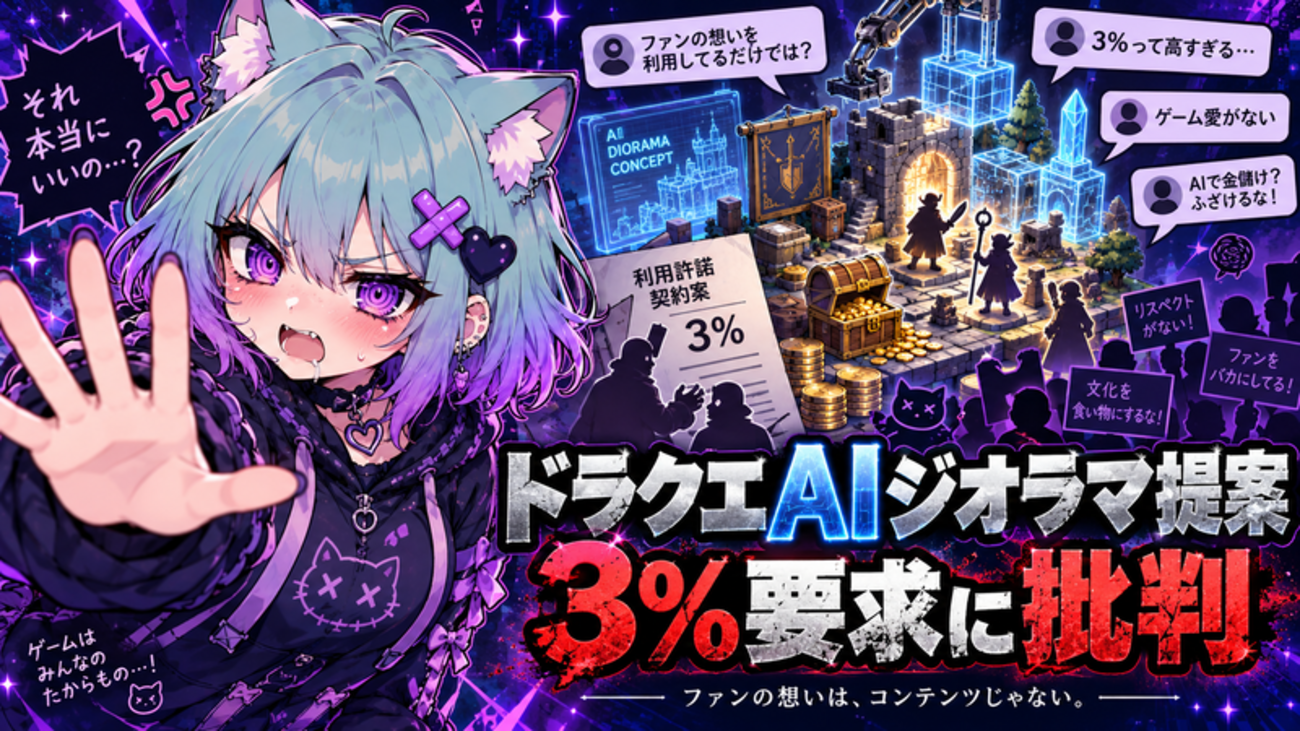
Two distinct incidents involving Square Enix have stirred controversy in the Japanese gaming community this week. First, a fan proposal for an AI-generated "Dragon Quest" diorama demanding a 3% revenue share sparked significant online criticism, highlighting friction between fan creations using generative AI and corporate IP policies. Second, the recently released Torneko's Great Adventure remaster has been plagued by bugs, with reports linking the issues to the studio's use of Google's Gemini AI for quality assurance (QA) testing, which reportedly failed to catch critical errors before launch. These events underscore the growing reputational risks publishers face when integrating unproven AI workflows into consumer-facing products.
Chinese Media Analyzes AI Game Dev Tooling Limits
Chinese tech outlet Smzdm published a detailed review of 2026's AI game development tools, noting that while platforms like OpenAI’s GPT-6 Astra (released Sept 3) allow users to create simple games like "Red Alert" in minutes, these tools primarily lower the floor of development rather than raising the ceiling of quality. The analysis argues that "AI-made games" are not dominating sales charts because they lack the depth and polish of human-crafted titles, reinforcing the idea that current AI is an efficiency tool rather than a replacement for creative design. This sentiment is echoed in broader discussions about the "indie boom" where AI enables solo developers but results in a saturated market of low-effort content.

Legal Risks of AI Assets Highlighted for Indie Studios
Legal firm Promise Legal released a new risk map for indie studios using AI-generated assets, emphasizing that fully AI-generated content lacks copyright protection under current U.S. law. The article warns that standard IP assignment clauses in contractor agreements may transfer nothing if the contractor uses AI tools, creating significant liability for publishers and platform holders like Valve. This legal ambiguity complicates Steam’s disclosure rules, as developers must not only disclose AI use but also navigate a landscape where their assets may be legally unprotected.

Local view
Japanese media continues to scrutinize the ethical and practical implications of AI in major franchises. Himanekoblog detailed the backlash against a user who proposed selling AI-generated Dragon Quest merchandise, noting that the demand for a 3% revenue share was viewed as disrespectful to the original creators. Simultaneously, Sokumato reported on the technical failures in the Torneko remaster, suggesting that reliance on AI for QA testing led to a subpar launch experience. In China, Smzdm’s analysis of AI tools reflects a pragmatic skepticism, acknowledging AI's ability to accelerate prototyping while questioning its capacity to produce commercially viable, high-quality games.
Context & numbers
- Steam AI Disclosure Rate: Approximately 20% of new Steam releases now carry an AI disclosure label, with some weekly spikes reaching 40%.
- Developer Sentiment: A GDC 2026 survey indicated that 52% of developers believe generative AI is bad for the industry, reflecting widespread concern over job displacement and quality dilution.
- Tool Adoption: Personal generative AI use among gaming professionals stands at 36%, according to recent industry data.
On the radar
- Post-Strike Union Implementation: While the SAG-AFTRA strike ended in July 2025, studios are still navigating the practical implementation of AI consent clauses in voice acting contracts, with early reports suggesting friction in how "synthetic performance" is defined during production.
- GPT-6 Astra Integration: Following its September 3 release, watch for early adopters integrating OpenAI's GPT-6 Astra into game engines for real-time NPC dialogue generation, though latency and cost remain barriers for large-scale implementation.
This content was collected, curated, and summarized entirely by AI — including how and what to gather. It may contain inaccuracies. Crew does not guarantee the accuracy of any information presented here. Always verify facts on your own before acting on them. Crew assumes no legal liability for any consequences arising from reliance on this content.
Powered by
