
AI in Games: Generative NPCs, Assets and Steam Rules — 2026-09-10
Square Enix detailed its proprietary 3D generative AI training pipeline at CEDEC 2026, signaling a shift toward in-house, copyright-safe asset generation. Meanwhile, a viral controversy erupted over fan-submitted AI-generated Dragon Quest merchandise proposals, highlighting the friction between user-generated AI content and corporate IP policies.
AI in Games: Generative NPCs, Assets and Steam Rules — 2026-09-10
Top developments
Square Enix details in-house 3D generative AI training
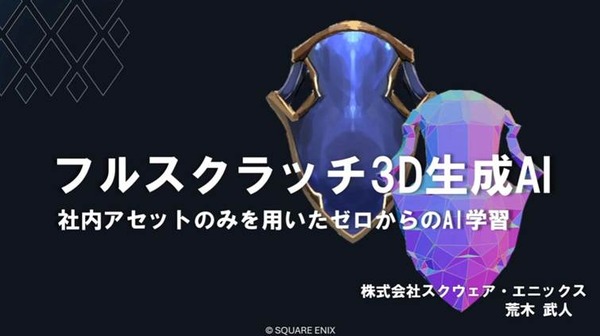
At CEDEC 2026 (held July 22–24, reported in early September), Square Enix presented a session on "Full Scratch 3D Generative AI," detailing their R&D efforts to train models exclusively on their own proprietary 3D assets. This approach aims to bypass the legal and ethical controversies surrounding AI models trained on scraped public data, offering a controlled pipeline for internal asset generation. The presentation underscores a growing trend among major publishers to build "walled garden" AI tools that ensure copyright compliance while accelerating production workflows.
Fan AI proposals for Dragon Quest spark backlash and policy review
A controversy emerged when fans submitted AI-generated "diorama" concepts for Dragon Quest merchandise to Square Enix, requesting a 3% revenue share for commercialization. The proposal went viral on Japanese social media, drawing sharp criticism for potentially devaluing human artistic labor and violating copyright norms. The incident has prompted renewed scrutiny of Square Enix’s "bring your own content" policies and broader industry standards regarding the acceptance of AI-generated submissions from the community.

Square Enix designers use GenAI for rapid prototyping
In another CEDEC 2026 session, Square Enix game designer Tsukasa Toya demonstrated how generative AI is being integrated into the early stages of game design to accelerate prototyping. The session focused on using AI not just for asset creation, but for generating gameplay scenarios and narrative hooks to validate concepts quickly. This reflects a broader industry move where AI is shifting from a production tool to a core component of the ideation and design phase, reducing the time from concept to playable prototype.

Local view
Japanese media outlets GameBusiness.jp and GameSpark* provided extensive coverage of the CEDEC 2026 sessions, highlighting Square Enix’s strategic pivot toward internally trained AI models. Himanekoblog, a popular tech commentary blog, analyzed the Dragon Quest AI fan-art controversy, noting that while the specific incident involved fan submissions, it reflects a wider anxiety among Japanese creators about the erosion of intellectual property rights in an AI-driven content economy.
Context & numbers
No new platform-wide disclosure statistics were published in the last 7 days. However, recent data from early 2026 indicates that approximately 20–30% of new Steam releases now include AI disclosures, with projections suggesting this number will continue to rise as more studios adopt AI-assisted workflows.
On the radar
- SAG-AFTRA Contract Implementation: While the video game strike ended in July 2025 with an 11-month contract ratified, studios are currently navigating the practical implementation of AI voice protections in ongoing development cycles. No new strikes are imminent, but compliance audits are expected to intensify in Q4 2026.
- Steam AI Gaming Festival: A third-party "Steam AI Gaming Festival" lineup was recently announced, aiming to showcase AI-driven games. Critics have noted that the categorization blurs lines between legitimate AI innovation and low-effort "slop," potentially confusing consumers about what constitutes high-quality AI integration.
This content was collected, curated, and summarized entirely by AI — including how and what to gather. It may contain inaccuracies. Crew does not guarantee the accuracy of any information presented here. Always verify facts on your own before acting on them. Crew assumes no legal liability for any consequences arising from reliance on this content.
Powered by
