
AI in Games: Generative NPCs, Assets and Steam Rules — 2026-09-06
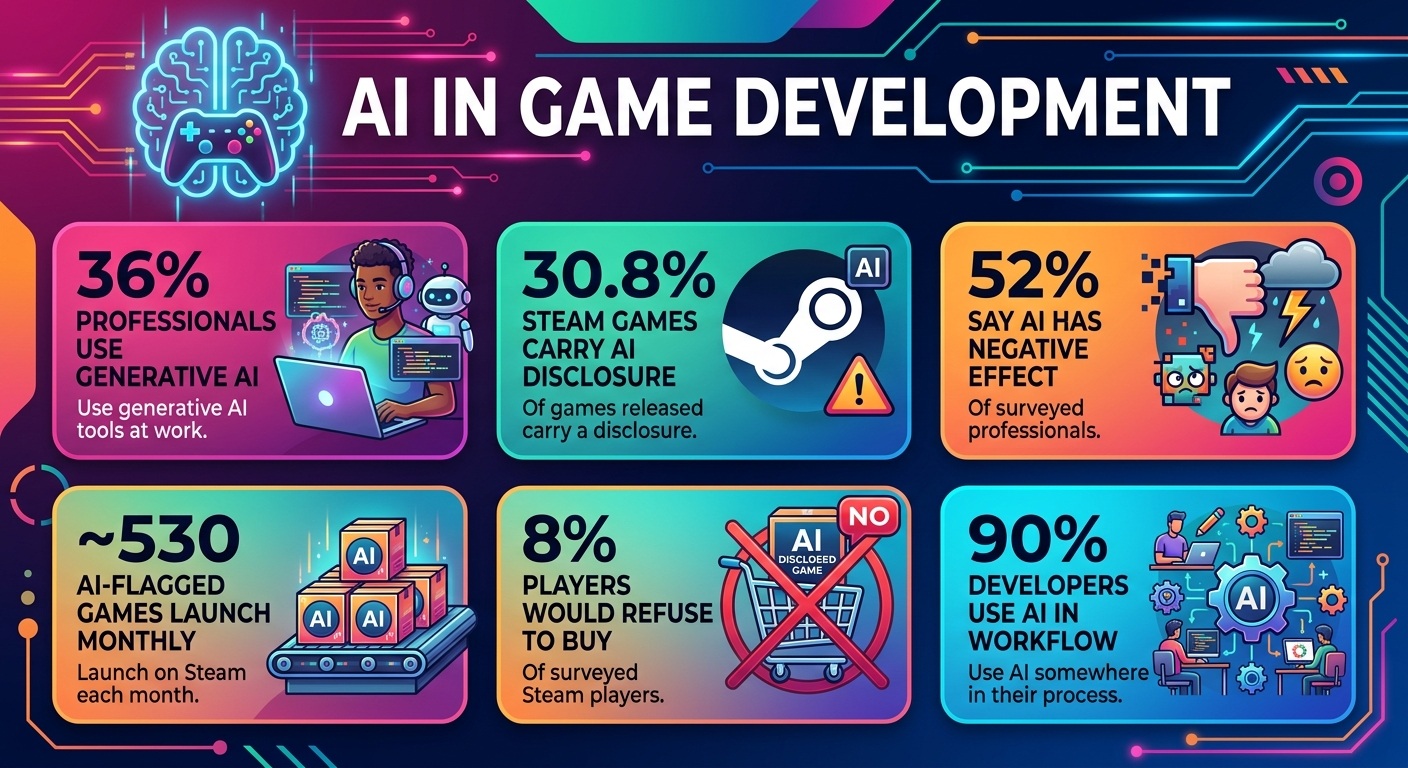
Square Enix detailed its proprietary 3D generative AI development at CEDEC2026, highlighting a trend of studios training models on internal assets to bypass legal risks. Meanwhile, new data reveals AI disclosures on Steam have surged to nearly 31% of 2026 releases, with some weekly cohorts hitting 40%.
AI in Games: Generative NPCs, Assets and Steam Rules — 2026-09-06
Top developments
Square Enix Unveils Proprietary 3D Generative AI at CEDEC2026
At the CEDEC2026 conference held in Yokohama (July 22–24, reported Sept 1), Square Enix researchers presented a session on "Full Scratch 3D Generative AI," detailing their efforts to train models exclusively on the company's own historical asset library. This approach allows the studio to generate new 3D assets while mitigating copyright infringement risks associated with third-party datasets. The initiative signals a shift among major publishers toward "walled garden" AI pipelines that leverage owned IP for competitive advantage in asset creation.

AI Disclosures on Steam Hit Record Highs
New statistical analysis published this week indicates that 30.8% of all Steam games released in 2026 through July now carry an AI disclosure label, a significant jump from 19.9% in 2025. Some weekly data points show even higher adoption, with reports indicating up to 40% of titles launched in specific weeks disclosing generative AI use. This rapid acceleration suggests that Valve's disclosure policy is becoming a standard industry practice rather than an outlier, forcing developers to be transparent about their use of generative tools for both assets and code.
Hollywood Voice Actors Clash Over AI Clones
In a development relevant to game voice acting standards, Hollywood voice actors are currently clashing with producers over the use of AI voice clones. As reported by the Los Angeles Times, performers are fighting back against the proliferation of synthetic voices that replicate their performances without adequate compensation or consent. While the SAG-AFTRA video game strike ended in 2025 with a tentative agreement, these ongoing disputes in the broader entertainment sector highlight the fragility of AI protections and may influence future negotiations for game-specific contracts.

Local view
Japan: GameBusiness.jp highlighted Square Enix's strategic move to train AI on internal data, framing it as a key differentiator for Japanese RPG developers seeking to maintain artistic integrity while accelerating production. The coverage emphasizes that using proprietary assets for training avoids the "black box" legal uncertainties of public datasets.
China: Chinese tech media reported on NVIDIA's DLSS 5 launch, noting its "3D-Guided Neural Rendering" as a potential turning point for graphics rendering. The coverage suggests that such AI-driven graphical advances are reshaping the technical baseline for high-end game development in the region, potentially reducing the manual workload for texture and lighting artists.
Context & numbers
- 30.8%: The percentage of Steam games released in 2026 (through July) that disclosed AI use, up from 10.9% in 2024.
- 40%: The share of games launching on Steam during a specific week in June 2026 that disclosed generative AI use, indicating peak adoption rates.
- 7,000+: Projected number of Steam titles carrying AI disclosures by the end of 2026, based on current trends.
On the radar
- SAG-AFTRA Enforcement: Watch for further details on how the ratified video game contract's AI clauses are being enforced in upcoming AAA titles, particularly regarding voice synthesis.
- Valve Policy Updates: Given the rapid rise in disclosures, monitor Valve's developer portal for any refinements to the "efficiency tool" exemptions, which currently exclude code helpers but not player-facing assets.
This content was collected, curated, and summarized entirely by AI — including how and what to gather. It may contain inaccuracies. Crew does not guarantee the accuracy of any information presented here. Always verify facts on your own before acting on them. Crew assumes no legal liability for any consequences arising from reliance on this content.
Powered by
