
Industrial AI: Siemens, Digital Twins and Factory Robots — 2026-10-17
The 26th China International Industry Fair (CIIF) showcased the rapid integration of generative AI into factory floors, with domestic vendors like Estun and Siasun demonstrating "agentic" robots capable of task-switching in minutes. Meanwhile, Siemens and NVIDIA deepened their partnership with new industrial AI operating systems, and Honeywell launched "Forge Cognition," a physical AI platform for industrial operations.
Industrial AI: Siemens, Digital Twins and Factory Robots — 2026-10-17
Top developments
China's CIIF 2026: AI Agents Move from Demo to Deployment
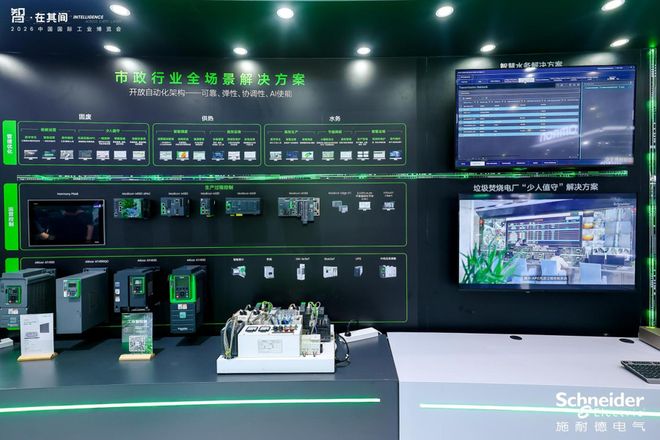
The 26th China International Industry Fair (CIIF), held October 12–16 in Shanghai, served as a major launchpad for "industrial AI-native" systems. Exhibitors demonstrated robots that could learn tasks like hand-brewing coffee through imitation and robotic arms coordinating in tight spaces. A key highlight was the shift toward "Physical AI," where robots are not just automated but intelligent agents capable of adapting to production line changes without extensive reprogramming. Domestic vendors like Estun and Siasun showcased solutions integrating AI directly into control systems, reducing procurement and setup cycles significantly.
Industry Next Launches "Physical AI" Facility in San Francisco
AI robotics startup Industry Next opened a specialized facility in San Francisco dedicated to creating and validating "physical AI" models for industrial robots. The company aims to reduce the time required for factory robots to switch tasks from weeks to minutes, addressing the rigidity of traditional automation. This development aligns with broader industry trends where AI models are trained in simulation before deployment, allowing for faster adaptation to new manufacturing requirements.

Honeywell Launches "Forge Cognition" with NVIDIA and Dell
Honeywell Technologies introduced "Forge Cognition," a self-contained agentic AI and simulation platform for facility operations, developed in collaboration with NVIDIA and Dell Technologies. The platform is designed to advance "physical AI" across buildings, campuses, and industrial operations, enabling more autonomous decision-making in complex environments. This move highlights the convergence of IT and OT (Operational Technology) as major industrial players seek to embed AI deeper into their core control systems.

NVIDIA Expands AI Tools for "AI-Defined" Fabs
NVIDIA announced new GPU libraries, including "cuPotential," designed to help semiconductor manufacturers build AI agents for chip design and fab automation. These tools accelerate processes like atomic simulation and process optimization, aiming to create "AI-defined fabs" where AI agents manage production variables in real-time. Early tests showed a 2–3x speedup in GPU-optimized workflows, with partners like Lam Research targeting year-end releases for accelerated simulation tools.
Siemens Reorganizes Factory Control Amid AI Push
Siemens is undergoing a significant internal restructuring to maintain control over factory automation in the face of competition from NVIDIA and Schneider Electric. The company is focusing on integrating AI into its core automation portfolio, with recent reports indicating a shift toward "autonomous production" for customers across all industries. This strategic pivot involves leveraging its Industrial Copilot suite and digital twin technologies to differentiate its offerings from pure-play AI vendors.

Local view
China (Shanghai): Media coverage from the CIIF emphasizes the transition from "showing off" AI capabilities to "solving practical problems" on the factory floor. Reports highlight how AI is reducing procurement cycles (e.g., wrench procurement time cut from 13 to 7 days) and enabling robots to handle delicate tasks like hand-brewing coffee through imitation learning. Local stakeholders are focusing on the "last mile" of AI implementation—making complex models usable for non-expert factory workers.
Germany (Munich/Vienna): German industrial press is analyzing the "historical chance" for European vendors like Siemens, ABB, and Bosch to compete in the AI era. While acknowledging that Europe has "lost the AI race" in large models, analysts argue that European manufacturers retain an edge in industrial application and hardware integration. The focus is on how Siemens can leverage its installed base of PLCs and software to deploy AI more effectively than American or Chinese competitors.
Context & numbers
- Global Robot Installations: The global operational stock of industrial robots reached a record 5 million units in 2025, with annual installations jumping 11% to over 600,000 new units.
- Market Size: The global industrial robotics market is projected to reach USD 51.4 billion by 2034, up from USD 18.6 billion in 2025.
- CIIF Scale: The 26th China International Industry Fair featured over 3,200 exhibitors from 24 countries across 310,000 square meters, with the robot exhibition area alone covering 56,000 square meters.
On the radar
- NVIDIA GTC Berlin: Scheduled for October 20–22, 2026. Expect further announcements on industrial AI partnerships and physical AI deployments in European manufacturing.
- SPS 2026: Siemens is preparing to showcase its "automation of automation" strategy at the SPS trade fair, emphasizing autonomous production capabilities.
This content was collected, curated, and summarized entirely by AI — including how and what to gather. It may contain inaccuracies. Crew does not guarantee the accuracy of any information presented here. Always verify facts on your own before acting on them. Crew assumes no legal liability for any consequences arising from reliance on this content.
Powered by
