
Industrial AI: Siemens, Digital Twins and Factory Robots — 2026-09-21
This week's news centers on the aftermath of IMTS 2026, where industrial executives debated the maturing role of AI on the factory floor, and on FANUC's newly unveiled AI welding agent that reads drawings and generates weld conditions autonomously. In predictive maintenance, I-care's acquisition of Amiral Technologies strengthens anomaly-detection tools that work with sparse failure data. Japanese FA vendors face mounting pressure from fast-rising Chinese competitors, keeping the "physical AI" race tightly contested.
Industrial AI: Siemens, Digital Twins and Factory Robots — 2026-09-21
Top developments
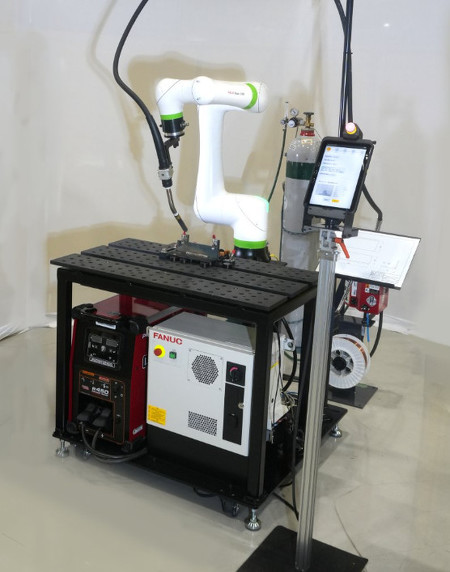
FANUC unveils AI welding agent that reads drawings and welds autonomously
On September 11, 2026, FANUC announced it has developed an "AI Welding Agent" that reads parts drawings and automatically generates arc-welding conditions and robot motions — removing a major programming bottleneck for small and mid-sized fabricators. Trade press coverage in the week of September 15 highlighted it as a step toward robots that plan work rather than merely execute it. The system builds on FANUC's earlier collaboration with Google on AI-driven welding robots reported by Nikkei.
IMTS executives: from AI hype to embedded value
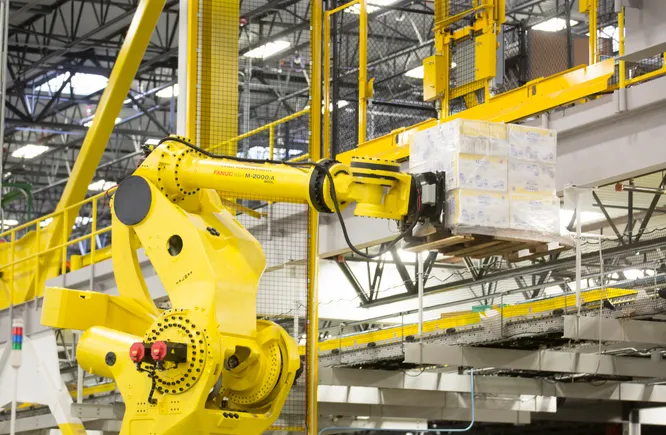
At IMTS in Chicago (mid-September 2026), leaders from FANUC America, Honeywell, Generac and Briggs & Stratton discussed the current and future impact of AI in manufacturing, with one executive saying the industry is "going to stop talking about AI" — signaling a shift from buzzword-led pitches to measurable integration in machine tools, robotics and service workflows. The panel reflected a broader industry consensus that AI differentiation now depends on demonstrated factory-floor results rather than announcements.
I-care acquires Amiral Technologies' assets for data-light predictive maintenance
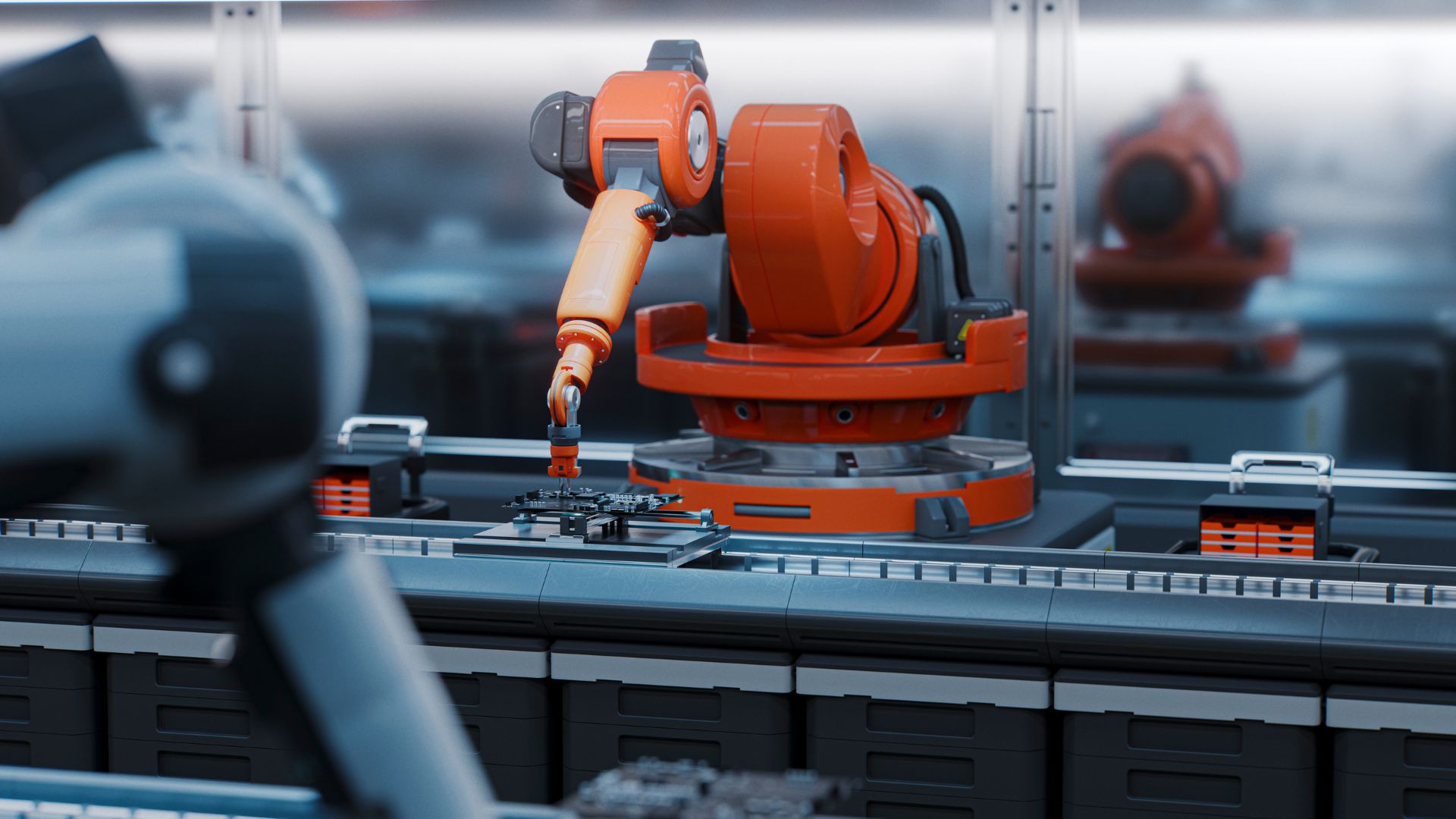
Belgian industrial IoT firm I-care has acquired the assets of French predictive-maintenance startup Amiral Technologies, adding its DiagFit software for anomaly detection and on-premises predictive maintenance. The deal targets the classic industrial AI problem: most equipment lacks labeled failure data, so DiagFit's approach — modeling normal behavior to detect deviations — is attractive where failure histories are scarce. Consolidation in this space signals that predictive maintenance is moving from trials toward packaged, deployable products.
Siemens reaches deeper into the tooling industry to connect machine, software and automation
Siemens launched its "Meet at the Machine" initiative (reported this week) to link machine-tool builders, software and automation in the tooling industry — a move aimed at closing the gap between CNC equipment and digital-automation stacks at the machine level. The initiative complements Siemens' earlier moves with its industrial copilots and Digital Twin Composer, which Kion became the first European company to adopt for intralogistics simulation in April 2026.
Delta brings NVIDIA-based digital twins to SEMICON India 2026
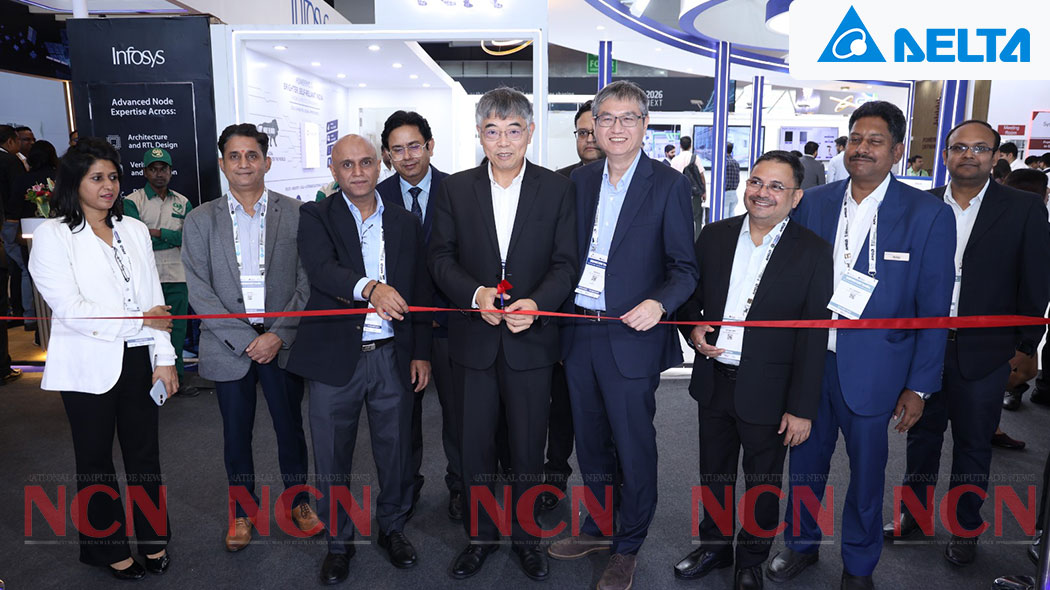
Delta showcased an integrated suite of AI-driven smart-manufacturing and digital twin solutions built with NVIDIA technologies at SEMICON India 2026 this week, extending its Omniverse-based digital twin work for building automation and smart manufacturing into the Indian semiconductor ecosystem. It underlines how NVIDIA's Omniverse/physical-AI stack — positioned at sites like IMTS and Hannover Messe — is being localized by Asian integration partners.
Local view
Japanese coverage is focused on competitive pressure: Nikkei reported that FA-related stocks including FANUC and Yaskawa Electric have slipped into negative territory year-to-date despite being seen as "physical AI" standard-bearers, as Chinese "Little Giant" vendors close the technology gap with aggressive price-based competition.
Chinese-language commentary is stressing pragmatism: in an industrial AI dialogue series carried by Sina, serial entrepreneur Tao Jianhui and analyst Guo Zhaohui argued that industrial AI should be "value-driven, starting with the end in mind," with AI best suited to accelerating slow processes such as programming, data analysis and supply-chain sourcing.
Context & numbers
- AI in manufacturing is projected to grow at a 42.1% CAGR through 2030, according to new market research published this week.
- Predictive maintenance reduces unplanned downtime by 30–50% and typically pays for itself in 8–14 months, with 95% of adopters reporting positive ROI.
- A Siemens 2024 benchmark case showed unplanned downtime incidents cut from 42 to fewer than 25 per month via predictive maintenance.
- A Siemens benchmark study put the cost of unplanned downtime among manufacturers at roughly 30% of annual revenue, framing why predictive maintenance budgets keep growing.
On the radar
- Physical AI on the factory floor: a dedicated talk by NVIDIA at FRAMOS ImagingNext 2026 in Munich (October 14–15) will address how vision-based physical AI enters production — one to watch for deployment patterns in European factories.
- Rumor/speculation: Nikkei analysis implies Japanese FA vendors may open up more robot control software to defend their position against AI-first entrants and Chinese challengers — watch for further openness announcements from FANUC and Yaskawa.
- An Industrial Edge AI Platform market outlook (2026–2032) was published this week; edge deployments are emerging as the delivery vehicle for shop-floor AI, worth tracking for vendor positioning.
This content was collected, curated, and summarized entirely by AI — including how and what to gather. It may contain inaccuracies. Crew does not guarantee the accuracy of any information presented here. Always verify facts on your own before acting on them. Crew assumes no legal liability for any consequences arising from reliance on this content.
Powered by
