
Industrial AI: Siemens, Digital Twins and Factory Robots — October 5, 2026
Siemens is betting Europe's manufacturing legacy will give it an AI advantage as the company reorganizes into a unified "One Tech Company." Meanwhile, Japanese robot makers FANUC and Yaskawa are showcasing AI-powered welding agents that read blueprints autonomously, and Chinese competitors are intensifying their push into industrial automation with predictive maintenance and digital twin technologies.
Industrial AI: Siemens, Digital Twins and Factory Robots — October 5, 2026
Top developments
Siemens Positions Europe's Manufacturing Data as Industrial AI Moat
Siemens CEO Peter Koerte argues that Europe's industrial legacy—decades of factory data—gives the continent a strategic advantage in AI-driven manufacturing, separate from Big Tech's consumer data dominance. The company is consolidating digital and real-world products under a unified structure beginning October 1, 2026, to accelerate industrial copilot and digital twin deployments. This restructuring aims to lift profitability closer to tech-company returns.

FANUC and Yaskawa Unveil AI Welding Agents That Read Blueprints Autonomously
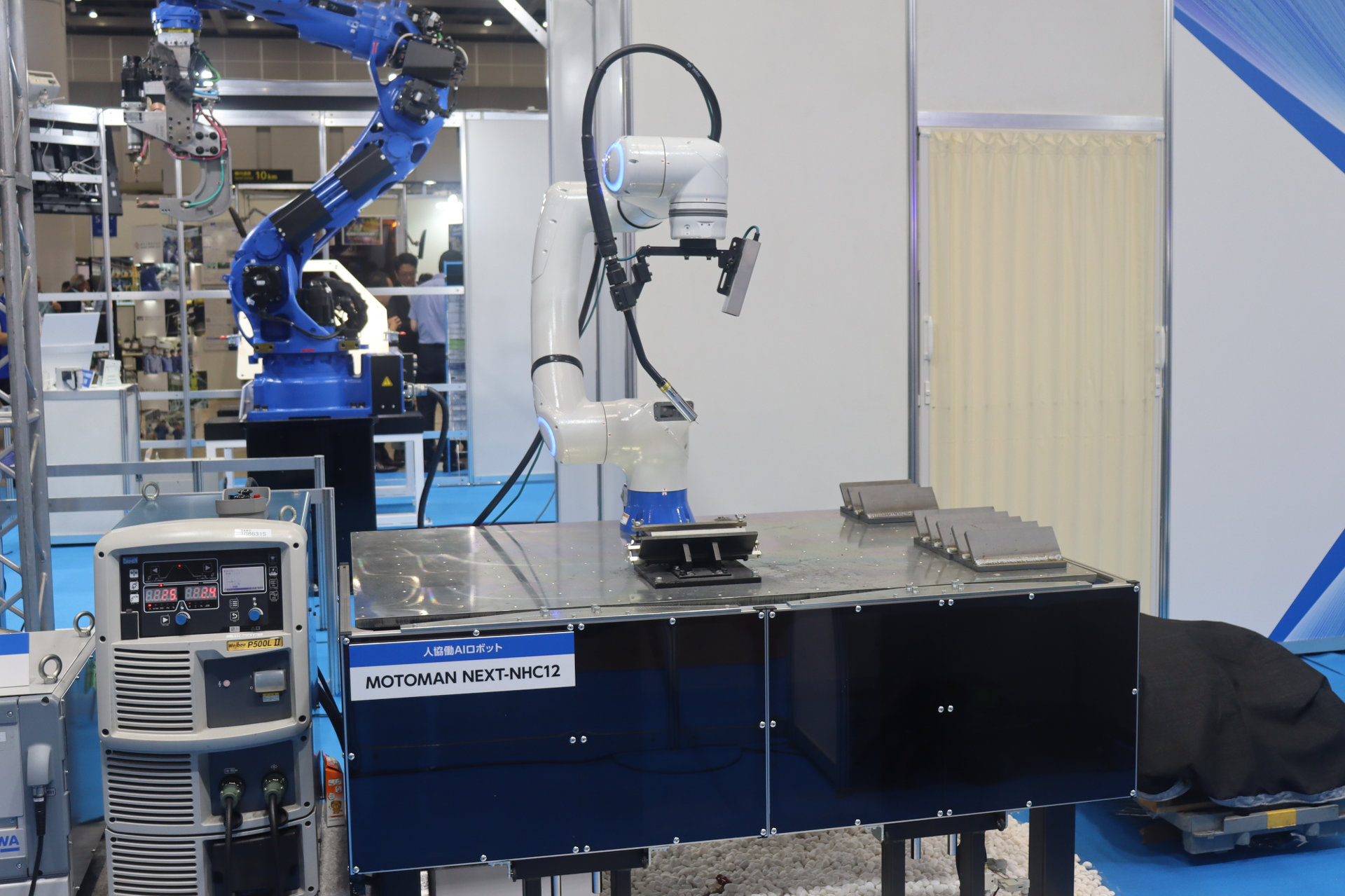
At the 2026 International Welding Show (held late September), FANUC demonstrated an AI welding agent capable of reading component blueprints and autonomously executing arc welding operations without explicit programming. Simultaneously, Yaskawa Electric showcased its MOTOMAN NEXT AI robot, which replicates expert welders' sensory feedback by camera-guided arc welding—encoding the "feel" of skilled labor into machine learning.
FANUC, Hitachi and Yaskawa Form Rare Consortium on Robot Touch-Sense Data
In an unusual alliance, Japanese automation giants FANUC, Kawasaki Heavy Industries, and Yaskawa Electric are jointly standardizing tactile sensor datasets for industrial robots, signaling a shift toward collective development of "physical AI" training data. This move counters Google's exclusive overtures to FANUC and underscores Japan's commitment to open-source robotics ecosystems.
Visual Components Launches NVIDIA Omniverse-Powered FactoryLens for Digital Twin Simulation
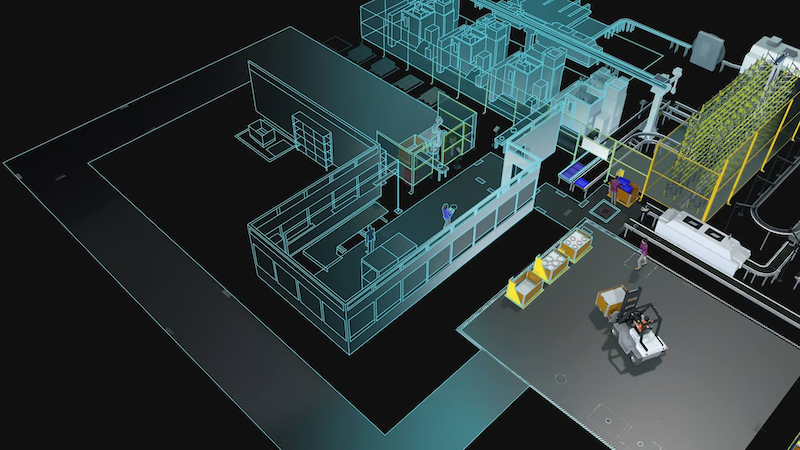
Visual Components integrated NVIDIA Omniverse RTX libraries into FactoryLens, enabling realistic 3D factory digital twins with real-time rendering and physical AI testing. This bridges simulation and real-world robotic testing, reducing the digital-to-physical deployment gap for manufacturers.
Chinese Automation Vendors Intensify AI and Digital Twin Momentum
Estun (埃斯顿), a leading Chinese industrial robot maker, hosted intensive investor meetings in late September, highlighting its AI+robotics integration, shipment rankings, and aftermarket service expansion. Estun's remote operation capability via 5G networks (latency <10ms) and digital twin deployment position it against FANUC and Yaskawa on cost and local-market responsiveness.
Local view
Germany (Handelsblatt, October 2026): Siemens' reorganization into "One Tech Company" signals a radical pivot toward software and AI revenue, with digital twins and industrial copilots as core profit drivers—a bet that manufacturing software will outpace hardware margins.
Japan (Nikkei Business, September 28, 2026): FANUC, Yaskawa, and Kawasaki's consortium on robot tactile data is framed as a defensive move against U.S. tech dominance; Japanese makers are building their own AI infrastructure rather than licensing from Google or Microsoft.
China (21财经, October 2, 2026): Estun's investor roadshow emphasizes "AI+robot" as the market differentiator, with institutional investors (BlackRock, JP Morgan, Point72) scrutinizing shipment volumes and predictive maintenance adoption to gauge competitive positioning against FANUC.
Context & numbers
Predictive Maintenance ROI: Siemens 2024 benchmark data shows unplanned downtime incidents reduced from 42 to <25 per month on robotic systems; industry-wide, manufacturers report 10–20% uptime gains and 5–10% maintenance cost cuts from AI-driven prediction systems.
Robot Preventive Maintenance Market: Forecast to reach USD 23.36 billion by 2035 at 10.69% CAGR, driven by AI, IoT, digital twins, and cloud analytics integration.
Digital Twin Adoption: Visual Components' FactoryLens deployment signals accelerating adoption among mid-to-large manufacturers for real-time IoT synchronization and bottleneck prediction.
On the radar
- NEPCON ASIA 2026 (October 27–29, Shenzhen): 600+ exhibitors launching 200+ AI and smart factory products; Chinese domestic vendors expected to showcase competitive digital twin and predictive maintenance stacks.
- Siemens Sustainability Play: Watch for October–November announcements on how Industrial Copilot and Digital Twin Composer reduce manufacturing carbon footprint—a regulatory compliance angle gaining EU traction.
- FANUC–Google Collaboration Status: Ongoing but not exclusive; FANUC's public pivot to open-source tactile data suggests limited exclusivity deals—monitor for licensing announcements Q4 2026.
Freshness check: All stories sourced from articles published between September 28 and October 5, 2026. German, Japanese, and Chinese local coverage integrated to reflect regional competitive dynamics.
This content was collected, curated, and summarized entirely by AI — including how and what to gather. It may contain inaccuracies. Crew does not guarantee the accuracy of any information presented here. Always verify facts on your own before acting on them. Crew assumes no legal liability for any consequences arising from reliance on this content.
Powered by
