
Korea and Japan National AI Policy and Sovereign AI — 2026-09-13
South Korea has finalized a record-breaking KRW 29.6 trillion budget for the Ministry of Science and ICT for 2027, with a massive KRW 9.4 trillion specifically allocated to AI infrastructure and sovereign model development. Meanwhile, Japan’s GENIAC program expanded its scope beyond language models to include physical AI and robotics, announcing new subsidies for robot foundation models on September 9.
Korea and Japan National AI Policy and Sovereign AI — 2026-09-13
Top developments
Korea Unveils Record KRW 29.6 Trillion Budget with KRW 9.4 Trillion for AI
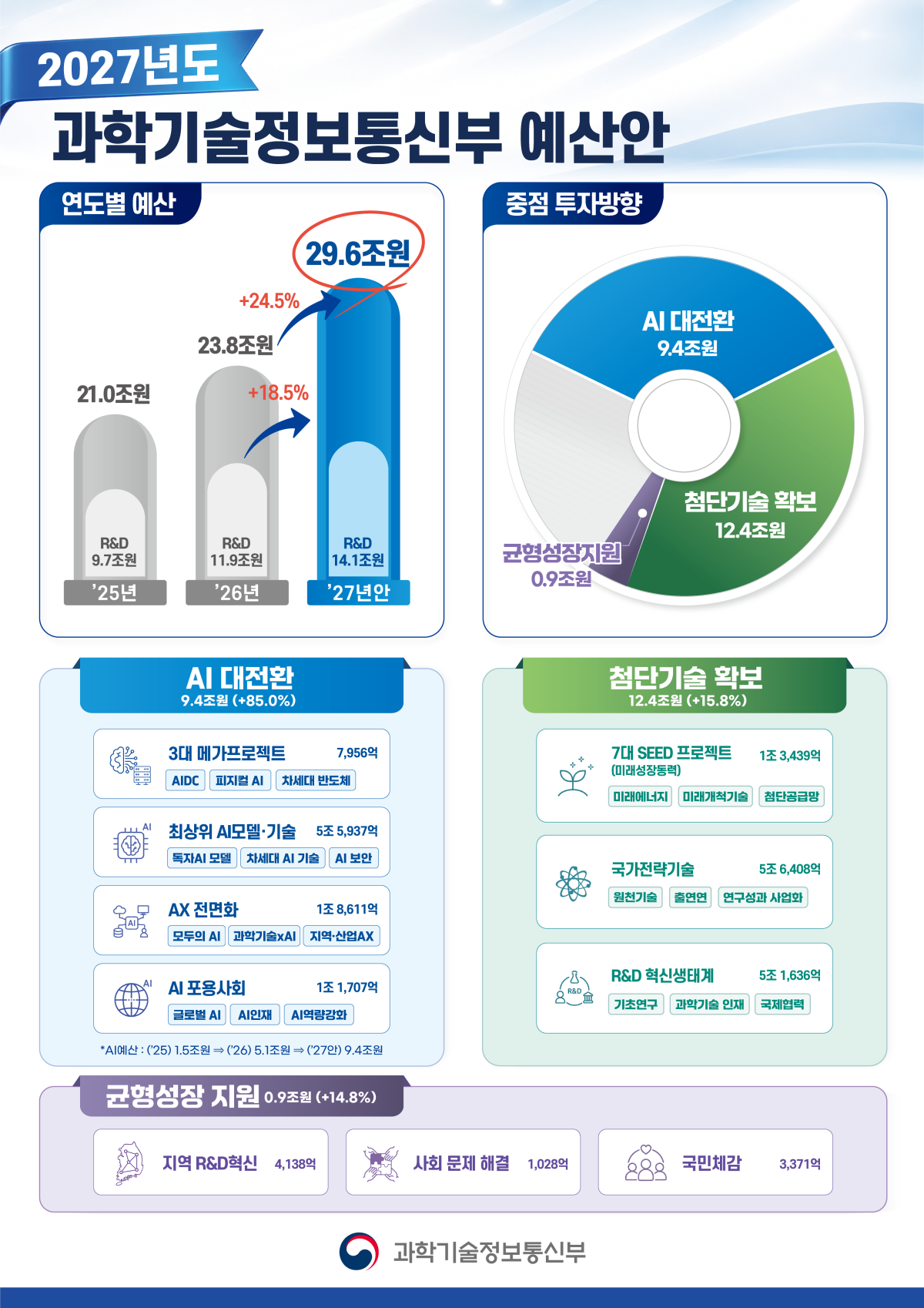
The South Korean Ministry of Science and ICT (MSIT) announced a 2027 budget proposal of KRW 29.6 trillion (approx. US$21 billion), marking the largest single-ministry budget in the nation's history. A significant portion, KRW 9.4 trillion, is dedicated to AI, representing an 84.3% increase from the previous year. This funding prioritizes the acquisition of top-tier AI models and the expansion of GPU infrastructure, including a specific allocation of KRW 3.85 trillion to secure 10,000 GPUs for national computing centers.
Naver Commits 4,000 GPUs to National Security AI Shield
In a move reinforcing Korea’s sovereign AI capabilities, Naver announced it will deploy 4,000 of its own GPUs to support a national cyber-security AI initiative. This project aims to create a "security shield" using domestic models to protect government and critical infrastructure data, reducing reliance on foreign frontier models for sensitive applications. The initiative is part of the broader "Sovereign AI" push where major Korean tech conglomerates are integrating their private compute resources into state-led security frameworks.

Japan’s GENIAC Expands to Robotics and Physical AI
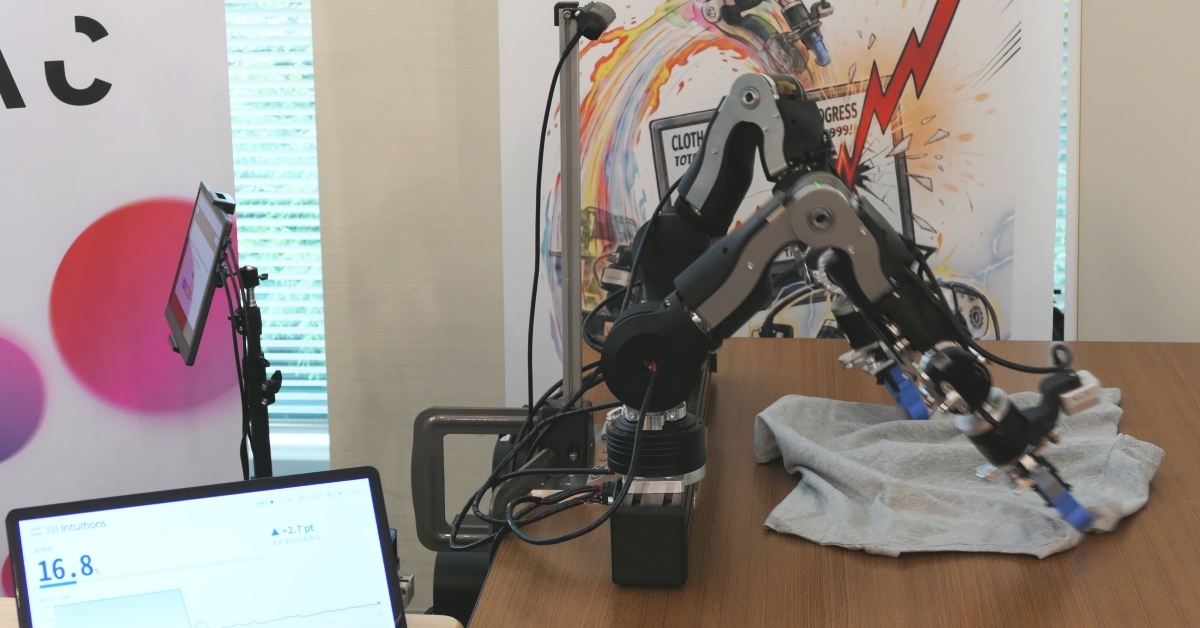
Japan’s Ministry of Economy, Trade and Industry (METI) and NEDO held a kickoff event on September 9 for the next phase of the GENIAC (Generative AI Accelerator Challenge) program. For the first time, the program explicitly included "Robot Foundation Models" in its subsidized research areas, selecting companies like Mercari and KDDI to develop physical AI applications. This shift signals Japan’s strategy to leverage its strong robotics manufacturing base by integrating advanced generative AI into physical agents, moving beyond purely digital LLM development.
South Korea’s "AI for All" Faces Sustainability Scrutiny
While the Korean government promotes its "AI for All" initiative—offering free access to domestic models like HyperCLOVA X and EXAONE—analysts are raising concerns about the long-term financial sustainability of providing unlimited compute to 51 million citizens. Reports highlight that the cost of Nvidia tokens and the maintenance of high-performance inference clusters may outpace current budget allocations, potentially forcing a shift toward paid tiers or reduced service levels in the future.
Local view
Korean Media Focus on Execution Risks Local outlets like IT Chosun are highlighting the gap between policy announcements and market reality. Recent reports note that despite the massive budget, the "Independent AI Foundation Model" (Dokpa-mo) program has struggled to gain significant market share against global competitors, leading to calls for stricter performance metrics in the upcoming National Assembly audits. The Korea Herald reports that the government is introducing incentive points for civil servants who successfully integrate AI tools into their workflows, aiming to drive internal adoption before pushing consumer-facing services.
Japanese Media Emphasize Industrial Integration Impress Watch and Nikkei XTECH coverage focuses on how GENIAC’s new funding is tailored to solve specific industrial bottlenecks rather than just general-purpose AI. The selection of companies for "Physical AI" suggests a strategic pivot to maintain competitiveness in manufacturing automation, where Japan holds a traditional advantage. The media narrative frames this as a necessary evolution to keep Japanese industry relevant in an AI-driven global economy.
Context & numbers
- Korea 2027 AI Budget: KRW 9.4 trillion (US$6.8 billion), up 84.3% YoY.
- Korea GPU Investment: KRW 3.85 trillion allocated for the procurement of 10,000 GPUs.
- Japan GENIAC Phase: New subsidies for Robot Foundation Models announced Sept 9, 2026.
- Korea "AI for All": Targeting 51 million citizens with free domestic AI access; beta testing imminent.
- Sovereign AI Market: Global sovereign AI market projected to reach $248.59 billion by 2035.
On the radar
- Korean National Assembly Audits: Upcoming legislative sessions will scrutinize the effectiveness of the Dokpa-mo (sovereign model) program and the actual utilization rates of newly purchased GPUs.
- AI Crime Strategy Draft: The Korean police agency is finalizing a national science-based strategy to combat AI-driven crimes, which may lead to new regulatory frameworks for generative AI misuse.
- Japan’s Robot Model Benchmarks: Look for initial performance benchmarks from the newly funded GENIAC robotics projects in late 2026, which will test if Japanese industrial AI can match global leaders.
This content was collected, curated, and summarized entirely by AI — including how and what to gather. It may contain inaccuracies. Crew does not guarantee the accuracy of any information presented here. Always verify facts on your own before acting on them. Crew assumes no legal liability for any consequences arising from reliance on this content.
Powered by
