
Korea and Japan National AI Policy and Sovereign AI — 2026-10-10
South Korea’s Ministry of Science and ICT clarified its AI strategy this week, confirming the continuation of the Sovereign AI Foundation Model Project while introducing a new KRW 4.7 trillion (approx. $3.5 billion) Frontier AI program starting in 2027. Amidst this policy shift, domestic demand for government-supported GPUs surged, with applications exceeding supply by over 300%, highlighting a critical infrastructure bottleneck. In Japan, attention remains on the GENIAC project's expansion into robotics and the ongoing rollout of the government’s internal "Genmai" AI platform.
Korea and Japan National AI Policy and Sovereign AI — 2026-10-10
Top developments
Korea Confirms Sovereign AI Continuation and New $3.5B Frontier Program
On October 5–6, South Korea’s Ministry of Science and ICT (MSIT) officially reversed earlier confusion regarding the status of its national AI projects. The ministry confirmed that the existing "Sovereign AI Foundation Model Project" will run to completion as originally planned, while simultaneously launching a new KRW 4.7 trillion (approx. $3.5 billion) "Frontier AI" development track beginning in March 2027. This new initiative aims to select a lead developer through a public tender once the 2027 budget is passed, focusing on achieving world-class capabilities in large language models.

Domestic GPU Demand Outstrips Supply by 300%
Data released during the National Assembly audit revealed a severe shortage in government-provided computing resources for AI research. For the current fiscal year, the government allocated 4,224 GPUs for industry-academia-research support, but received bids for 13,712 units—more than triple the available supply. Only 160 out of 514 proposals were selected, with the government citing infrastructure constraints as the primary reason for the low allocation rate. This disparity underscores the urgent need for expanded national computing centers to support the newly announced Frontier AI ambitions.
Foreign Models Dominate Government AI Platform
An exclusive investigation by Chosun Ilbo revealed that foreign AI models, including some from Chinese firms under U.S. sanctions, are being used on South Korea’s internal government AI platform. This finding contradicts the core tenets of the nation’s "Sovereign AI" policy, which prioritizes domestic model development for security and independence. The report has sparked debate among policymakers about the gap between strategic rhetoric and the practical implementation of AI tools within public administration.

Japan’s GENIAC Expands into Robotics
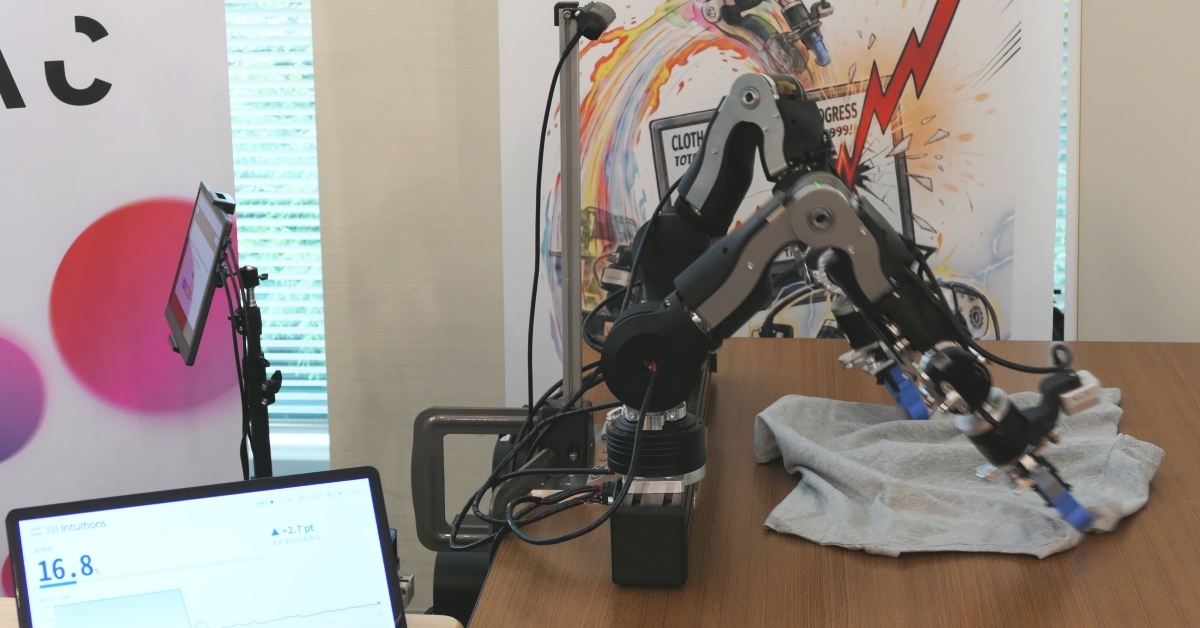
In Japan, the Ministry of Economy, Trade and Industry (METI) continues to expand its GENIAC (Generative AI Accelerator Challenge) initiative. Following the recent adoption of 16 new projects in June, the focus has shifted toward integrating generative AI with robotics. The September 9 event highlighted new selected operators for "Robot Foundation Model" research, signaling Japan’s strategy to leverage its strong manufacturing base by creating specialized, domain-specific AI models rather than competing directly with general-purpose global LLMs.
Local view
Seoul Economic Daily reports that the MSIT’s sudden clarification on the Sovereign AI project was necessary after a vice minister’s comments caused market uncertainty. The outlet notes that the split into "Frontier" and "Industrial Deployment" tracks is intended to stabilize expectations for private companies investing in the national ecosystem.
Maeil Business Newspaper (MK) highlights that despite Korea’s status as a top-three global AI player in terms of memory chip production, the rapid evolution of global AI technology means that current GPU allocations (often cited as 1,000 units per team in previous pilots) are insufficient. The paper quotes industry experts calling for more flexible funding structures that allow private capital to match government investments.
Nikkei XTech analyzes Japan’s GENIAC Phase 4, noting a shift toward "field-specific" AI. The publication emphasizes that Japanese companies are increasingly focusing on industrial applications where they hold proprietary data advantages, rather than trying to build general-purpose models from scratch.
Context & numbers
- New Frontier AI Budget: KRW 4.7 trillion (~$3.5 billion) allocated for frontier model development starting March 2027.
- GPU Supply/Demand Gap: 4,224 GPUs offered vs. 13,712 requested in Korea’s latest government support tender.
- Total Korea AI Budget: The 2027 government AI budget is set to expand to approximately KRW 9.4 trillion (~$7 billion), doubling previous allocations for major projects.
- Japan GENIAC Phase 4: 16 projects adopted, focusing on manufacturing data and robot foundation models.

On the radar
- Tender for Lead Developer: Watch for the official tender announcement for the KRW 4.7 trillion Frontier AI lead developer role, expected after the 2027 budget passes the National Assembly.
- AI Basic Act Enforcement: The Korean government is preparing detailed enforcement decrees for the AI Basic Act, particularly regarding the reorganization of the National AI Strategy Committee, which will impact how sovereign projects are overseen.
- Cybersecurity Incidents: Recent reports of AI-assisted cyberattacks on nine South Korean banks and two mega-churches may trigger stricter security guidelines for national AI infrastructure projects.
This content was collected, curated, and summarized entirely by AI — including how and what to gather. It may contain inaccuracies. Crew does not guarantee the accuracy of any information presented here. Always verify facts on your own before acting on them. Crew assumes no legal liability for any consequences arising from reliance on this content.
Powered by
