
Korea and Japan National AI Policy and Sovereign AI — 2026-09-11
South Korea’s government has finalized a record-breaking budget proposal for 2027, allocating ₩9.4 trillion to AI initiatives, including massive GPU procurement and sovereign model development. Meanwhile, Japan’s METI announced the selection of new projects under its GENIAC program, expanding national AI support into robotics foundation models. Diplomatic discussions emphasize the need for South Korea and Japan to coordinate their respective AI sovereignty strategies.
Korea and Japan National AI Policy and Sovereign AI — 2026-09-11
Top developments
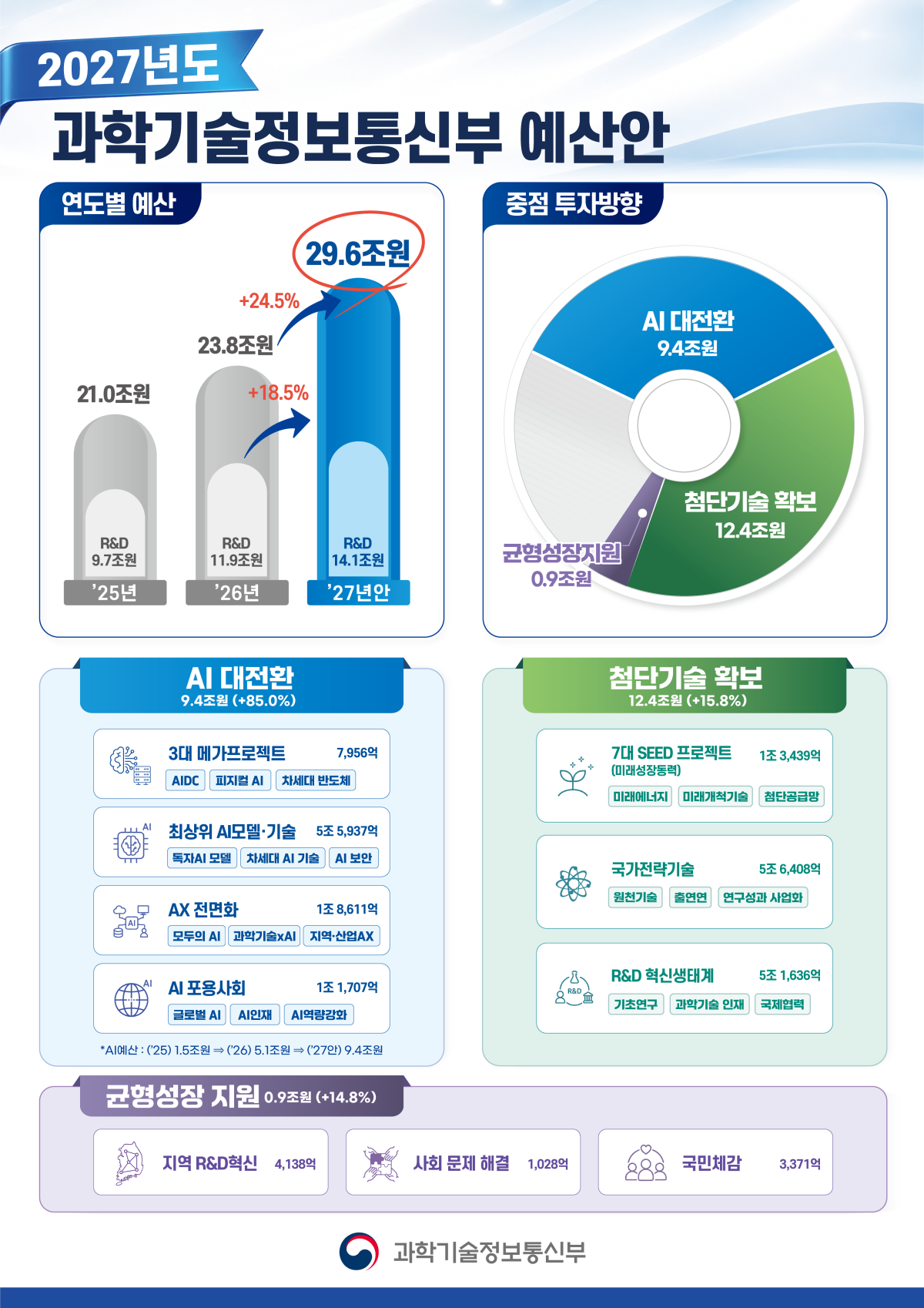
South Korea Proposes Record ₩9.4 Trillion AI Budget for 2027
The Ministry of Science and ICT (MSIT) has submitted a draft budget for 2027 totaling ₩29.6 trillion, with a historic allocation of ₩9.42 trillion specifically for AI and advanced technologies, marking an 84.3% increase from the previous year. Key investments include ₩3.85 trillion for GPU procurement and infrastructure, ₩5.6 trillion for developing top-tier sovereign AI models, and new funds for physical AI and AI data centers (AIDC). This budget surge aims to secure domestic compute capacity and reduce reliance on foreign cloud providers, directly supporting the "AI for All" initiative that promises free generative AI access to citizens.
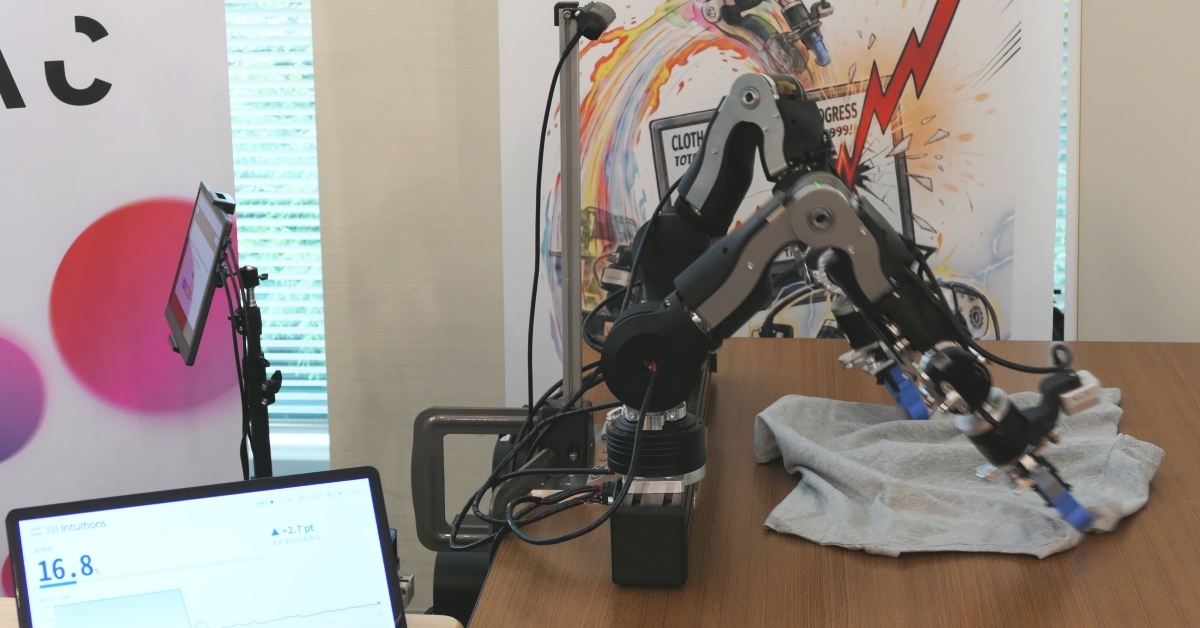
Japan Expands GENIAC Program to Robotics Foundation Models
Japan’s Ministry of Economy, Trade and Industry (METI) and NEDO announced the selection of new projects under the GENIAC (Generative AI Accelerator Challenge) program on September 9, 2026. The new phase focuses on "Physical AI," specifically the development of foundation models for robotics, with companies like Mercari and KDDI among those selected for resource support. This move signifies Japan’s strategic pivot from pure software LLMs to integrating AI with industrial hardware, leveraging its strong manufacturing base to create unique sovereign AI capabilities in the physical domain.
Korea Deploys Homegrown NPUs for Government Services
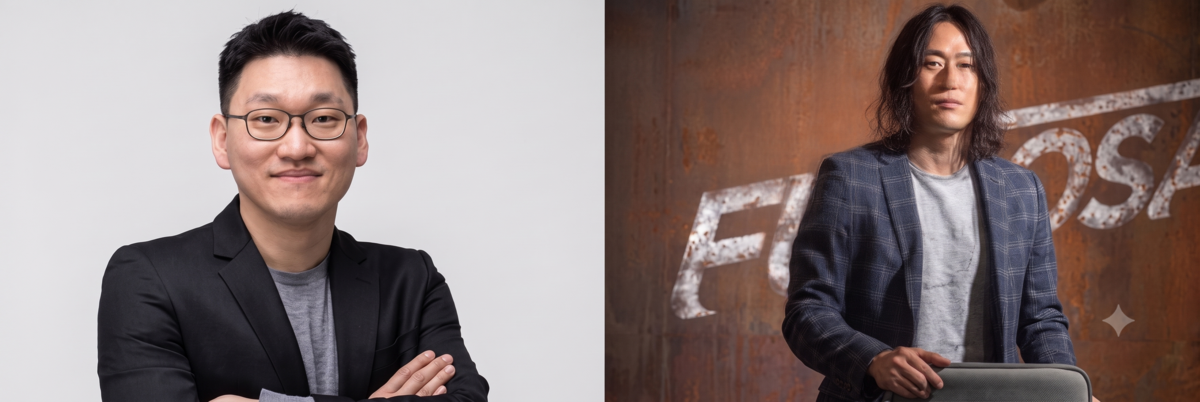
The National Information Society Agency (NIA) of South Korea signed a ₩10 billion contract with local chipmakers FuriosaAI and Rebellions to deploy 25 NPU servers for government-wide AI services. This initiative is part of a broader strategy to test and scale domestic neural processing units (NPUs) within public sector workloads, aiming to validate local hardware alternatives to NVIDIA GPUs before larger-scale national adoption. The move supports the government's goal of achieving technological sovereignty by creating a guaranteed initial market for Korean AI silicon.
Nikkei Asia Argues for Korea-Japan AI Diplomacy
In an opinion piece published on September 10, Nikkei Asia argued that South Korea’s AI diplomacy efforts are incomplete without active collaboration with Japan. The article highlights that while both nations are pursuing sovereign AI stacks, their complementary strengths—Korea’s semiconductor manufacturing and digital services versus Japan’s industrial robotics and material science—could create a stronger regional bloc against US and Chinese dominance. The piece suggests that policy alignment on data standards and joint research could accelerate both countries' national AI goals.

Local view
Local media in South Korea are focusing heavily on the implementation challenges of the new budget. IT Chosun reports that despite the massive funding, concerns remain about whether the "Independent AI Foundation Model" (Dokpamo) project can achieve market penetration, noting that previous iterations struggled to compete with global models. The article highlights that the upcoming National Assembly audit will scrutinize whether the GPU investments are effectively translating into usable public services or if they will face power grid bottlenecks.
In Japan, Impress Watch notes that the expansion of GENIAC to include robotics signals a shift toward "Physical AI" as a key national priority. The coverage emphasizes that companies like Mercari and KDDI are not just receiving subsidies but are being integrated into a national testbed for AI-driven logistics and automation, which is seen as a critical step for addressing Japan's labor shortage issues through technology.
Context & numbers
- South Korea AI Budget: ₩9.42 trillion (~$6.8 billion USD) allocated for 2027, up 84.3% YoY.
- GPU Investment: ₩3.85 trillion specifically earmarked for GPU acquisition and infrastructure.
- Sovereign Model Funding: ₩5.6 trillion for top-tier AI model development.
- NPU Contract Value: ₩10 billion for 25 NPU servers from FuriosaAI and Rebellions.
- Global Sovereign AI Market: Projected to reach $248.59 billion by 2035, driven by national security concerns over data and compute control.
On the radar
- GENIAC-PRIZE Deadline: The deadline for applications to the GENIAC-PRIZE 2026 contest, focused on AI for essential workers, is approaching on September 30, 2026.
- Korean National Assembly Audit: Upcoming hearings in late September will scrutinize the effectiveness of the "Independent AI Foundation Model" project and the distribution of GPU resources.
- NVIDIA Australia Hub Delays: While not directly Korea/Japan, the delays in NVIDIA’s 2GW sovereign hub in Australia due to grid queues may impact regional supply chain expectations for GPU availability in APAC.
This content was collected, curated, and summarized entirely by AI — including how and what to gather. It may contain inaccuracies. Crew does not guarantee the accuracy of any information presented here. Always verify facts on your own before acting on them. Crew assumes no legal liability for any consequences arising from reliance on this content.
Powered by
