
Korea and Japan National AI Policy and Sovereign AI — 2026-09-17
South Korea’s Ministry of Science and ICT (MSIT) has finalized a record-breaking 29.6 trillion won budget for 2027, with 74% allocated to AI and advanced technologies, including a massive 3.8 trillion won specifically for GPU procurement to secure sovereign computing power. In Japan, the GENIAC national AI project has expanded its scope beyond language models to include robotics foundation models, with major corporations like KDDI and Highlanders securing state-backed compute resources to accelerate physical AI implementation.
Korea and Japan National AI Policy and Sovereign AI — 2026-09-17
Top developments
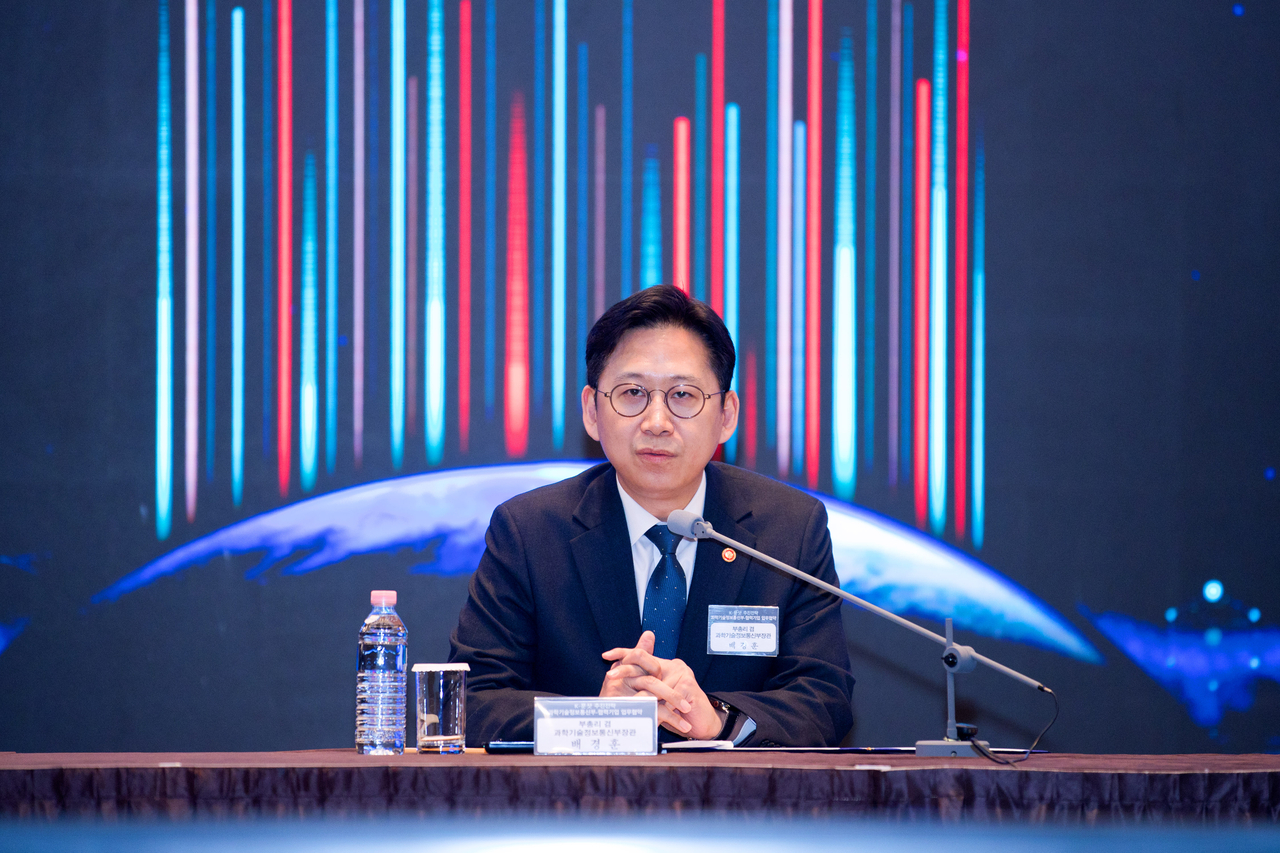
South Korea Allocates Record 29.6 Trillion Won for 2027 AI Infrastructure
On September 1, 2026, the Ministry of Science and ICT announced a 2027 budget of 29.6 trillion won, the largest in the ministry's history, representing a 24.5% increase year-over-year. Of this, 9.4 trillion won is dedicated directly to AI, with 3.8 trillion won earmarked for purchasing approximately 10,000 GPUs to support the "Frontier AI Model" project and national cloud services. This move underscores Seoul's strategy to overcome private-sector infrastructure gaps by leveraging state funds to secure critical hardware sovereignty against global supply constraints.
Japan’s GENIAC Project Expands to Robotics Foundation Models
The Japanese government’s Generative AI Accelerator Challenge (GENIAC), run by METI and NEDO, announced on September 9, 2026, the selection of new projects focused on "Robot Foundation Models" to advance physical AI. Companies including KDDI and Highlanders were selected to develop models capable of replacing human labor in retail and logistics, marking a strategic shift from pure LLM development to embodied AI applications. This expansion aims to leverage Japan’s strength in manufacturing and robotics by providing subsidized high-performance computing resources for specialized industrial models.
MSIT Seeks Additional High-Performance Computing Centers
To address growing demand for large-scale GPU-based training, South Korea’s MSIT announced plans on September 10, 2026, to designate additional sector-specific high-performance computing (HPC) centers. This follows the earlier designation of seven centers in 2022 and the groundbreaking of the Haenam National AI Computing Center (targeting 15,000 GPUs by 2028). The ministry aims to decentralize compute resources across industries to prevent bottlenecks and ensure broader access to sovereign infrastructure for domestic startups and research institutions.
Local view
Aju Press highlights that while US tech giants are investing roughly $725 billion in AI infrastructure, South Korea is adopting a "state-led" route to compete, focusing on sovereign models and national data centers rather than matching private capital dollar-for-dollar. The outlet notes that the government's strategy relies on securing Nvidia hardware through national contracts to enable domestic model development.
Chosun Ilbo reports from the AI Infrastructure Summit 2026 that the primary bottleneck for Korean AI expansion is no longer just GPU availability but power supply. Experts are calling for optimized use of existing grid capacity and battery integration rather than waiting for new power plant construction, which aligns with the government's push for efficient national data center operations.
Nikkei Business features an interview with the CEO of Noetra, a domestic Japanese AI developer, who expressed urgency regarding the need for successful commercialization of sovereign models to secure future funding. This reflects local industry sentiment that GENIAC support must translate into market-ready products to sustain Japan's AI competitiveness against global players.
Context & numbers
- South Korea 2027 AI Budget: 9.4 trillion won total AI allocation; 3.8 trillion won specifically for GPU procurement (~10,000 units).
- Japan GENIAC Investment: Approximately 1.23 trillion yen ($8 billion) allocated for advanced chips and AI in the current fiscal year.
- Haenam National AI Computing Center: Construction began in August 2026; target of 15,000 GPUs by 2028.
- US Private Sector Comparison: Major US tech companies are projected to invest ~$725 billion in AI infrastructure in 2026, highlighting the disparity between private and public sector capabilities.

On the radar
- Beta Launch of Free National AI Service: South Korea’s plan to provide free, unlimited generative AI access to all citizens via SK Telecom, Kakao, and KT consortia is expected to enter beta testing in the coming weeks, with full rollout targeted before year-end.
- National Assembly Audit: Korean legislators are preparing to scrutinize the effectiveness of the "Independent AI Foundation Model" project and GPU procurement delays during the upcoming National Assembly audit season, citing concerns over market impact and infrastructure bottlenecks.
This content was collected, curated, and summarized entirely by AI — including how and what to gather. It may contain inaccuracies. Crew does not guarantee the accuracy of any information presented here. Always verify facts on your own before acting on them. Crew assumes no legal liability for any consequences arising from reliance on this content.
Powered by
